


National Public Lands — Frequently Asked Questions
Thank you for joining WTA for our webinar “Where Things Stand: National Public Lands Update” on Oct. 29, 2025. You asked many insightful questions during the webinar. We answered some questions during the recorded webinar. Since we didn't have time to answer them all live, we’ve compiled additional answers below.
Where are national public lands in Washington state?
12.1 million acres of Washington state’s total 18.8 million total of public land are nationally managed. View Washington state Recreation Conservation Office’s interactive map to find national public lands near you.
Could you share the statistics for this year’s staffing reductions at federal land management agencies?
| U.S. Forest Service | National Park Service | |
| Employees lost in 2025 (nationally) | 5,800 | 4,000 |
| Percent reduction for staff nationally | 16% | 24% |
| Percent reduction for staff in Washington state | About 25% |
What impacts are we seeing to trails and lands from reduced staffing?
We are hearing about places being impacted, but our land management partners have stressed that many effects are not immediately evident and will grow over time. With fewer staff, many trails aren’t getting maintenance that they usually would, especially in the backcountry. As time goes on, winter weather does damage, and logs pile up, trails will start to become inaccessible. National Parks and Forest Service staff are being pulled from their regular work on trail crews or doing wildlife surveys to attend to frontline needs like trash, restrooms and campgrounds. This is keeping places open to the public in the short term, but is doing damage to our public lands in the long term.
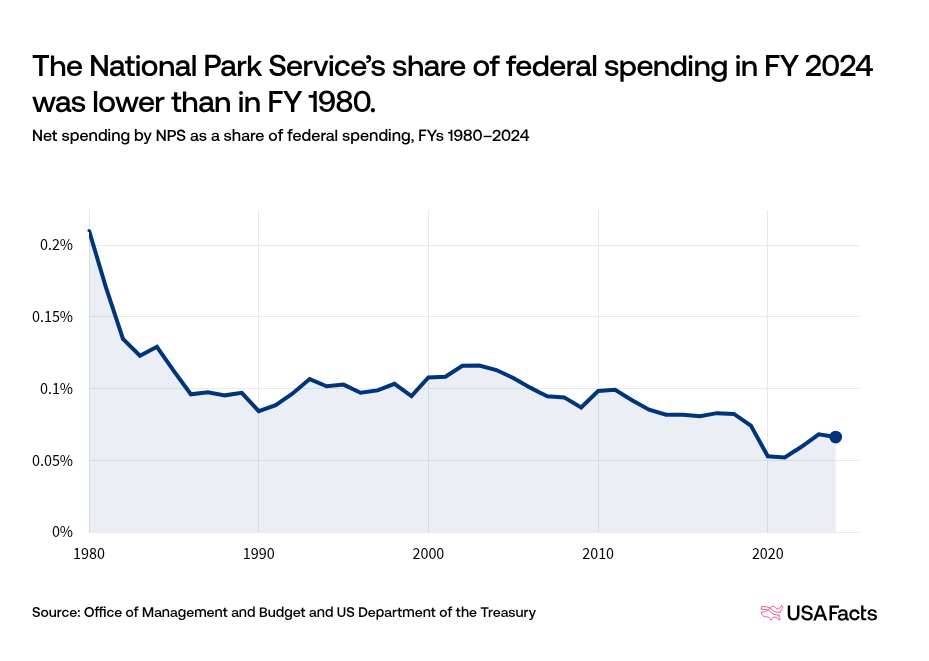
What are trends in National Park staffing and visitation before this year’s cuts?
The short story is that both funding and staffing of national public lands have been declining for decades, even as visitation continues to remain popular and even grow.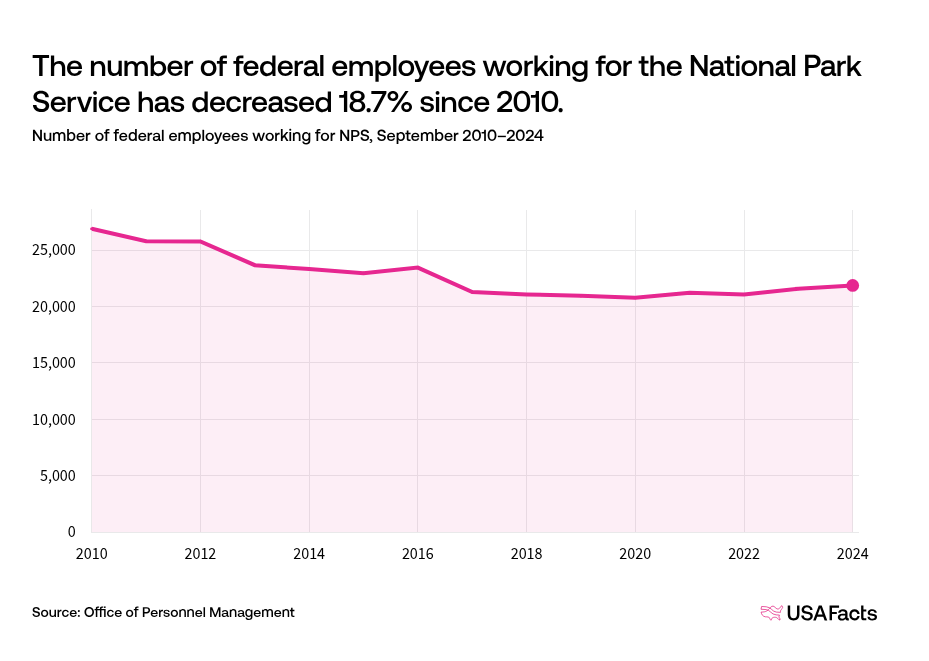
By stopping at 2024, this graph undercounts the dramatic employee cuts made in the last year. As of Oct. 1, 2025, the Department of Interior reported 14,500 staff.
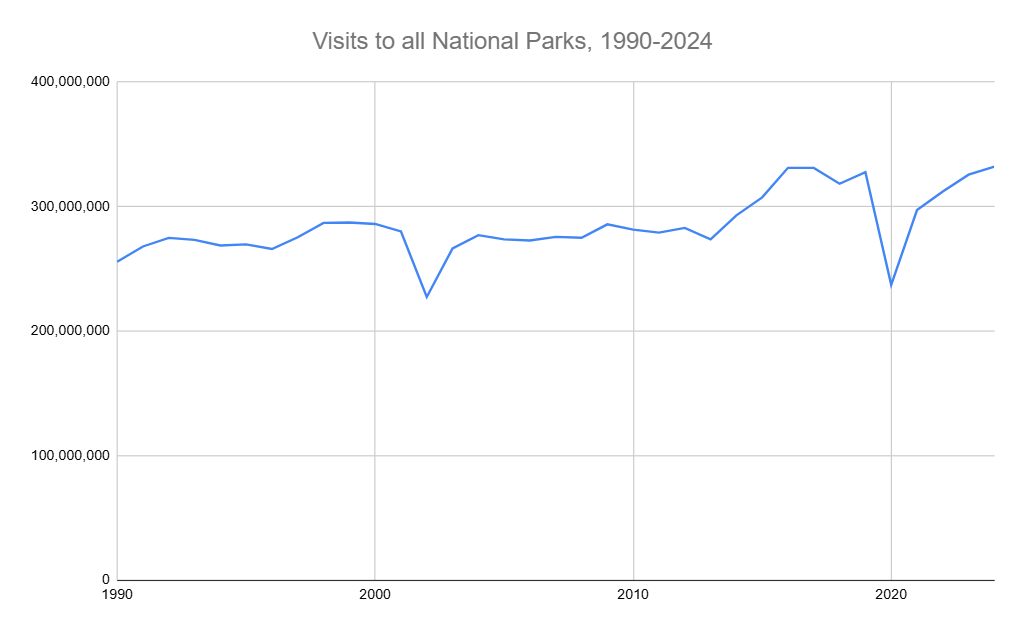 Source: National Park Service visitor use statistics https://irma.nps.gov/Stats/
With all the staffing cuts, can we expect more wildfires? How do we address that issue?
Land managers like the U.S. Forest Service have fewer staff to do prescribed burns that manage wildfire fuel, which means we could expect more acres of public lands impacted by high severity wildfires over time. WTA’s partners at Outdoor Alliance reported on a series of bills that would support wildfire response and resilience.
What’s the EXPLORE Act?
The Senate unanimously passed the EXPLORE Act at the end of 2024, showing strong bipartisan support for public lands and our access to them. Here's Outdoor Recreation Roundtable’s overview of the EXPLORE Act, which bundled together many bills, including the Outdoors for All Act to create parks and green spaces in communities that need them and the SOAR Act to remove red tape for guides taking people on outdoor experiences on our national public lands.
WTA was particularly pleased about the piece of the EXPLORE Act that directs our national land management agencies to conduct an inventory of all recreation sites and their accessibility according to the Architectural Barriers Act. That, along with other parts of the EXPLORE Act, is an important step in making it possible for everyone to visit our national public lands.
What’s the Roadless Rule?
The Roadless Area Conservation Rule is an administrative policy that restricts where the U.S. Forest Service can construct new road networks. Since 2001, the Roadless Rule has protected one-third of our National Forests and 25,000 miles of trail from activities like road building, logging and mining. This includes outdoor recreation on beloved Washington state landscapes like Washington Pass, Baker Lake, Lake Chelan, Quinault Lake, Silver Star Mountain and more. The Roadless Rule’s protections also keep water clean for 60 million Americans who rely on national forests as their drinking water source.
In August, the U.S. Department of Agriculture started a process to remove the Roadless Rule, and 3,900 hikers spoke up with WTA, along with more than 600,000 people across the country. We expect the next step in the process to happen in February or March of 2026; we’ll let you know when and how to use your voice.
Does removing the Roadless Rule need to be approved by Congress, or can the administration do it on its own?
Removing the Roadless Rule is an administrative action that can be done without input from Congress.
How to advocate for public lands
Is it better to call rather than email my representatives?
Every time you reach out, by any means of communication, it helps remind your representatives that our outdoor places are important to you. Different lawmaker’s offices track public communications differently. All the voices and ways of making contact contribute to a strong message of support for public lands, but congressional offices certainly pay attention to respectful phone calls from constituents and track the content of those conversations.
Generally comments on social media are not tracked by staffers, so it is better to call, email or mail your representatives.
How helpful is it to contact representatives outside of my district or members of Congress that sit on natural resources committees?
Generally, an elected official will be most interested in hearing from the voters they represent. One way to get your message to other members of Congress is to think about your personal networks: Do you know anyone who lives in districts represented by the officials you want to reach?
Sharing information and actions with people you know helps build a groundswell of support for public lands.
Are there members of the Washington state’s Congressional delegation that would be helpful to target?
All twelve members of Washington’s Congressional delegation (two Senators and ten Representatives) are key to protecting and promoting our state’s public lands. Reach out to your representatives and spread the word to friends and family in other districts.
What more can I do?
- Contact your members of Congress. One of our webinar attendees who previously worked for a U.S. Senator shared this tip:
- Send physical mail to remind them that public lands are a priority. Their advice is that your letter will make the best impression on your representative if it’s short (half a page), respectful and includes a personal story.
- A phone call or individual email are also great ways to share your message.
- Become an ambassador. Ambassadors represent WTA at events and trailheads to help folks get outside in ways that are safe for both people and lands. If you like talking to people and want to help public lands you love, check out our Ambassador program. We are always accepting interest forms, but we’re especially in need of ambassadors in Eastern and Central Washington right now. Please email Nicole Masih-Theberge at nmasihtheberge@wta.org with any questions.
- Invite more people to speak up. We need a nationwide chorus of voices to get our public lands the protections, funding and staffing they need. Invite your hiking buddies, friends and family to join WTA’s Trail Action Network and visit our action center.