


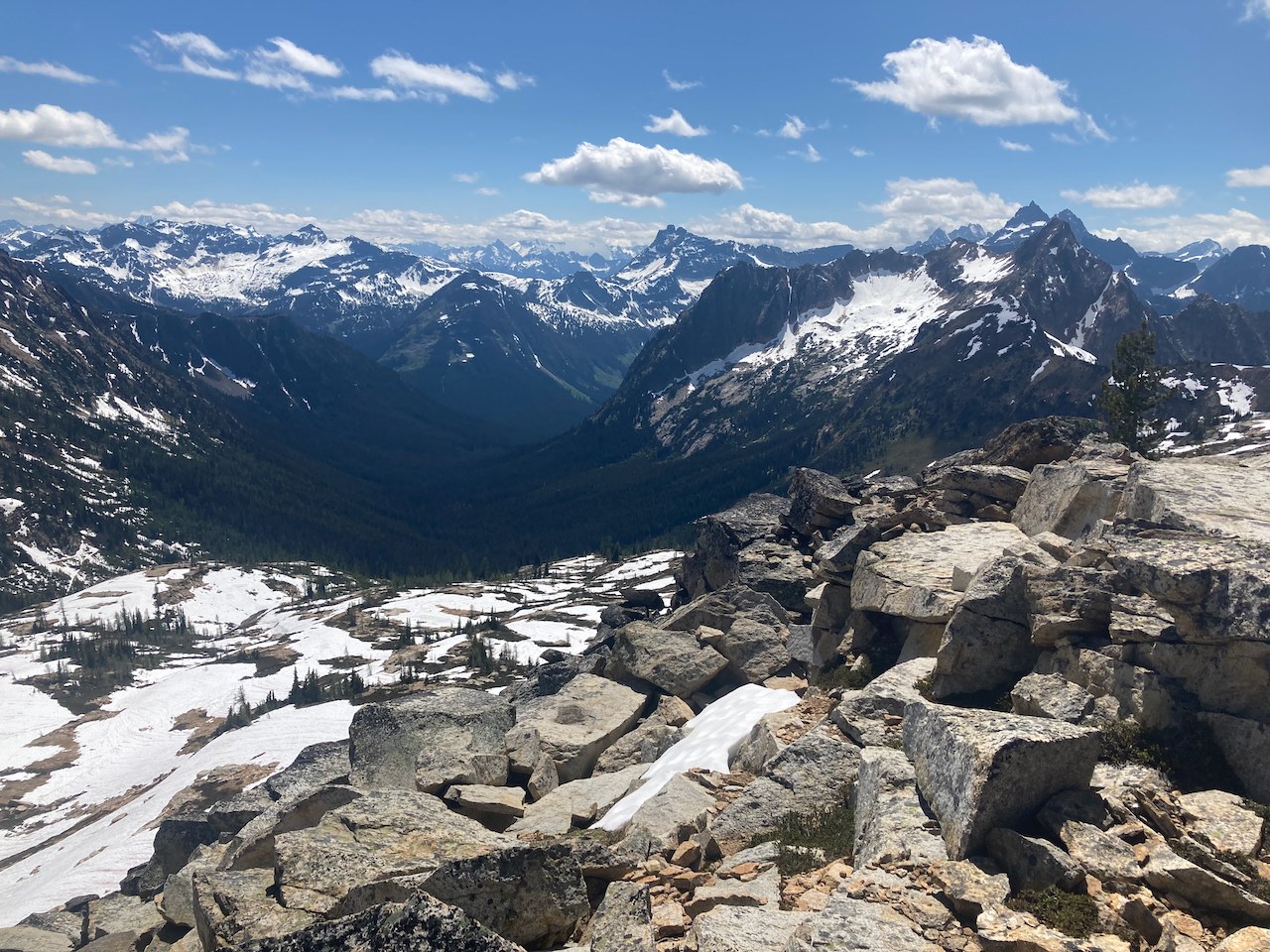
I did almost the exact same hike a year ago on June 12, 2023 and there was less snow above 5,500 ft then, in comparison to what I found today almost a month later. I was surprised given how fast the snow disappeared below 5,000 this year. In the distance, there appears to be a lot of high elevation snow -- the coming warm spell will accelerate its loss.
The first time I did Cutthroat Pass was an overnight on August 1, 2006. Since that time, I have been to the Pass several times from both sides. It has become one of my favorites, if not my favorite. The pass is relatively close to high elevation vehicle access and it lies at a high elevation itself (~6,800 ft). The views from the Pass are outstanding; they start early on both sides and only get better; go 350 to 650 feet higher to the northern ridge and the views are exceptional. In addition, the experience from Rainy Pass is vastly different than that from Cutthroat Lake -- I cannot think of another pass with such a stark contrast. The icing on the cake is the presence (and abundance) of subalpine larch on both sides.
Although I arrived at Rainy Pass rather late (~noon), the temperature when I parked was 53oF (when I returned it was 56). Although there were a few cars parked along Highway 20, there was still parking within the designated trailhead parking lot. When you leave Highway 20 on the north side, there is a short paved section and then from side to side lies a masterful maze of potholes; going to the other edges helps, but does assure safe passage. Did not use the facility (had used the one in the Early Winters Campground and it gets an A+).
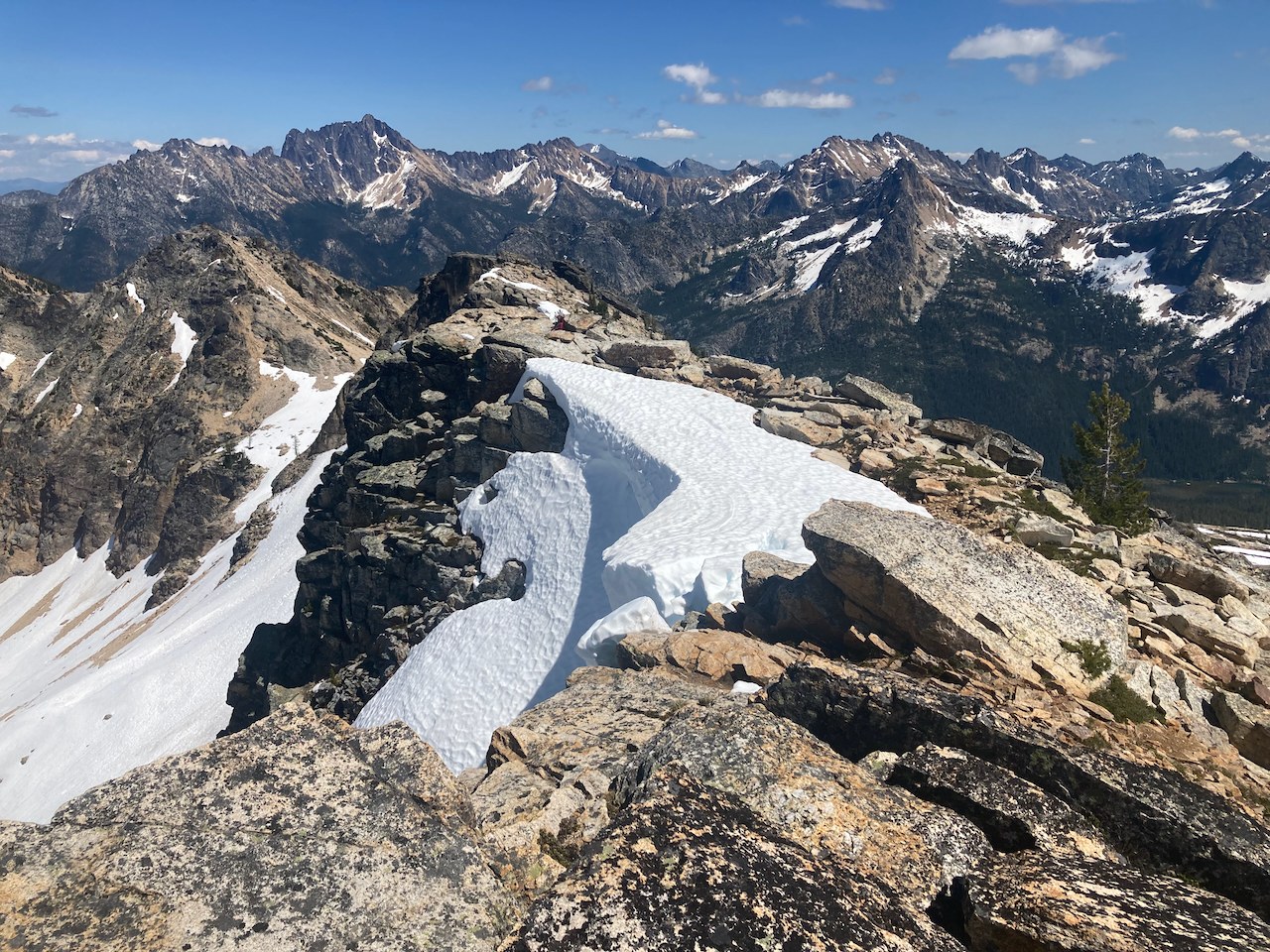
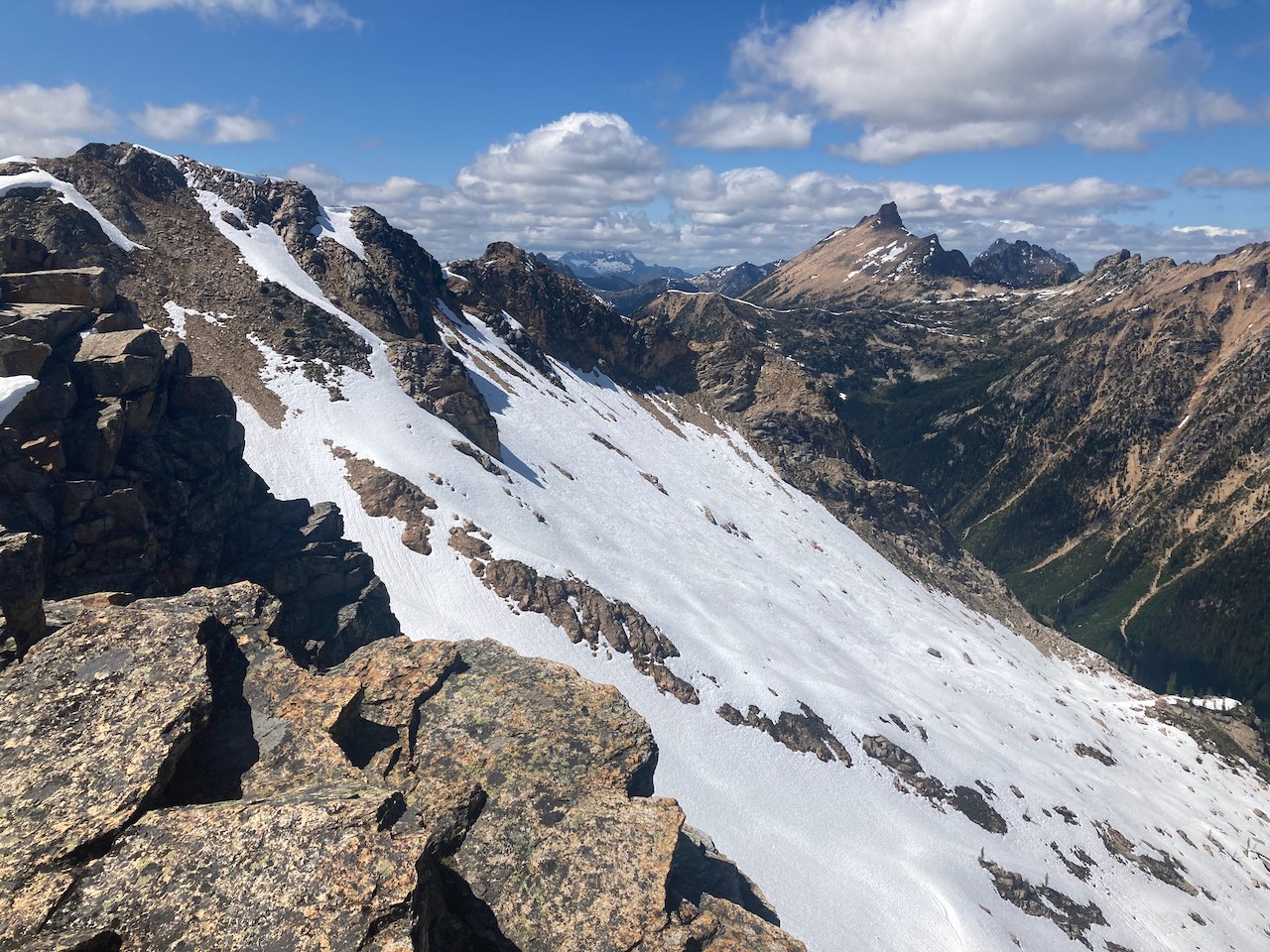
The trail is in outstanding condition -- it has the PCT recommended grade of 10% ±_ and thus it is 5 miles from the trailhead to the Pass. There were no shortages of stream crossings, four of which required some thought and care and more thought and care on the return as the water level was a little higher. The coming warm temperatures might add to this contrast. This contrast will disappear as most of the snow melts. All day there were very strong winds which brought an abundance of cold air, which I found very refreshing. From just before the officially camping area at the base of the cirques headwall, snow in larger and larger patches begins. The switchbacks on the side with all the subalpine larch were just short segments to totally covered with snow. There were plenty of good foot imprints to easily cross these snow covered sections. I did not use microspikes, but a pole helped greatly. At least half, if not more, of the trail has strong forest cover and, therefore, shade. The last quarter of the trail is mostly in the sun. Near the curve in the last switch-back, I headed almost due north, taking a path of maximum snow coverage and least resistance to the upper most high point in what 'peakbagger' calls Peak 7450 on the north ridge (it is just east of a higher point (7,550 ft). Without the snow, the abundance of talus and loose screen would decrease the easy of such an additional side trip. Figures 1, 2, and 3 are from this high point.
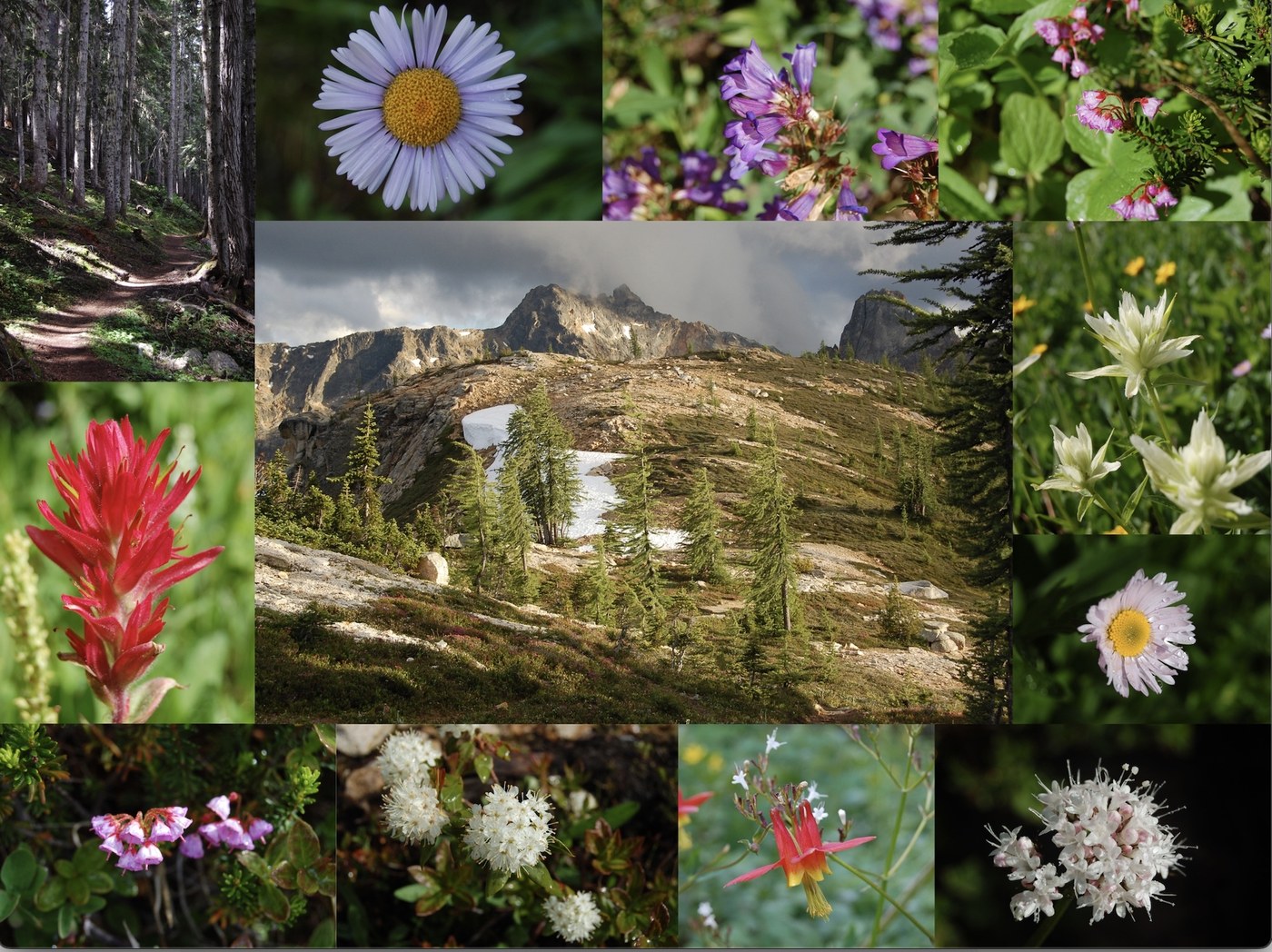
The list of existing and emerging flowers include: aster, buttercup, three-leaf foam flower, penstemon, Sitka valerian, red columbine, lupine, buttercup, anenome, glacial lily, spring beauty, false salmon seal, twisted stem, white and red heathers, and phlox (see Figure 4; a composite made of the flowers seen on August 1, 2008).
I highly recommend this hike.
Comments
Thanks for such a detailed report. One of my favorite trails. Good to know it’s hike able again.
Posted by:
The path before you on Jul 03, 2024 09:35 AM