


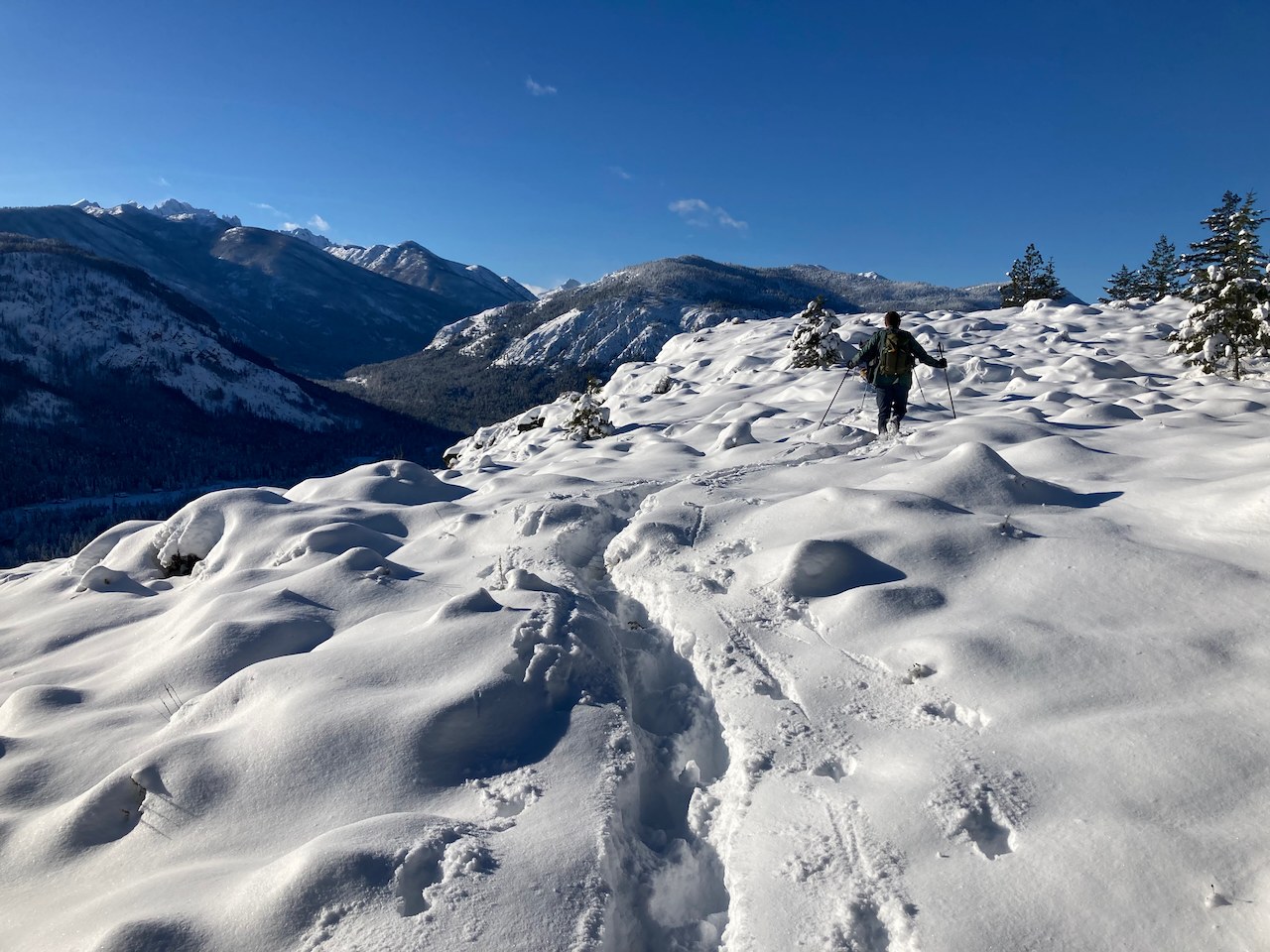
Yesterday (and today), there is horizon-to-horizon blue sky day with lots of snow in the valley and even more higher up. Perfect day for a hike up Spokane Gulch. Two people had broken trail to the junction with the Flagg Peak trail (they went up Flagg Peak). We broke trail the rest of the way to the highest initial lookout point. There were two novel differences from my many other times up Spokane Gulch (>125 times).
First: This has been an atypical, last two and half months. From mid-October to mid-November, there were great snow storms above 4,000 feet (occasionally, in a promising fashion, lower). Even in very early December, Washington and Rainy Passes and Highway 20 were open and the valley was snow free), then the warm rains began, Highway 20 was closed and even the higher elevation snow began to melt. There were floods on the west side of the Cascades and rivers on the east side rose to flood levels. US 2 was closed. In the 13 years that I have been hiking the Spokane Gulch trail, the ephemeral stream, which the trail crosses some 9 times, only flows during periods of rapid spring snow melt. During these series of mild, atmospheric rivers, this ephemeral stream had volumes of water coming down the hill. A December 17th hike up Sagebrush and Flagg mountain, three days after peak flows on the Methow, this ephemeral stream had sufficient volume that each trail crossing required some careful foot work to avoid getting wet. This was true all the way to above the junction with the Flagg Mountain trail. Yesterday, when we did this hike, there was still plenty of water flowing -- you could actually hear it before you saw it. In the mid-summer to early March, I have never hiked the Spokane Gulch trail when there is water flowing in this stream. Walking up the snow-covered trail (well over a foot in the valley and approaching two feet on the bench leading to the lookout point[s]) and dealing with flowing water was a new, but interesting experience!
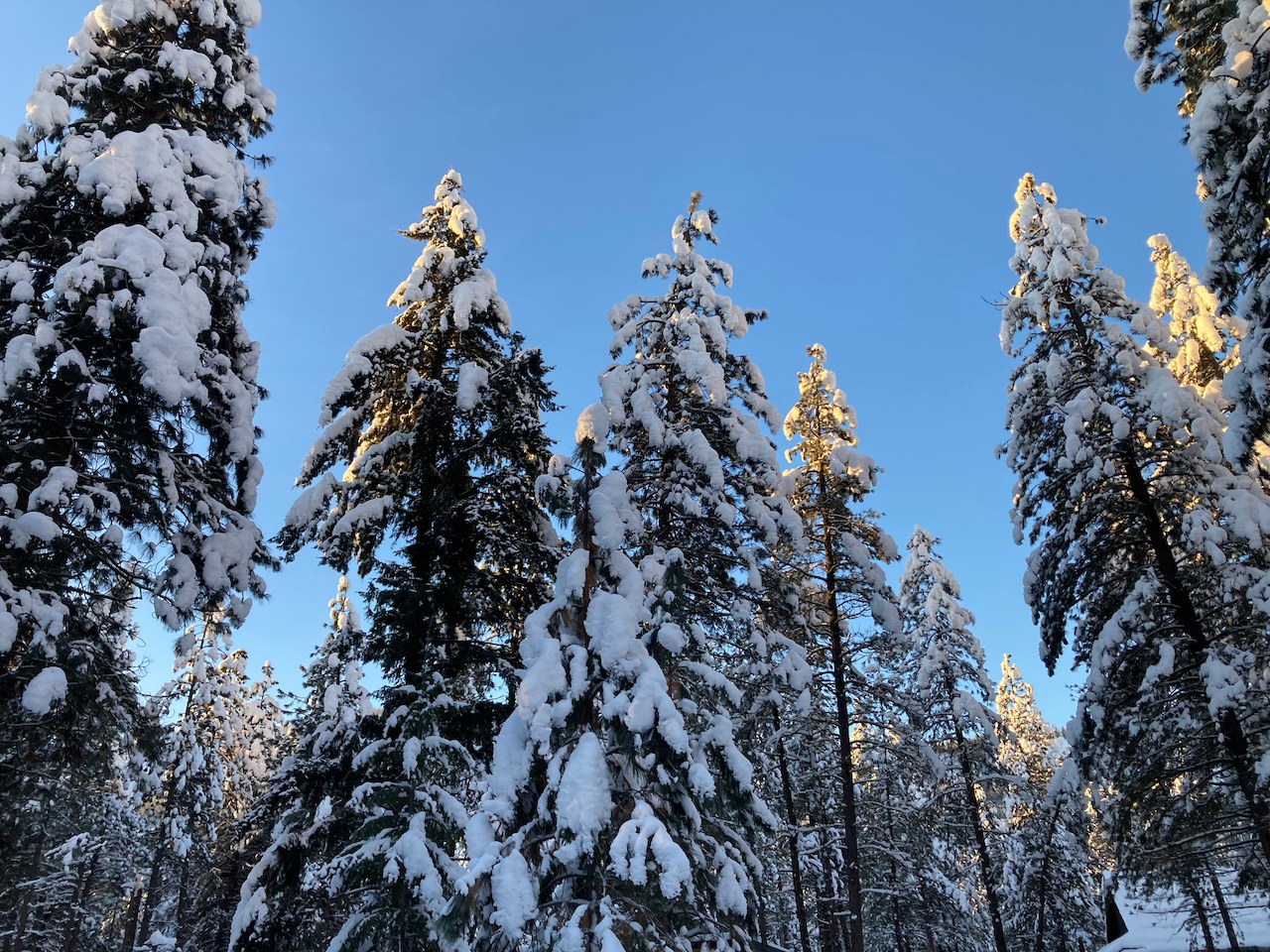
There was a second issue: this long, gray, wet, the mild fall ended about 8 or 9 days ago when a series of snow storms consistently reached at or below the 1,800 foot level. This unusually high water content snow coated the trees and cold nights further cemented the snow on the trees, especially those near the valley floor. Snow loads became so great that trees (generally those with poor diameter to height ratios and mostly ponderosa pine, bent over, bowed in some cases almost forming a shepherd's crook and then suddenly snapping at the base of the live crown. Some broke near ground level, some up-rooted [especially Douglas-fir]). I can walk out to the back porch of where we are staying and see 15 broken or up-rooted trees. So the first part of the Spokane Gulch trail goes through this forested zone where trees were breaking or up-rooting. It was an initial concern, but we encountered only one new tree across the trail (easily crossed). This issue was not present in the forest reached in the upper third of this trail.
The four of us and our one dog all enjoyed this hike and recommend it. Right now there is a broken trail. We used spikes, but I don't think those are critical now -- I like the sure-footed aspect they provide.


Comments