 Washington Trails
Association
Washington Trails
Association
Trails for everyone, forever
Washington Trails
AssociationTrails for everyone, forever
WTA celebrates 5 years of helping build a better future for trails through the Emerging Leaders Program | By MJ Mahan and Krista Dooley.
Back in 2023, Michelle Mouw was one of the members of WTA’s Emerging Leaders Program (ELP), which helped participants learn skills and make connections that could help them pursue a career in the outdoor industry. She learned trail work skills, met many professionals in the outdoor sector and even led a trail work party for BIPOC youth at a neighborhood trail.
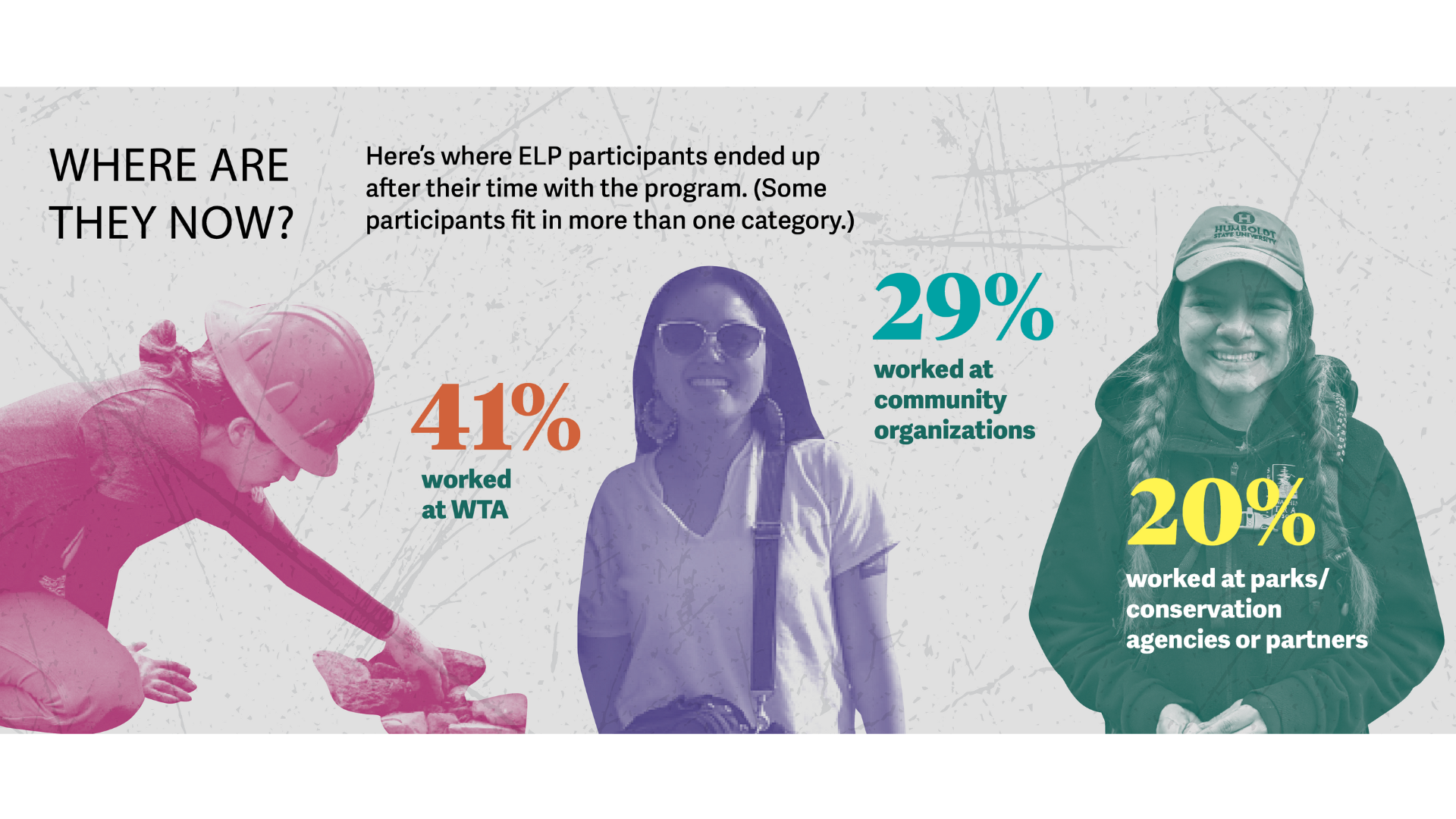
After she finished with her time at ELP, Michelle was hired as a King County backcountry trail crew member for a season. The following year, she returned to WTA as a leader for the ELP crew. Then she spent a season as a Lost Trails Found crew leader.
This year, Michelle joined a restoration crew with the Mountains to Sound Greenway Trust and will begin a landscape architecture graduate program at the University of Washington in the fall.
Michelle is just one example of the successes of the Emerging Leaders Program, which wrapped up its fifth season earlier this year. Now, we’re looking back and celebrating the impact, connections and lessons learned from the program, which has attracted an array of applicants, from recent graduates to midcareer professionals, all looking to gain experience in trail maintenance and outdoor leadership while exploring new career pathways.

ELP crews are able to gain various kind of professional experience, including trail work and crosscut saw trainings. Photo by Angelic Friday.
“It’s been such a joy seeing the Emerging Leaders Program grow and evolve over the past 5 years,” said Jaime Loucky, WTA’s chief executive officer. “When WTA first launched this program, we saw a need to create more spaces where early career leaders could build skills and get to know the outdoor industry. Along the way, we got to see five cohorts of fantastic, motivated and talented people build their leadership and trail skills, and make connections with each other and with other partners. And we got to see them launch their careers."
 Learning and growing
The program began in the fall of 2020, when WTA launched a paid program that focused on building trail maintenance skills and learning in community, including for Black, Indigenous and People of Color (BIPOC) and LGBTQ+ folks, who are underrepresented in the outdoor industry. At the time, we called it the Leadership and Inclusion crew.
“For most of us, this is the first opportunity we’ve ever had to develop our technical skills, network with outdoor professionals or learn about environmental stewardship as a career,” said Zachary Toliver, a member of the first crew.
That crew of six learned technical skills from outdoor industry professionals, including staff from WTA, the Washington Department of Natural Resources and Mount Rainier National Park. “No matter what we’re learning or how much rain is dumped on us, the days always end filled with sincere enjoyment. Our conversations with experts go beyond the work, often into what everyday life is like in their respective fields,” Zachary said.
Thanks to participants’ feedback from that first year, we adjusted the program for a second year and renamed it the Emerging Leaders Program. Throughout the 14-week paid program, participants focused on gaining trail maintenance and outdoor recreation skills and building a professional network.
ELP’s growing reputation attracted numerous partners and collaborators. In 2023, WTA’s advocacy team asked for and received funding for a partnership with Washington State Parks. Through this 3-year collaboration, ELP cohort members met State Parks staff, including rangers and staff who work in education, traditional art, natural resource management and tribal relations. They also did trail work at state parks.
Washington State Parks staff benefited from the partnership as well.
“Getting to work with these future leaders in the outdoor industry over the past 5 years has been a great experience,” said Jason Armstrong, a park ranger. “They have provided me the opportunity to expand my leadership ability as I learn about challenges and barriers within the outdoor industry. Additionally, the group has accomplished some great work while at Deception Pass as we continue to improve trails and experiences throughout the park.”

ELP particpant working alongside Americorp memebers on the trail. Photo by Zach Toliver.
ELP cohort members worked at 26 trail project locations with nine different land manager.
“It has been great to see the leaders and crew members grow and explore new opportunities throughout the program each season,” said Leeanne Narwot, backcountry trail crew supervisor for King County Parks. “The large amount of passion and intention behind the program is apparent year to year as the program has changed. I have enjoyed partnering with ELP each year to get to know the members … while also offering opportunities to connect the crews directly with other staff within King County Parks. Being able to share a passion for trail work is truly a uniting force.”
Again and again, cohort members said some of the most powerful aspects of the program were working on independent projects and learning from BIPOC leaders who are already in the outdoor industry and working to make the outdoors more welcoming.
Through the program, WTA collaborated with more than 60 BIPOC community partners and outdoor professionals. Cohort members connected with those folks and learned more about their career journeys.
For the last three seasons, Chevon Powell has talked to cohort members about her role as the founder and managing director of Golden Bricks Events, the creation of Refuge Outdoors Festival and being a BIPOC woman in the outdoor industry.
“I got to go hiking with the crew, and it’s so invigorating for me as a person that is 24/7 in the work,” Chevon said. “(ELP) aligns with what I do because I am serving BIPOC communities and creating spaces for BIPOC folks to be outside and live and thrive. … We need more diverse leadership in this work.”
Meeting people like Chevon helped cohort members see themselves in a similar place in the future. ELP participants built connections with professionals and got a better understanding of what jobs in the outdoor sector are like.
ELP also included time for cohort members to work on a project that supported their own professional development interests and WTA’s mission. They wrote for Washington Trails magazine, coordinated volunteer trail work, translated outreach materials into Spanish, attended outreach events and facilitated a Salish Sea educational hike.

ELP cohort members smiling on trail they helped rebuild. Photo by Angelic Friday.
Before she joined ELP in 2022, Tiffany Chou had used WTA’s Hiking Guide when training to hike the Pacific Crest Trail. She wanted to give back, so she wrote Hiking Guide entries for urban trails. That gave her a chance to see the behind-the-scenes work for the Hiking Guide. And, when WTA was hiring for a communications coordinator, Tiffany’s previous experiences and new skills from her ELP project helped her get the job after her time with ELP. She has been working on WTA’s communications team ever since, including leading work on the Hiking Guide.
As we look back at the 5 years of ELP, we are so grateful to all the people, from cohort members to community partners to WTA members, who helped make it possible. And we continue to see power in the unique opportunities that programs like this can provide.
The 2025 Emerging Leaders Program cohort was the last season to receive state funding in partnership with Washington State Parks, due to the extremely tight budget. Our team will be refining our approach and exploring new paths and partnerships to sustainably fund this program into the future. We are developing our strategic plan for the next 5 years, and we know it’s important for WTA to continue to support the next generation of outdoor leaders.
Member donations help fund all of WTA’s work, including programs like ELP, but have not been able to fill the gap for ELP. If you would like to discuss the opportunity to have a financial impact on ELP going forward, please reach out to Andrea Michelbach at andream@wta.org or 206-557-3402.


