 Washington Trails
Association
Washington Trails
Association
Trails for everyone, forever
Washington Trails
AssociationTrails for everyone, forever
If you are thinking about hosting an event on public lands (whether it be a wedding, elopement, reunion or otherwise) and have questions about rules and regulations, we're here to help get you started. | By Ashton Weis
While you naturally might envision WTA employees working out on trail, a lot of us spend most of our working time in an office. I'm one of those people and, while I'm working, one of my jobs is to answer the phones. We get a lot of questions from “is this trail open?” to questions about climate change. A lot of those questions we can answer ourselves, but for this one: "How do I get married on public lands?" or a similar: “How do I host an event on public lands,” I needed to turn to an expert.
If you are thinking about hosting an event on public lands, and have questions about rules and regulations, we are here to help get you started in the right direction. I have attended some beautiful and fun events on public lands. They’re a lovely location for a memorable family reunion or can be an authentic space for a couple to share vows on their wedding day.

Whether you're thinking of planning a wedding, reunion or just a fun get-together, we've got you covered. Photo by Peter Mason.
To get started, you’ll have to figure out if your space is a local or county park, a Washington State Park, a national park or Forest Service land. Once you’ve located your ideal venue, go from the list below to ensure you have everything you need to host an event without a hitch. (Unless getting hitched is, in fact, the goal.)
I spoke with Kim Larned, the special use permit administrator with the Forest Service, to get some insight on Forest Service lands. Here’s her advice.
Kim emphasizes that the laws and rules governing hosting events can change. Discussing your plans with a staff person is the best way to have a successful event.
Some of the common ground rules (this is not an exhaustive list) for hosting on federal land:
These regulations are in place to provide adequate sanitation and resource protection from the group hosting the event.
There are three national parks in Washington State: Mount Rainier, Olympic and North Cascades. Confusingly, the National Park Service has its own forms per park and each has their own process. While they all have separate forms, stipulations and email addresses for questions, their processes are similar to one another. They all request at least 3 to 4 weeks of processing time, and submission can be made up to a year in advance. Aside from these three, there are several other parks and historic sites that are managed by the National Park Service, and will be subject to specific rules. Find your park from this list.
If you want to host your event in a Washington State Park, here’s what you need to do:
Fill out the online special use permit, at least 60 days in advance of your event. While they do not provide a guideline about the minimum number of people, if you’re wondering if you need a permit, it is most likely that you do.
If you are hosting at a local or county park, rules vary. You should reach out to the city or county that is responsible for the park for details. In the case of the City of Seattle, for example, if you are hosting an event with more than 50 people, you are required to have a permit for the event. Some of these events require specialty insurance.
Your event may also require a banquet license. For more information about this permit, check out the Washington State Liquor and Cannabis Board site.
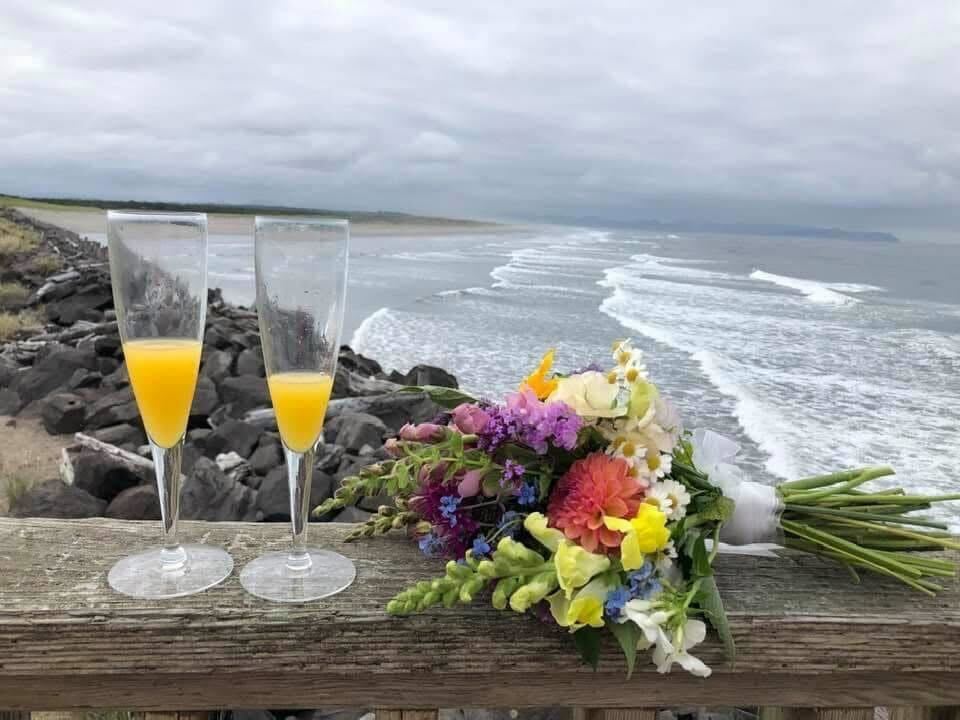
Enjoy your outdoor festivities — and then don't forget to leave no trace and pack it all out! Photo by Brandon Tigner.
Other elements to consider when hosting an event outside are:
If you are still stuck at where to start, please continue to call us! You might even get to talk to me.


