


What Pass Do I Need?
If it's hard for you to figure out which permit or pass you need to go hiking, you're not alone. Here are some answers to common questions about which pass you need.
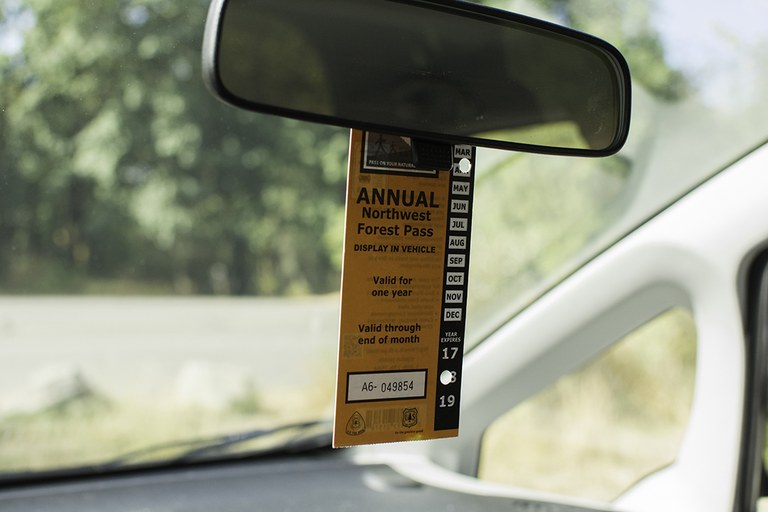
A Northwest Forest Pass works on U.S. Forest Service lands.
What's the difference between the Northwest Forest Pass and the Discover Pass?
Both are required to park at trailheads in Washington. The Northwest Forest Pass is for use on federal land (like national parks or forests); the Discover Pass is for state land (like state parks).
Some trails do also require permits (usually if you are accessing a wilderness area or planning on camping in a popular area) We discuss permits on this page.
Can I buy one pass that will work work on all state and federal lands?
No. Currently a pass for both federal and state land is not available. Your best bet is to get an Interagency Pass and a Discover Pass. That will cover you for most hikes in Washington.
The Interagency pass will give you access to national parks as well as national forests. Note that in 2024, Mount Rainier National Park initiated a timed-permit entry system for visitors, which means you need both a pass to enter the park and a $2 reservation made in advance on recreation.gov.
I plan to hike a lot but don't want to worry too much about having the right pass. Which passes should I get, and what will it cost me?
You should purchase the America the Beautiful Interagency Pass ($80) and the Discover Pass ($45). This will give you access to all federal and state lands in Washington, and you can check at the trailhead to find out which one you should display.
Most of my hiking is along I-90. Can I get by with one pass?
Probably not. Public lands are managed by both state and federal agencies along this corridor. Mount Si and Tiger Mountain, for instance, are managed by the Department of Natural Resources and require the Discover Pass ($45). Twin Falls and Squak Mountain are state parks and also require the Discover Pass. But further up the pass is the Mt. Baker-Snoqualmie National Forest where you need a Northwest Forest Pass ($30). There are also several trails on King County park lands, and these are free.
I'm not sure where I want to hike this year, buT I don't want to buy passes that I don't need. Please help!
Take a look at our Hiking Guide (or make a list of saved hikes in your site account) and see what passes they require. For $80, you can get an annual pass to all federal land, and for $45you can get onto all state lands all year. It's usually easier to simply get an annual pass, and you will likely break even unless you only hike 1 or 2 times a year.
What's the deal with Mount St. Helens? Is it per person or per car? Will my Northwest Forest Pass work there?
Mount St. Helens National Monument is a bit of a wild card in the whole pass system. Folks who plan to make one or more visits there may find that the America the Beautiful pass is the way to go, especially if they are planning to go to a national park and do other hiking in the national forests. The U.S. Forest Service manages Mount St. Helens and charges on a per-person fee basis. Entry to the Coldwater or Johnson Ridge sites are $8 per person for those 16 and older (free for kids). The Monument honors the America the Beautiful and Senior passes for named pass-holders and 3 adults, and a Northwest Forest Pass will gain entry for one person.
I'm a senior. Are there passes for me?
Yep. The Interagency Senior Pass (formerly the Golden Eagle pass) is the best deal around. This pass costs only $20 per year and is honored nationwide at any federal site charging entrance fees. It is available to anyone 62 or older. Unfortunately, there is no similar pass for Washington state lands at this time.
I like hiking in the desert area of Central Washington during the spring. Who manages these lands? What pass do I need?
This depends where you plan to go and when you plan to go. Much of the hiking in Central Washington is in State Wildlife Areas. These are managed by the Washington Department of Fish & Wildlife. There are also a good number of state parks. Hikers in this area should purchase a Discover Pass ($45/year).
I only plan to go out one or two times. What pass should I get?
You should purchase day passes. A day pass for hiking on national forest lands is $5 and state lands is $10. It costs $30 per car to enter Mount Rainier or Olympic National Parks, and that pass is good for a week. Mount Rainier also requires permits to enter the park, which cost $2 per vehicle and must be reserved in advance on recreation.gov.
These passes are sometimes available at the trailhead, but you shouldn't count on it. Both the Discover Pass and Northwest Forest Pass can be purchased and printed online. Check WTA's Recreation Pass Info page for details.
Ugh! These fees infuriate me. I already pay taxes for these public lands, and I don't feel like I should pay extra. Is there anywhere I can go without forking over more money for passes?
Fortunately, there are a number of places hikers can go without paying additional fees. North Cascades National Park is one, as long as your hike originates along Highway 20. The Olympic Coast (managed by Olympic National Park) is largely free, except in some instances where hikers enter though tribal land. Most county parks are free, though there may be some exceptions. There are also a growing number of trails on lands managed by land trusts that do not require an entry fee. Finally, there actually are a number of trailheads in national forests that do not require the Northwest Forest Pass. The Northwest Forest Pass is only required where the trailhead offers some sort of developed facility, like a picnic table or toilet. Want to figure out if your desired hike requires a pass? Filter our Hiking Guide by "No Pass Required."
Is there a way for me to earn a free pass?
Yes. When you volunteer for two WTA work parties on national forest land, you can trade your volunteer day passes in for an annual pass. Similarly, if you volunteer for 24 hours on any combination of State Parks, DNR or Fish and Wildlife lands, you can receive a free annual pass.
Are there any fee free days?
Yes. Federal (national park, national forest, national wildlife refuge, etc.) and state (Washington State Parks, DNR, state wildlife land) fee free days are listed here.
Federal or state Lands?
Federal recreation sites include: national forests; national parks; national wildlife refuges; national historic sites; Bureau of Land Management lands; and places managed by the Bureau of Reclamation. An America the Beautiful Interagency pass gets named passholders into all of these sites; a Northwest Forest Pass allows trailhead parking on national forests only.
Washington state lands include: Washington State Parks; Washington Department of Natural Resources lands (state forests, natural resource conservation areas (NRCAs), natural area preserve (NAP)); and Washington Department of Fish and Wildlife lands (state wildlife areas). These areas require a Discover Pass.