 Washington Trails
Association
Washington Trails
Association
Trails for everyone, forever
Washington Trails
AssociationTrails for everyone, forever
Whether it’s pee, poop or periods, having good hygiene will make your time outside more fun and can even keep you safe.
If you spend time in the backcountry, you’ve likely accepted that a certain amount of dirt is part of the experience. But that doesn’t mean you can forget about hygiene, especially for pee, poop and periods. Planning ahead and having the supplies you need can help you stay healthy and have a more comfortable trip.
Hygiene around menstruation and going to the bathroom outdoors really matters for a few reasons. Anastasia Allison is the creator of the Kula Cloth, a reusable pee rag, and an advocate for talking openly about these issues. She breaks the need for hygiene down into three concerns.
First is health. If you’re not careful about cleaning your hands after using the bathroom, you could end up with nausea or diarrhea caused by a virus. That’s especially unpleasant and possibly dangerous in the backcountry.
Second is comfort. If you’re drip drying after peeing, you’re risking uncomfortable chafing. Or if you don’t have menstrual supplies and need them, what you improvise may be unpleasant or ineffective. You’re also putting yourself at risk of an infection, including the potential for a urinary tract infection.
Third is mental state. Being physically or emotionally uncomfortable decreases how much you can focus. This is particularly important on long or challenging trips. If you’re distracted by discomfort while descending from a summit or hiking back to the car after a long backpacking trip, for instance, you’re more likely to lose focus and injure yourself.
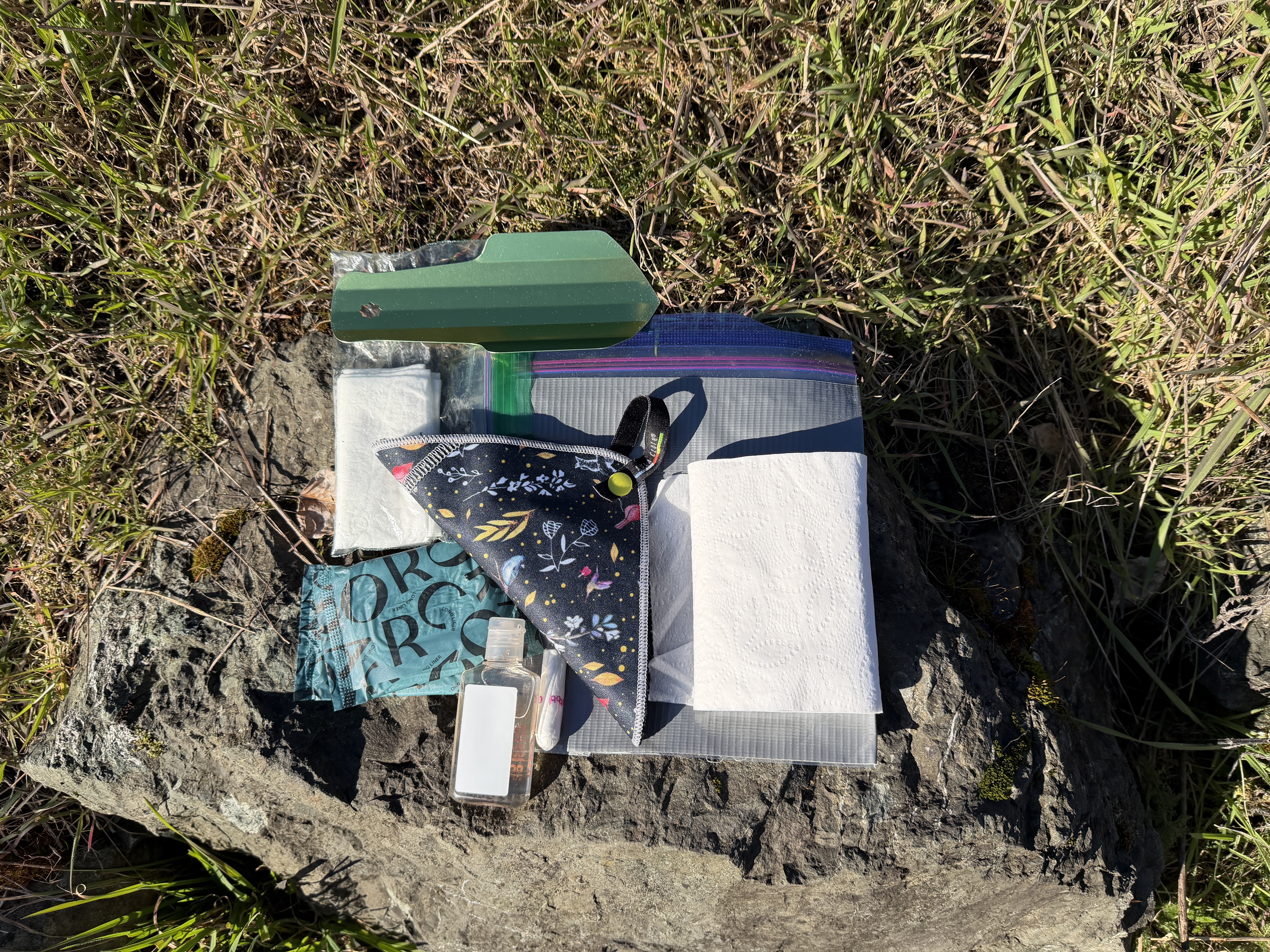
Everyone's bathroom kit looks a little different, but the basics are pretty simple. Photo by Jessi Loerch.
Here are some tips for backcountry hygiene to keep in mind for your next trip, or to share with any new hikers you bring with you.
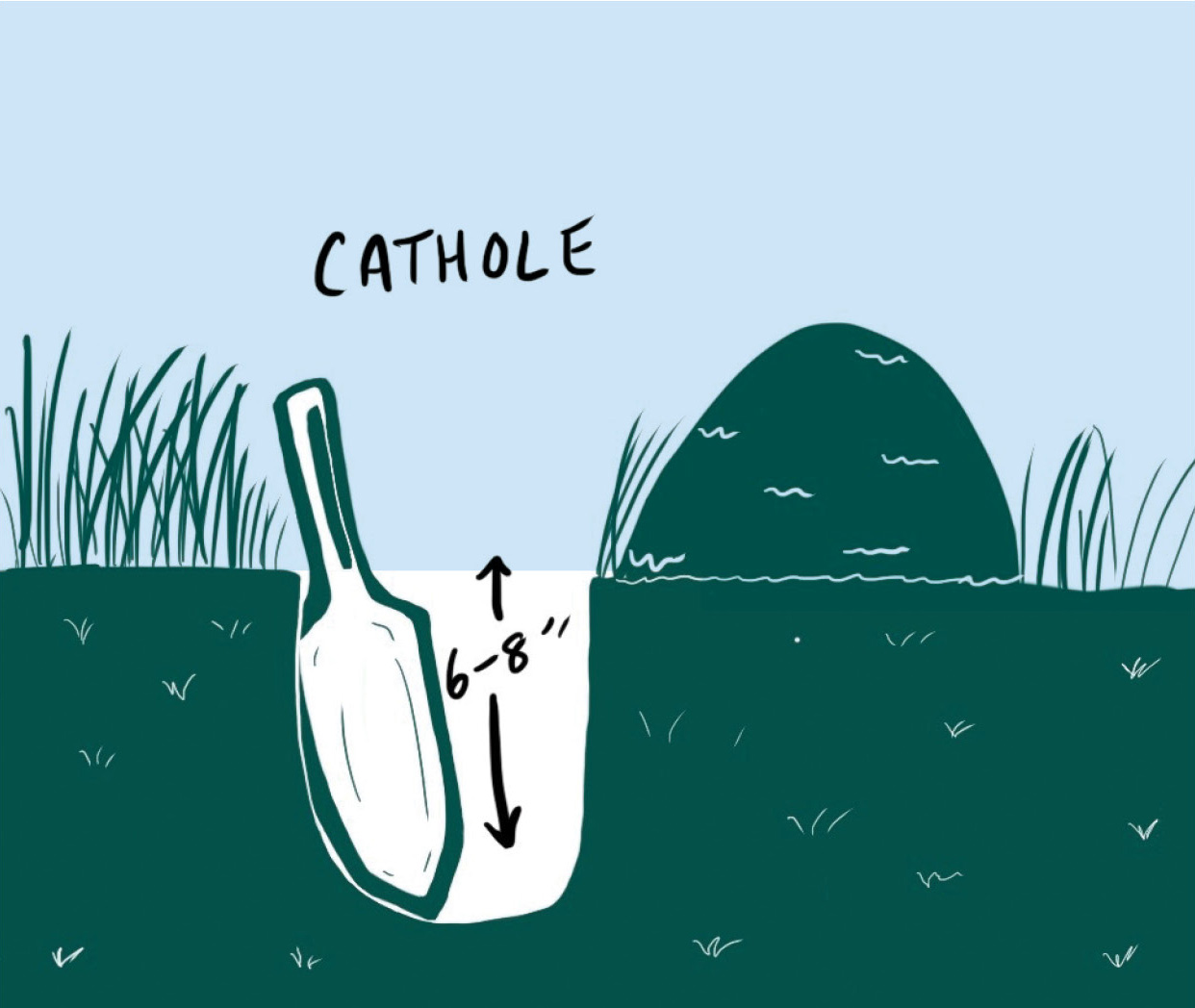
If you don’t have access to a privy, you’ll need to dig a cathole at least 200 feet from water to bury poop or to empty menstrual cups. Graphic by Daniela Velazquez.
Be sure to wash your hands (well away from water) or use hand sanitizer every time you use the toilet.
At least once a day, use a wet wipe or wet cloth to clean yourself off. You’ll be more comfortable and less likely to get chafing or infections. If you use wet wipes, you can dry them out in advance to save a bit of weight, then rehydrate them when you’re ready to use them.
Even if you’re already comfortable with all of these issues in the backcountry, remember that someone you’re hiking with might not be. Be prepared to talk openly. And if you’re sending a pre-trip message, linking to useful resources can help newer hikers feel more prepared.
Newer hikers might drink less water or try to hold it in to avoid going outside, which can make them uncomfortable and is potentially dangerous. By offering answers in advance, you can help avoid that.
Here's some sample text for a pre-trip message, courtesy of Anastasia.
Hygiene is an important part of both staying safe and feeling comfortable while we are on the trail. Proper hygiene can prevent illness and discomfort. If you are not sure how to manage any aspect of your hygiene on trail, please reach out and I will be happy to answer your questions or connect you with additional resources. In order to prepare for things to go right during our time together, I'm going to share information about the toilet "situations" that we will encounter while we are in the wilderness together — as well as resources (link to this article or other resources) on how you can handle your own hygiene properly while on the trail. The information included in this message details the basics of what might be included in your personal hygiene supplies. (Add in a list of supplies, adjust as necessary based on the trip and participants.) Feel free to customize or modify as needed, based on your specific needs.
For this trip, peeing and pooping and periods will need to be managed in the following ways: (List what they will have available to them... i.e. a privy will be available in certain spots, but a cathole will be required in other spots... and/or blue bag will be required).


