


Rebooting trails through planning, partnerships and volunteer power


For 6 years, WTA’s Trails Rebooted work has supported popular outdoor recreation areas to meet the needs of everyone who wants to get outside. It’s been a community effort — trail advocates, WTA members, volunteers and many partners have made this work possible. We’ve helped build new trails in the Teanaway and Lake Whatcom areas, and we’re now assembling a team to look at trails near Mount Rainier.
Noble Knob is one of the gems in the Snoquera region, a glacier-fed landscape northeast of Mount Rainier. When WTA trip reporter Trekski wrote about the trail, they said it offers “nearly constant amazing views” of Mount Rainier and the surrounding area.
But the drive to the trailhead is along 5 miles of a rough forest road that is often blocked by fallen trees and covered with “many sharp rocks that could ruin a tire,” as Trekski wrote. For more people to be able to safely experience Noble Knob and other Snoquera area trails, the right investments are needed.
For 6 years, WTA’s Trails Rebooted work has supported popular outdoor recreation areas to meet the needs of everyone who wants to get outside. It’s been a community effort — trail advocates, WTA members, volunteers and many partners have made this work possible. We’ve helped build new trails in the Teanaway and Lake Whatcom areas, and we’re now assembling a team to look at Snoquera area trails.
 Photo of Noble Knob by trip reporter Trekski
Teanaway Community Forest
New trails completed in the Teanaway Community Forest this summer were built thanks to more than 5 years of work by WTA and our partners. The Teanaway provides critical habitat for wildlife, including salmon. It’s a 1.5-hour drive from Seattle and has trail connections directly into the local communities of Cle Elum, Roslyn and Ronald.
Before the new trails were built, there were 140 miles of pre-existing user-built trails, a clear sign that the public wanted to get outdoors in the Teanaway. Moving user-built trails away from private property and sensitive wildlife spots was a main goal for the Washington State Department of Natural Resources (DNR) and the partners that WTA led with DNR to plan the area’s new trail system.
Partners continued construction on different pieces of trail work: WTA worked on Frog Pond Loop, Evergreen Mountain Bike Alliance on Big Sandy Ridge trail, Mountains to Sound Greenway Trust on Cheese Rock trail and Back Country Horsemen of Washington on Aspen Grove Loop.
 Photo of Teanaway trail work by Reed Waite
Olsen Creek State Forest
In a similar story, years of work by DNR staff, hikers and other outdoor enthusiasts have made it possible to hike at Olsen Creek State Forest near Lake Whatcom.
“Before the new access to Olsen Creek, there were less than 2 miles of sanctioned trails on DNR land in Whatcom County despite the high demand and use,” said Hyden McKown, DNR’s recreation development manager for the Baker District.
In 2016, DNR invited public feedback about improving access to DNR lands in Whatcom County. Hikers, bikers, equestrians, hang gliders and whitewater kayakers provided input that led to the 2019 Baker to Bellingham Non-motorized Recreation Plan. Part of the plan was to create designated trails at Olsen Creek State Forest.
WTA was one of the partners who advocated for the funding for the project and helped build and improve trails once funding was in place. Combining the people power and expertise of different organizations made it possible for DNR to get the work done during the 4-month window when heavy trail work is allowed in this area.
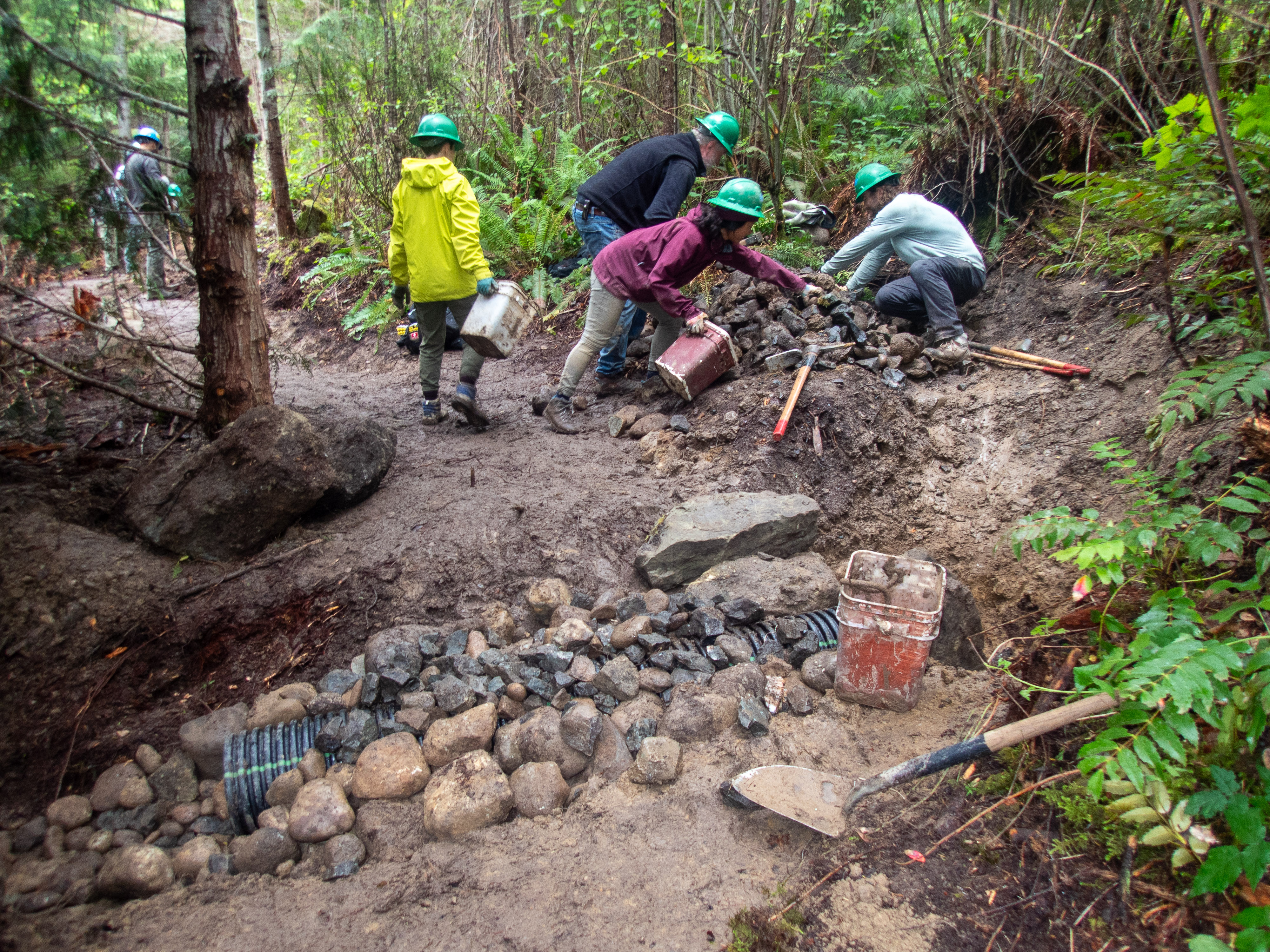 Photo of Olsen Creek trail work by John Storm.
“Seeing this process come to fruition, where we’re actually getting sanctioned recreation on the ground, is a huge win for recreation in general and for all the work that partners and the agency have put into it,” said Arlen Bogaards, WTA’s Northwest regional manager.
“Sanctioned trails enable DNR to reduce environmental impacts while creating more opportunities for people to experience the benefits of the outdoors. This includes the physical and mental health benefits of exercise, forest bathing, equestrian use or just taking in the views of Lake Whatcom, Bellingham Bay and even the Cascades on a good day. This initial phase at Olsen Creek provides more than 7 miles of multi-use trails,” said Andrew Giacomelli, DNR’s Baker District trails steward.
The ultimate goal is a 15-mile loop around Olsen Creek State Forest that offers connections to nearby public lands, such as Lake Whatcom Park. Future work will depend on funding. Sign up for WTA’s Trail Action Network at wta.org/tan, and we’ll email you at key moments to speak up for funding for Olsen Creek and other projects.
 Photo of Olsen Creek trail work by Mike Bellis
Snoquera — Highway 410, near Mount Rainier
WTA’s Trails Rebooted campaign is now looking at Snoquera, a recreation area along Highway 410 that is within an hour’s drive for millions of people. On Snoquera trails, you can enjoy fire lookouts, spectacular views of Mount Rainier and riverfront campgrounds.
Over time, a lack of maintenance on trails and roads has decreased the options for hiking in Snoquera. WTA has formed a coalition to explore how smart investments in trails can reduce recreation impacts and restore opportunities to get outside.
Our coalition represents hikers, mountain bikers, equestrians, motorized users, conservation organizations, Forest Service staff, and trail volunteers who are invested in a trail system that’s good for people and the landscape. Together, we will use the data we collect to make recommendations for sustainable trails.
Meeting the needs of all who wish to experience Washington’s trails improves the health of our communities, and it means that trails will have more voices to speak up for them. Creative partnerships are key to planning the future of Washington’s trail system. Upgrading these trail systems now, with growing demand in mind, will guarantee great experiences on trail for generations to come.
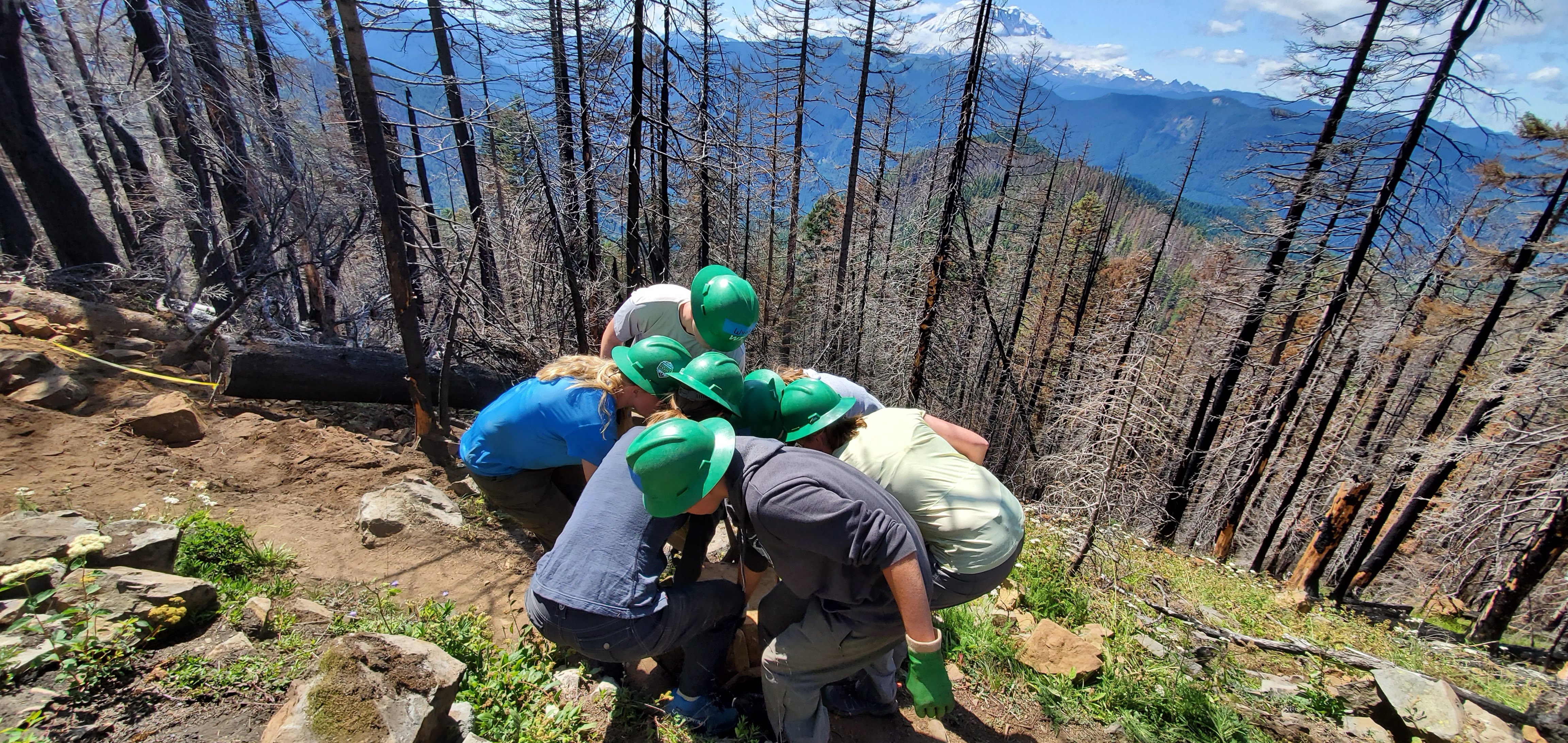 Photo of Noble Knob trail work by Jeremy Tarife
Comments