You are here: Home Find a Hike Hiking Guide Horseshoe Basin

Horseshoe Basin


Featured In: Day Hiking: North Cascades, by Craig Romano.
Buy the full book, including maps, elevation profiles, photos, and more:

» REI » Amazon

A portion of all book sales from the links above benefits WTA and helps protect and maintain our trails.

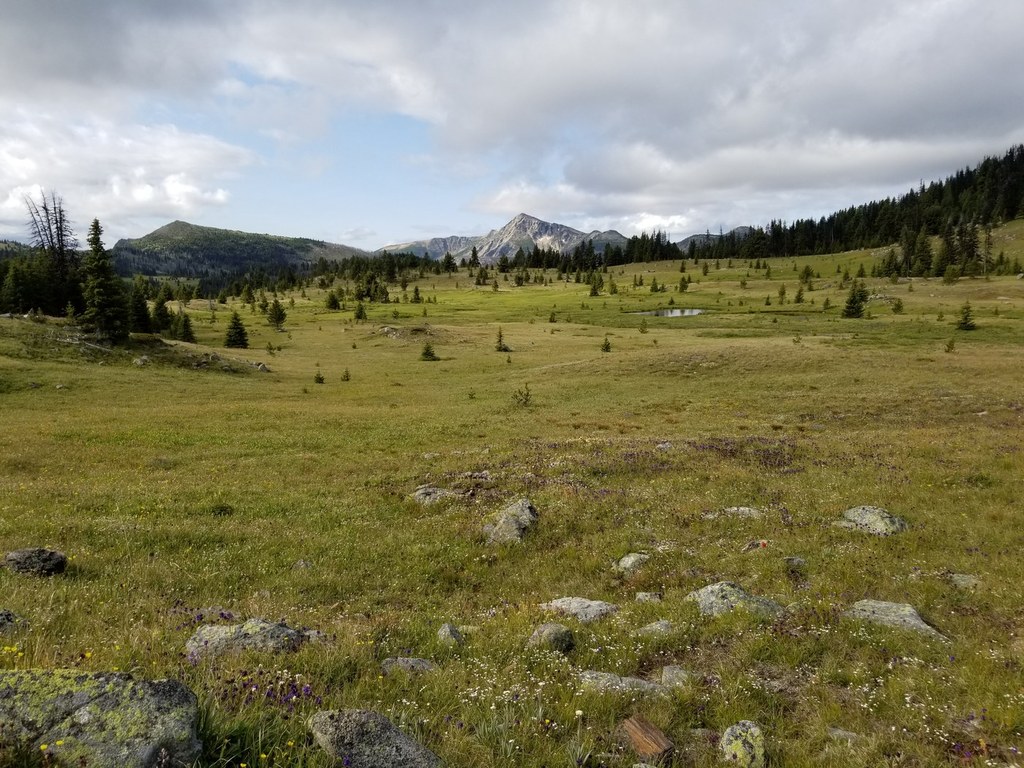
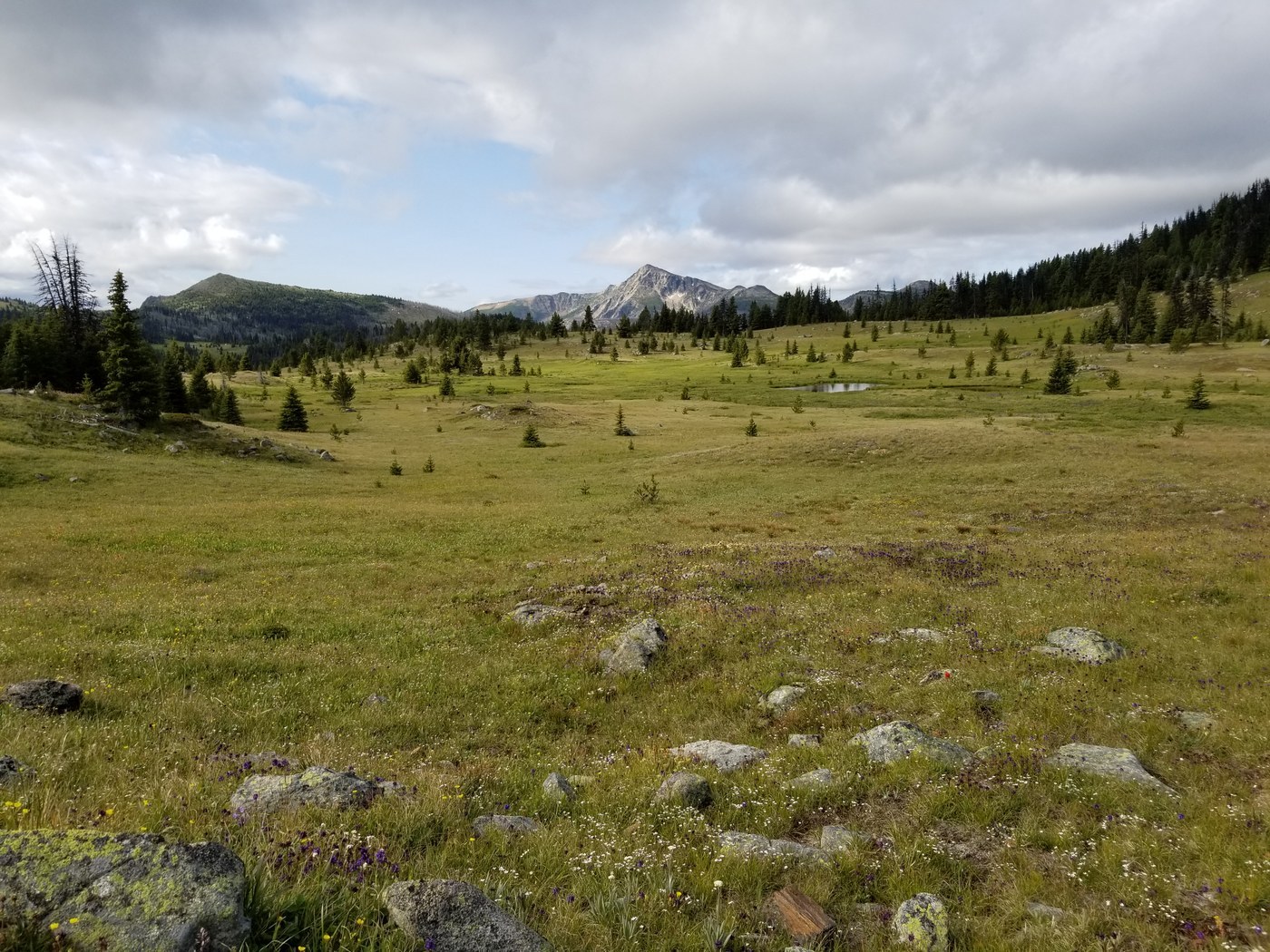
A land of immense natural beauty teetering on the extreme eastern end of the North Cascades, Horseshoe Basin has long been a favorite destination for backpackers. With sprawling alpine tundra, shimmering tarns, a half-dozen wide-open, easy-to-scramble summits, and spectacular wildlife observing, it's no wonder visitors prefer to spend days here. But Horseshoe Basin's fairly easy approach and gentle terrain make it a dead ringer for day hikers too. You won't be able to experience it all. But you'll get a nice taste-and by traveling lightly in this precious area you'll leave less of an impact than all of those backpackers.

Setting out on the Boundary Trail (a 73-mile odyssey across the Pasayten), immediately enter wilderness and begin a slow descent on what was once a service road to a mine. In 0.25 mile cross a meadow with a nice view west to Windy Peak. Then enter lodgepole pine forest burnt to a crisp in the Tripod Fire of 2006, a conflagration that scorched over 175,000 Okanogan acres. Most of the way to Sunny Pass traverses the burn. A healthy forest will return, but in the meanwhile this hike can be hot in summer (no forest cover) and potentially hazardous in strong winds (falling snags).

At 0.7 mile come to a junction with the Deer Park Trail and, shortly afterward, with the Clutch Creek Trail. At 1.5 miles cross a branch of Clutch Creek (elev. 6000 ft) and begin winding upward at a nice grade. Work crews with the Pacific Northwest Trail Association have nicely restored tread and repaired water bars damaged from the 2006 fire.

At 3.3 miles break out from the blackened snags (woodpecker heaven) into a lush verdant meadow garnished with a multitude of wildflowers (bluebird mecca). Sunny Pass shines ahead.

Continue upward through increasingly greener pastures, crossing gurgling creeklets and skipping through showy flower gardens to reach 7200-foot Sunny Pass at 4.8 miles. Horseshoe Basin, with its stable of stunning peaks carpeted in alpine tundra, spreads out before you. Take the trail to the right for closer inspection. In 0.1 mile ignore the Albert Camp Trail by continuing left. And after losing 200 feet in just over 1 mile, arrive dead-on in wide-open Horseshoe Basin. Sit and gape or consider your roaming options.
Driving Directions:

From downtown Tonasket turn left onto the Loomis Highway (signed "Many Lakes Recreation Area") and drive 16 miles northwest to the small village of Loomis. Bear right (north) onto County Road 9425 (Loomis-Oroville Road), and after 2 miles turn left onto Forest Road 39 (Toats Coulee Road). Follow this paved road 13.6 miles, turning right onto FR Spur 500 (signed "Irongate Trailhead"). Continue for 5.8 very rough and slow miles (high clearance necessary) to the trailhead at the road end (elev. 6150 ft). Privy and primitive camping available.

Improve or add to this guidebook entry

Note: the description and driving directions for this Mountaineers Books entry are copyrighted and can't be changed.

Recent Trip Reports

Hiked here recently? Submit a trip report!
There are 48 trip reports for this hike. See all trip reports for this hike.
Horseshoe Basin — Sep 13, 2011 — dbrooks
Multi-night backpack
Features: Wildflowers blooming | Fall foliage
Expand report text Hide report text
We hiked to Horseshoe Basin for our annual back packing trip. What a beautiful place! The weather was perfect the...
We hiked to Horseshoe Basin for our annual back packing trip. What a beautiful place! The weather was perfect the first two days but VERY cold at night. Frost on the ground after spending a quite cool night in the tent. Fantastic sunsets and very few bugs. We didn't know that hunting season started the 15th Lots of hunters. It was suggested by one that we would probably be safe if we just stayed on the trails. Part of the fun of this area is that you don't have to stay on the trails. We decided to hotfoot it out a day early. Didn't really want to be around for the killing anyway. Heard several shots on the way out. The road to the Iron gate trail head is quite a challenge. Would not try it with anything other that high clearance vehicle, but saw big horse trailers at trail head. The horses must have had a very bumpy ride.
Read full report with photos
Horseshoe Basin, Cathedral, Remmel Lake — Aug 22, 2011 — Peter
Multi-night backpack
Features: Wildflowers blooming
Issues: Blowdowns | Overgrown | Mudholes | Washouts | Water on trail | Bugs
Expand report text Hide report text
Day 1: Genesis In the beginning, my friend Paul and I planned to hike about 50 miles from the Irongate Trailhead...
Day 1: Genesis
In the beginning, my friend Paul and I planned to hike about 50 miles from the Irongate Trailhead via Horseshoe Basin, Cathedral Lakes and the Chewuch River to the Cathedral Drive Trailhead. We drove to my friend's dad's house in Leavenworth Sunday night and then to the trailhead the next morning. I parked my car at the Cathedral Drive trailhead (trail 510A) and had Paul drive his jeep up to Irongate. We got a late start and didn't get to the Irongate trailhead until about noon. There is a high-clearance vehicle recommendation for the 6 mile dirt road connecting Toats Coulee Rd to the trailhead, but my 1997 Subaru Legacy made it up fine on the way back. We didn't start hiking until about 1pm so we had about 7 hours to cover 14 miles to Teapot Dome before sunset. The hike out of the parking lot to Horseshoe pass was somewhat challenging given it was uphill and we were carrying 40-50lb packs. On the way, we ran into some hikers and US Border & Customs agents on horseback saying a 71 year-old woman went missing for several hours and was presumed injured or unconscious. A chopper circled the area and they eventually found her. Always let your party know where you're going even if it's to use the bathroom/hole. We hiked fast and made it to camp by 6pm, but didn't realize it wasn't Teapot Dome until the next day. Views were gorgeous through Horseshoe Basin! Wildflowers were in full bloom and the sky was overcast, so temps remained comfortable. A slight rain followed that night. I lost my sunglasses at Horseshoe pass as we ate lunch. The campsite we chose was off to the left of the trail with a stone fire pit, tent area, a marshy grass field and lots of downed trees for firewood. As we set up, I walked over some grass to fetch some firewood out of the woods. Just then it was as if the ground just lifted up and turned into mosquitos! It was terrible as it would be for most of the trip. We poured on the bug spray and net. Paul lived in Alaska before and he said there were more mosquitoes here than there. The crab meat alfredo pasta we had that night made up for it. When you go to the bathroom in the Pasayten Wilderness, be sure to spray bug spray EVERYWHERE. You'll appreciate it the next time you sit down.

Day 2: Any Given Tuesday
It turned out it was a good thing we didn't hike all the way to Tea Pot Dome. There were 5-6 other hikers camped there already so we would've had to camp on the hillside or some other uncomfortable place. We proceeded on to Tungsten Lake. Weather became sunny and hot which is how it would remain for the rest of the trip. In the forested part of the hike, sweat flies landed on us trying to get our sweat. That didn't last too long, though I would take the flies over the mosquitoes any day. We hiked by the old WWII tungsten mine and saw some of the old machinery still there. The mine itself looked like it had been dynamited shut, probably for safety reasons. Afterward, we pushed on to Apex Pass and planned to find a trail that would cut us over to Tungsten Lake, just before Apex Pass. We never found it. Some hikers we met at the tungsten mine said they hiked over the valley and up the hill to get to Tungsten Lake and caught 5 cutthroat trout. On the way to Tungsten Lake, we met a park ranger lady. We talked with her a bit asking about the mosquito conditions at Cathedral Lake. She gave us the thumbs down response. Oh man, it's gonna be a long night. A little ways down we saw another chopper fly overhead...another missing hiker? Bushwacked for a few hundred yards east at Apex Pass but kept running through more and more marshland, but no Tungsten Lake, so we said forge that and found an opening near Apex Pass and camped there. The sky was clear so we didn't bother with the rain-fly. Mosquitoes were out again but not as bad as Day 1.

Day 3: Fishing Heaven, Mosquito Apocalypse
Next day was the easiest hiking day with only 4 miles to hike to Cathedral Lake. The ascent to Cathedral Pass was challenging because of the uphill and heat of the day, but it was short. When we got to Cathedral Pass, Paul wanted to scale Cathedral Peak, so we dropped our pack at the bottom and scrambled to the top. The scramble up taxed our leg muscles but also our lungs. Cathedral Peak is at 7600 feet at the base of the peak and we climbed up to 8600 feet. There were intermittent paths but mostly sand and bushes were our footholds on the way up. We had to climb a few large rocks to get to the top. From the top of Cathedral Peak we could see so far into the Cascade Mountains. Notable peaks we could see were Mt. Rainier and Mt. Baker. Looking closer we could see the top of the Amphitheater, Upper and Lower Cathedral Lakes, and many other ridges and mountains.
After sliding down the mountain in the sand, we set up camp right by Cathedral Lake. We were greeted by a white mountain goat. First thing we noted besides the breat-taking views and the goat was, THE MOSTQUITOES! By day we were followed by flies and by evening hammered by the billions of mosquitoes. Paul would hit my back and kill 5-10 at a time and their numbers never seemed to diminish; instead they seemed grow in number the more we killed them. That didn't stop us from enjoying some great fishing at Cathedral Lake though. Paul casted an ultralight spinning setup and got a fish on his first cast. I used the fly rod and got several on nymphs and woolly buggers. Most exciting was when I casted the bugger over a submerged rock, quickly jerked it away from the rock as if it were an escaping minnow and BAM! it get's eaten by a medium sized cutthroat. Another was a prince nymph that exploded as soon as it hit the water. I lost several flies to fish because I was using 2.7lb tippet, so I switched to 4.5lb test tippet and those held on better. After it got dark we quickly headed for the tent to escape the swarm of bloodsuckers flying around.

Day 4: The Longest Day
Paul decided it would be a good idea to hike a little farther to The Four Point junction, 14 miles away, in order to shorten our final day's hike from almost 10 miles to only about 6. The reason being the last leg was up some really steep switchback, which we might be too tired to climb at the end of a long hike, and because we'd be finishing up close to sunset, forcing us to drive back up the Irongate trailhead road in the dark. The terrain was not difficult at all, but the trail conditions were terrible! We got confused at Remmel Lake where the trail forked but was not marked. We turned toward Remmel Lake and saw a sign for "Remmel Lake Cuttoff Trail" but didn't see it on the map. I bought my Green Trails map from REI last week but it was last updated in 2002. The Remmel Cuttoff Trail was not on it. Also, we didn't know that the part of Trail 510 along the southern part of Remmel Lake was closed. We ran into to hikers at Remmel Lake saying there was a sign in Winthrop saying that portion of the trail was impassable. Paul and I decided to investigate for ourselves and found out that once you reach the south end of Remmel Lake, the trail starts to look overgrown and unmaintained. We did see some fresh horse track through there, so someone went through on horse at least. We however, backtracked another mile back to Trail 565, east of Remmel Lake and connected with the rest of Trail 510 along Remmel Creek to the Chewuch River. This section of trail was absolutely frustrating. It was plagued with overgrown bushes covering hundreds of yards of the trail, followed by muddy patches every tenth of a mile and inconveniently placed exposed tree stumps that trip you before you can see them. Water covered many parts of the trail, sometimes making you think you were following a stream and not the trail. I even saw a fish swim down the trail at one point. In the later sections, huge rocks and drop offs made it really difficult on the ankles. I'm taking Ibuprofen and icing my right ankle as I write this report thanks to that. The Four Point junction camping area was the nicest of them all though and well worth it. The Chewuch River was a stone's throw away, firewood was all around. We even had a fallen tree with small stub sticking out like coat hooks, so we hung all our gear up neatly on those hooks. Best of all, there were virtually NO MOSQUITOES! Thank the LORD for relenting on the bugs for the last night. We enjoyed our best meal then too: Mashed potatoes with peas, bacon, turkey and gravy! I could've eaten the whole pot myself! This was the longest day at 14 miles.

Day 5: A New Hope
The final day we were looking forward to, especially since we were craving some good Mexican food for dinner! The hike out of Four Point junction was flat until we reached the junction to Trail 510A- Cathedral Drive. The hill was so steep, I liken it climbing a ladder made of sand. This went on for about 2 miles until finally, things flattened out and the rest of the hike was through level to moderately-sloped burned forest to the parking lot at the Cathedral Drive trailhead. Paul and I were so glad to get there and find that my car started and was not vandalized. The two water bottles I left in there were still cold! We finished off the great trip with dinner at a Mexican Restaurant in East Wenatchee called El Porton. I finished the large combination with no problem.

Lesson learned from this trip:
- No excuses- do not use brand new boots on a 50 mile hike; break them in first
- Bring more bug spray than you think you'll use
- Lighter is better; leave all unnecessary items at home, pack as lightly as possible
- Light Pack- I borrowed my neighbor's 2.5lb pack vs. my 7lb pack; I can still walk
- Sandals- You'll want to have your boots off for more than just the night
- Socks- As Lt. Dan said, "Keep your socks clean!" Bring a new pair for each day
- Water- drink more than you think you need; I wish I had 2L instead of just 1L
- Minimize items that "hang" from your clothes or bag; lost my sunglasses that way
- Check with the local ranger prior to the trip to find out if there are any discrepancies between what your map says and what is actually there.


Read full report with photos
Horseshoe Basin, Cathedral Lake, Tungsten, scheelite pass (#533), apex mountain — Jul 28, 2011 — TreeLady
Multi-night backpack
Features: Wildflowers blooming
Issues: Blowdowns | Snow on trail | Bugs
Expand report text Hide report text
Chasing a favorable forecast, hardy hiker spouse and I bit off the 6-hour drive from Issaquah to finally hike the...
Chasing a favorable forecast, hardy hiker spouse and I bit off the 6-hour drive from Issaquah to finally hike the boundary trail from Iron Gate through Horseshoe Basin to Cathedral Lakes. Due to the late season we lucked out and hit the peak of the wildflower season (and, unfortunately, the mosquito season too) along the hike. It's definitely worth the drive!

The drive mostly followed highway 97 up the westside of the Columbia and then along the Okanogan River. First time up there and we were amazed at the lush extent of the orchards! In Tonasket we turned left on 4th street, then left on highway 7 which turned into Loomis-Oroville Road. Passing through Loomis (don't blink!) we drove along a lovely reservoir and side valley, then turned left on Toats Coulie road which alternated (bumpy but patched) pavement and (washboardy) gravel several miles to a sign on the right for 'Iron Gate Trailhead'. Shortly after the sign, FR 500 cuts off - the infamous Iron Gate access road. It lives up to its reputation with a very narrow track, lots of rocks and deep runoff-ruts. Still, our passenger car was able to make it just fine going slow and aiming precisely to avoid getting high-centered. I would not want to do this with a low-clear car, but 4WD is not required (at least not during dry weather). After climbing steadily about 30 minutes on 500 we rounded a corner and there was the trailhead parking area, with three horse trailers and about 8 cars - UH OH!! Crowds? Horse piles? Still, we resolutely loaded up and set out at 2:05 PM on the trail which was clearly marked at the northwest corner of the parking area, along an old abandoned roadbed.

The trail started in lodgepole pine-fir forest and proceeded that way for about a mile, passing the junction to the Deer Lake and Windy Pass/Clutch Creek trail crossing, before passing into a very large burn which continued for nearly 5 miles almost to Sunny Pass. Skeleton trees but very vigorous regeneration of lodgepole and fir seedlings underneath, and lots of fireweed and lupine. The first 5 miles climbed gradually, then more aggressively, up successive steps first to a field of large picturesque white boulders and finally rounding a bend into the expanse of Sunny Pass with great views south and also north to Albert peak and Horseshow Basin meadows. A couple of lovely camps just before the pass. The junction for the Windy Pass loop (back to Iron Gate via Clutch Crk trail) cut off right at the top, though there was no sign for the pass. Continuing straight we arrived at Horseshoe Pass 2.5 hours and 6.4 miles later. Again no sign for Horseshoe Pass, just a sign for Goodenough Mountain trail going right. Meadow expanses in all directions and a very nice camp just up to the right of the junction, where we met some women who had come with horses and offered us some fresh cherries from their trees - thanks ladies!

Turning left there to continue on the boundary trail, we crossed a creek and more meadows and found Louden Lake on the flank of Rock Peak about a mile past Horseshoe Pass. Footpaths everywhere but no obvious camps - you really have to look! Someone had found a camp up above the lake to the right, and we wound around behind the lake on the left to find a couple of nice camps, choosing one to pitch our tent. Few good options to hang food, a consistent situation throughout this hike, as were the swarms of mosquitoes, but great views and I really enjoyed the evening sitting on the hill looking out over the lake.

The next morning we set out with Scheelite Pass as our objective. The trail rounds Rock Peak with views far north into Canada, descending slightly before passing around a small tarn and climbing up and south onto the shoulder of Haig Mountain. Once at the top the views really opened up to the south and west and we could see not only Windy Peak towering to the south but also Remmel Mountain and distant peaks of the North Cascades crest. The forest type throughout the high country was a fascinating and lovely mix of subalpine fir, lodgepole pine, whitebark pine, spruce (Englemann?) and lovely freshly-flushed subalpine larch, very open and interspersed with grassy meadows and white boulders as well as charred snags. The trail rounded Haig Mountain, descended and then climbed slightly traversing back into creek drainages and then back out around the shoulder of Teapot Dome (you only know you're there when you can look up and see the black-streaked dome above you). Some very nice camps heading up to and around TEapot Dome, with plenty of water throughout, at least this time of year.

From a high point on the side of Teapot Dome the trail descended to Scheelite Pass at about 18 miles from the trailhead, a broad flat spot covered in lodgepole pine with many very nice camps. Few if any good camps between Loudon and Teapot Dome though you might be able to find a small flat spot between rocks in the meadows if in dire need (but that would be poor 'leave no trace' practice!). We crossed water often along this section but not clear how many of the streams last through the dry season.

Because of the very flat trail we made excellent time to Scheelite, arriving there at about noon. AFter a snack we headed on with a plan to camp 3 miles further on, at Tungsten mine, where several other hikers said they had camped. The trail descended steeply from Scheelite (the steepest elevation change on the whole trip) and then continued to traverse with slight ups and downs around the south facing slopes until we came upon the Tungsten cabins, and slightly downhill from them, the junction with the Tungsten creek trail to Chewuch creek (8 miles down). We found a large, though swampy and buggy, camp just beore the cabins, checked out the mining debris and cabins (apparently maintained, just barely, by the boy scouts) and the outhouse with brand new hardwood toilet seats!

Our original plan had been to reduce our total mileage to and from Cathedral Lakes by making a loop out via Tungsten Creek, down to Basin Creek, and back up and out via Windy Pass and Clutch Creek trail. However, having checked out the depth of the drop to the valley bottom we decided to make a base camp at Tungsten, go out and back to Cathedral lakes with daypacks, and then retrace our steps along the boundary trail instead.

The third morning, we donned our daypacks for a short (40 minute) modest climb to Apex Pass (no camps along this section, though previous trip reports and indicated there were camps). Based on strong recommendations from other hikers we cut south up the ridge and made the easy climb to the top of Apex Peak for jaw-dropping 360-degree views including Glacier Peak to the southwest and Mount BAker-Shucksan to the west, plus the glory of the (still snowy) North Cascades. To make the climb, go just barely over the crest of Apex Pass and cut south across the open (boggy) meadows through the larch, aiming for the bouldery ridge to your right to avoid the cliffs. The high point had a small canister marking the spot.

Descending from the peak we headed on down from Apex Pass, around and back up, traversing to Cathedral Pass. Still a snowfield to cross multiple times as the trail switchbacked up to the pass, but mushy so safe with our poles. I would not want to have to cross it without poles.

From Cathedral Pass it would have been an easy scramble up to the top of Cathedral Peak but we decided to get a snack overlooking the lakes (barely melted below) and then head back so that we could get a ways back toward the Basin for our third night's camp. By then we had the idea that we could make great mileage on this gentle trail so hoped to be able to get out a day early. As expected we made it to Scheelite by about 3PM and took one of the nice camps there. We made a 6:20AM start the next morning and were able to make our way the 18 miles back to the car by 12:30PM.

Saw very few people, and the trail was extremely well maintained. Though this trail is obviously used by pack animals they did not have the extreme negative impacts of some heavily used pack trails and their impact was minimal overall. Our only suggestion would be that there be more formal camps established along the route to protect the meadows. Bring your 100% DEET!!
Read full report with photos
Horseshoe Basin — Jun 30, 2010 — brand
Overnight
Issues: Mudholes | Water on trail | Snow on trail
Expand report text Hide report text
Trail begins on the Boundary trail in dense forest burned by the 2006 Tripod fire. At .7...
   Trail begins on the Boundary trail in dense forest burned by the 2006 Tripod fire. At .7 mi. the Deer Park trail branches off to the right and just after the Windy Peak trail takes off to the left. Both of these can be taken to reach Horseshoe Basin, but we kept straight for the more direct option.
   At 1.5 mi. cross Clutch Creek, and at just over 3 mi. the trail briefly opens up to grassy meadows filled with yellow-bellied marmots. Take a pause to listen to the marmots whistle back and forth across the meadow just before re-entering burned forest.
   Soon views to Windy Peak open up on your left, and to Sunny Pass ahead. Just before Sunny Pass there's a great campsite just off the trail, but continue to the basin where there are many more options. At Sunny Pass we hit snow patches which continued intermittently the rest of the way to Horseshoe Basin.
   The snow got deeper and more frequent the closer we got to the basin, finally thinning out at the basin. At Horseshoe Pass, the way to Smith Lake looked like a rough go due to deep snow, so we went left toward Loudon Lake, finally setting up camp north of the lake. The basin is open for miles, begging for exploration with several nearby peaks waiting to be scrambled.
   We planned on spending day 2 exploring and scrambling Armstrong and Arnold Peaks, but unfortunately a cold front moved in and it began to snow which we just weren't prepared for so our trip was cut one day early. We'll definitely be making a return trip here as soon as possible.
Read full report with photos
Windy Peak, Cathedral Lake, Horseshoe Basin (Pasayten) — Aug 05, 2009 — Chris
Multi-night backpack
Features: Wildflowers blooming | Ripe berries
Issues: Overgrown | Water on trail | Bugs
Expand report text Hide report text
This was about a 50 mile hike starting at the Iron Horse Trailhead in the Okanagan National Forest. We...
This was about a 50 mile hike starting at the Iron Horse Trailhead in the Okanagan National Forest. We hiked up to Windy Peak the first day - about 5 miles. The trail was in good condition, although parts of the trail that leads to the backside of Windy Peak was a little overgrown, though it was not hard to follow. We camped at the top of Windy Peak, very close to where the trail hits a plateau.

From there, we hiked from Windy Peak to Topaz Mountain and down to the Chewuch River (trail #360). The forest was mostly burned out and looked like a fire had taken place there very recently - within the last few years. The trail was difficult to follow in places, but previous hikers had drawn arrows in the mud in the tricky spots. More difficult than we were expecting, the hike down to the river was steep at times and got kind of rough on our knees by the time we reached the bottom.

From here, the trail widens up and becomes much better maintained. You follow the river for a while until you hit the trail that heads up to the Cathedral Lakes area. Very beautiful sections of trail, this was one of my favorite sections of the hike. Hiking through a beautiful meadow, you eventually get to the lakes. We camped at Upper Cathedral Lake, and were visited by some mountain goats in the morning.

From here, the trail goes through a pass and takes you past the old Tungsten Mine. Eventually, the trail winds around a few ridges to eventually take you down to the Horseshoe Basin. The trail was in good condition this entire time. Horseshoe Basin is fantastic - a must-see for all Washington hikers. The trail from the basin back to the trailhead is in fine condition. Overall - a fantastic (but pretty tiring) hike! Probably the biggest issue was the many, many mosquitoes at most of our campsites - particularly at Upper Cathedral Lake and Horseshoe Basin, but they were present almost everywhere we stopped.
Read full report
horseshoe pasayten by '2 old hikers'.jpg
The rolling hills around Horseshoe Basin invite lots of wandering. Photo by Trip Report poster '2 Old Hikers.'
Location
Boundary Trail (#533)
North Cascades -- East Slope
Okanogan National Forest, Tonasket Ranger District
Statistics
Roundtrip 12.0 miles
Elevation Gain 1550 ft
Highest Point 7200 ft
Features
Wildflowers/Meadows
Mountain views
Wildlife
Ridges/passes
Established campsites
User info
Dogs allowed on leash
May encounter pack animals
Guidebooks & Maps
Day Hiking: North Cascades (Romano - Mountaineers Books)
Green Trails Horseshoe Basin No. 21

Improve or add to this guidebook entry

Note: the description and driving directions for this Mountaineers Books entry are copyrighted and can't be changed.

Map it
Red Marker Horseshoe Basin
48.9085833333 -119.904066667
  • Volunteer Vacations 2012
(48.9086, -119.9041) Open in new window
Document Actions
  • Email this page
  • Print this
  • Share
Log in


Forgot your login name or password?
New user?


Email Newsletter

Get Trail News each month hiking tips, trail ideas, action alerts.

Connect with us

Facebook_icon2 twitter_icon RSS_icon

Featured Member
Footer
powered by Plone | site by Groundwire and served with clean energy