


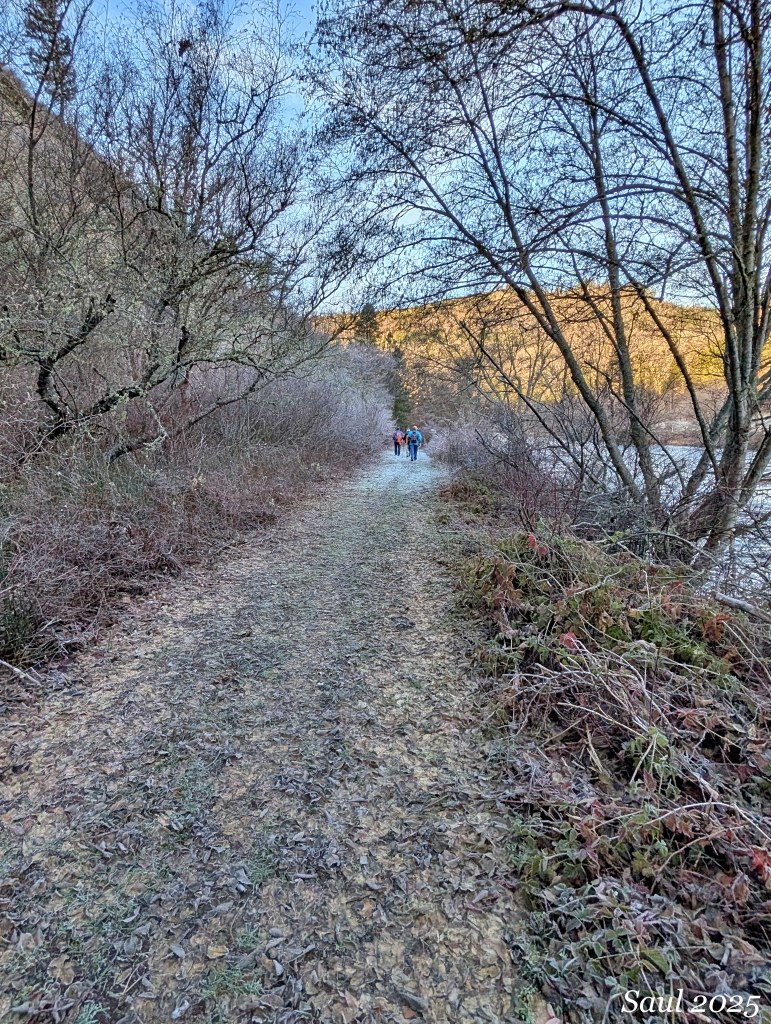
We closed out 2025 with a hike on the Mineral Springs section of the Klickitat Rail Trail, starting from the Wahkiacus Trailhead.
To reach the Wahkiacus Trailhead: From SR 14 at Lyle, drive 16.5 miles up the Klickitat River on SR 142 through the town of Klickitat, and then make a right onto Horseshoe Bend Road. Cross the bridge over the Klickitat River and drive 0.1 miles to make a right onto Schilling Road. Immediately turn right again into the parking area for the Klickitat Rail Trail. A portable toilet is available at the trailhead.
Our hike was 6 miles round trip with about 75 feet of elevation gain on the return stretch as we hiked upriver.
It was our coldest hiking day so far this winter, 26 degrees when we started and still in the 30's and frosty in the shade when we ended.
State Parks has widened and brushed the trail to allow four-wheel-drive trucks to traverse it in advance of construction to replace the missing trestle across the Klickitat River in 2026. No more climbing through the brush that had grown across the trail (former railroad bed).
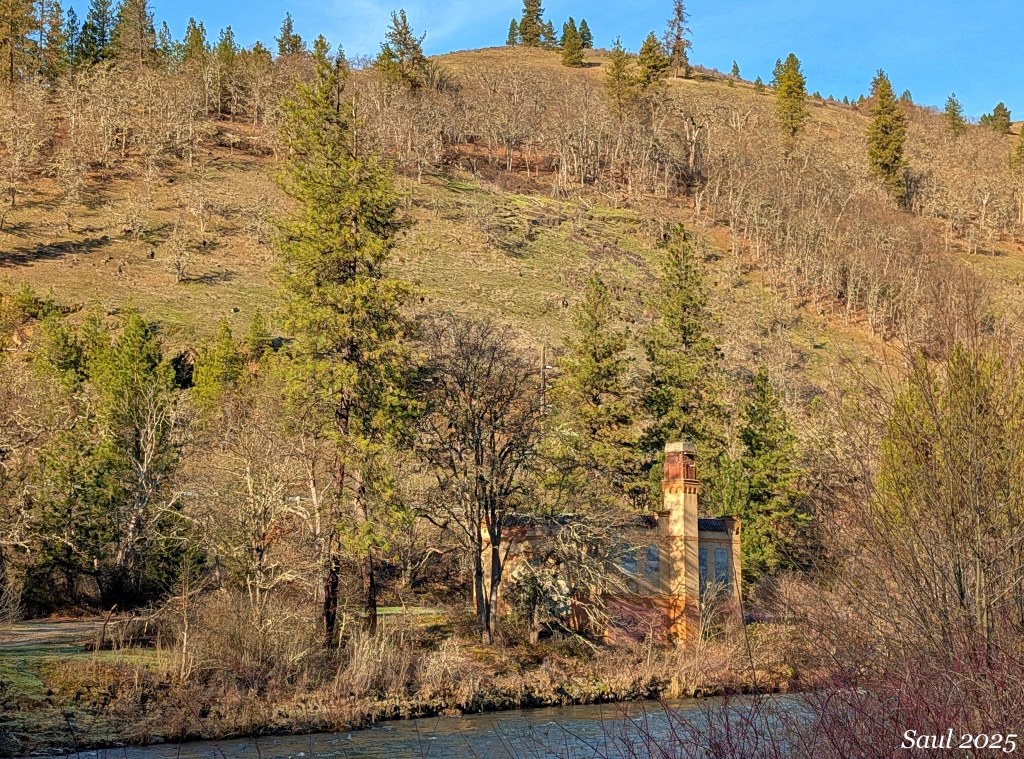
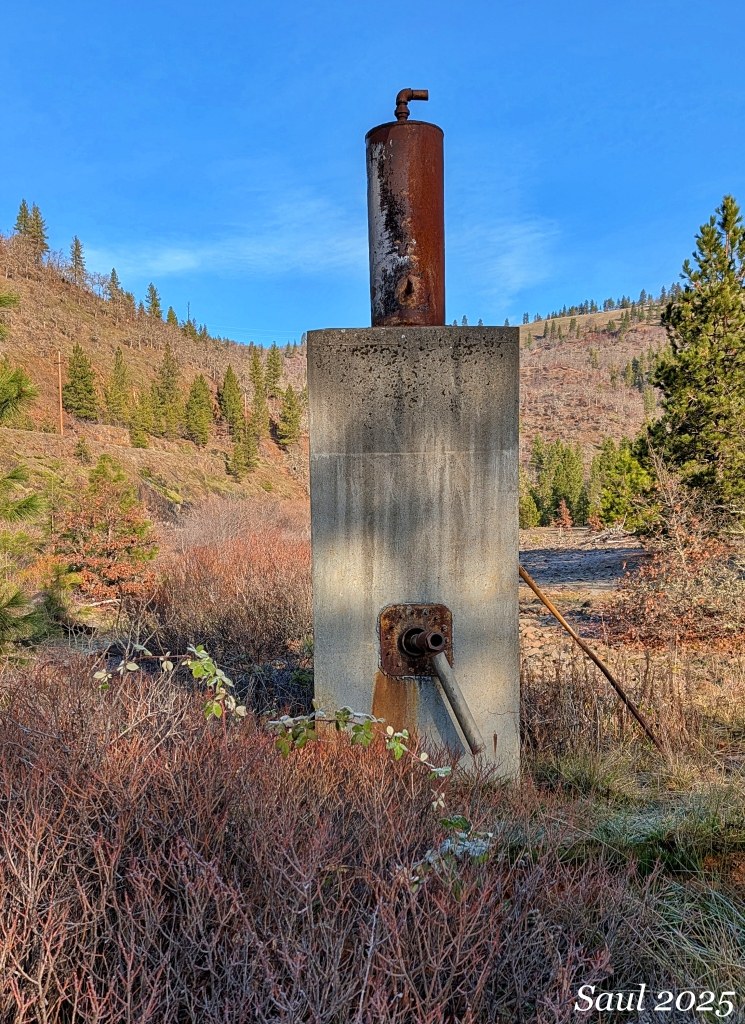
We hiked quickly to stay warm until we rounded the bend into sunshine at the historic Klickitat Mineral Springs. We explored the three mineral springs visible along the trail and looked for views across the Klickitat River to the former mineral water bottling and dry ice plant.
According to Washington State Parks: The indigenous people of the area communally used the Klickitat Valley’s carbonized mineral springs for medicinal and ceremonial purposes for thousands of years. Euro-Americans attempted to profit from the resource.
In 1890, James A. Rusk (father of mountaineer-conservationist C.E. Rusk) constructed the Mineral Springs Spa near today’s trail, and beginning in 1902, a series of entrepreneurs operated a bottling plant and marketed local mineral waters with added sugary syrups as “Klickitat Mineral Water,” “Klickitat Pop,” “Merry Mix,” “Whistle,” “and “Mineral Ale.”
In 1928, Warren Langdon purchased the site and built a larger plant across the river from today’s trail. The product continued to sell, using the railroad for shipment to regional markets until the Great Depression, competition from other producers, and the death of Langdon shuttered the plant.
In the early 1930s, Ray Newbern invested $200,000 in the plant, converting it to manufacture dry ice from the carbon dioxide in the spring water. He found a ready market for the product during World War II, as applications included inflation systems for lifeboats, pontoons, and life jackets, as well as food preservation, firefighting and gasoline tank stabilizers. The plant continued to operate until 1957.
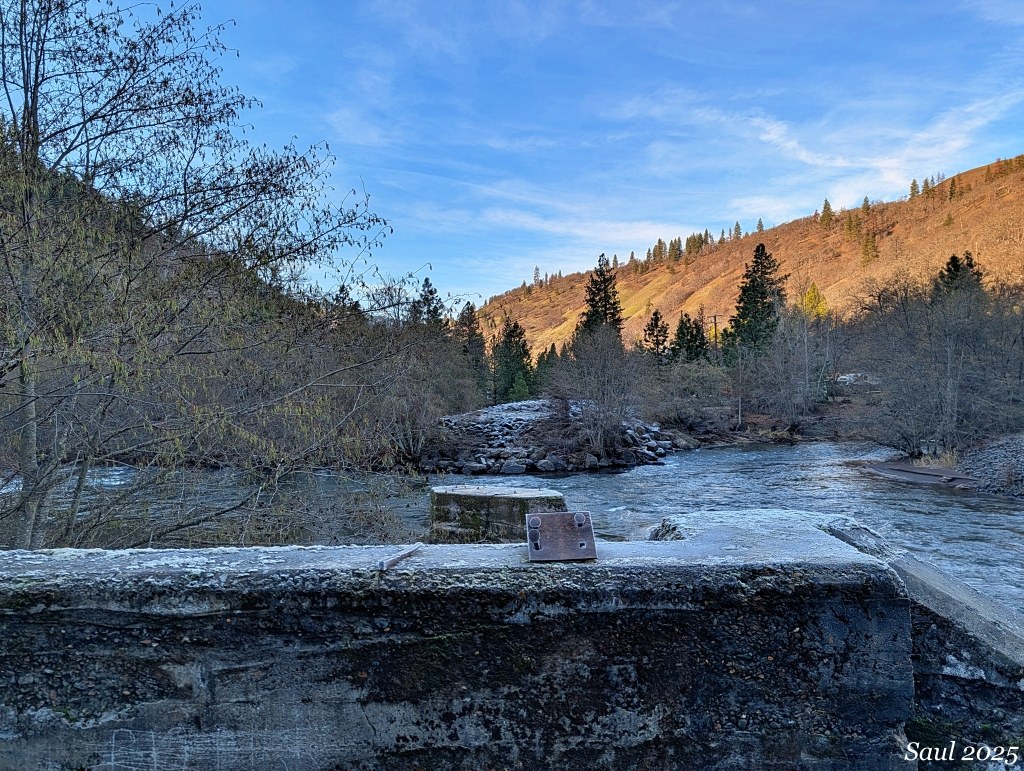
Beyond the Mineral Springs, we went back into the cold shade to continue hiking to the gap in the trail where a railroad trestle used to cross the Klickitat River. The trestle either washed out or was removed during the 1996 Flood.
State Parks has provided a picnic table overlooking the Klickitat River at the missing trestle which we used as our lunch stop before heading back the way we came.
Comments