


Type of Hike
Day hike
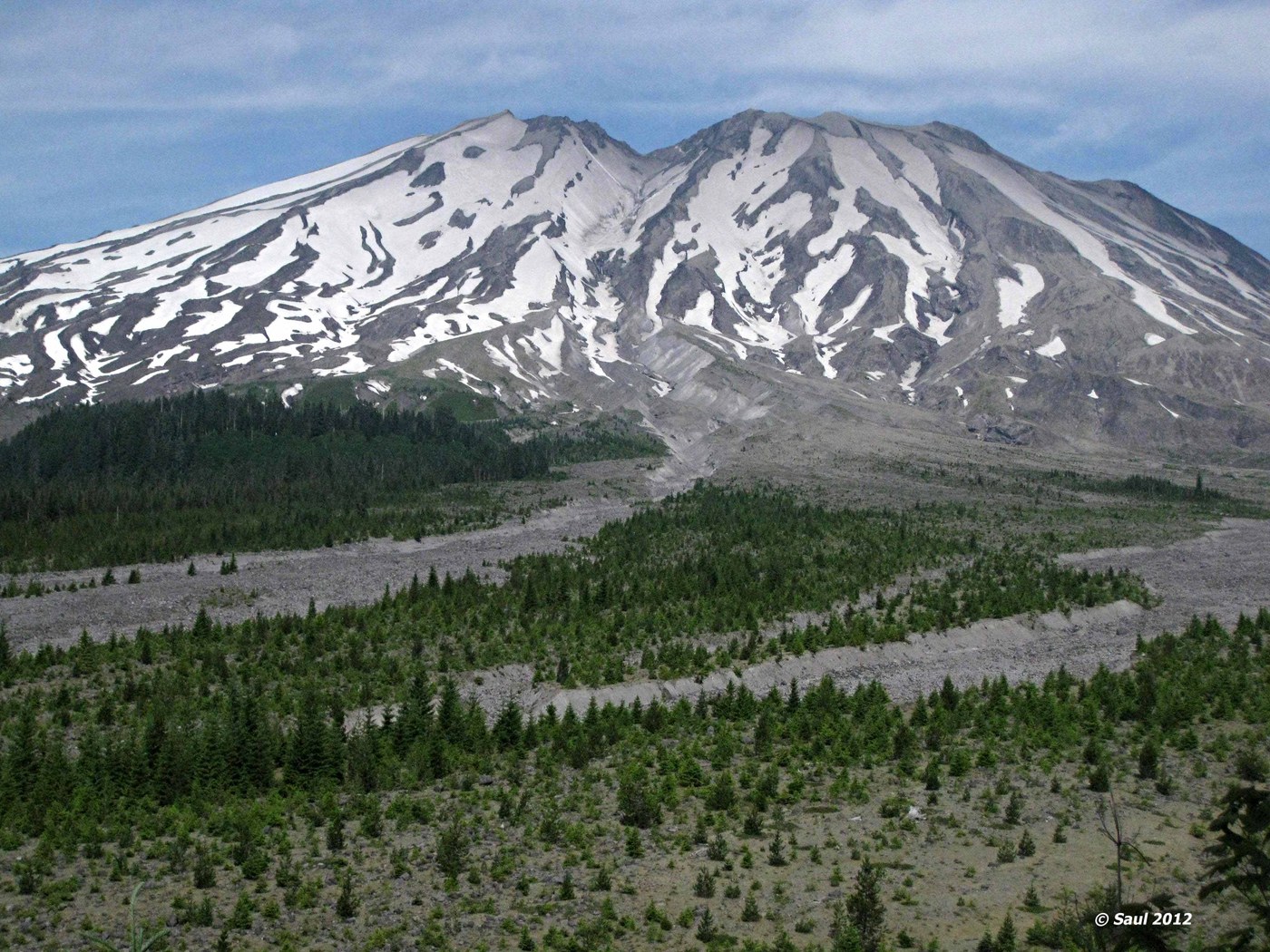
Ape Canyon Trail is one of my annual hikes on Mount St. Helens. It traverses a diversity of landscapes, climbing from the edge of the Muddy River lahar along a forested ridge to the pumice desert at the head of Ape Canyon and the Plains of Abraham.
Do not believe the sign at the trailhead. It says 5.5 miles to the Loowit Trail; the actual distance is around 4.25 miles. Since the Loowit Trail junction is beyond Ape Canyon, the distance to the canyon is closer to 4 miles.
If all you want to see is Ape Canyon, you can turn around there. I always go another mile or so to the Plains of Abraham. There is a terrific lunch spot and turnaround point at the cliff edge that offers grand views of Mount St. Helens and Mount Adams. The full distance is about 11 miles round trip and 1,900 feet of elevation gain.
Last year, we saw several mountain goats near our lunch spot; none were visible this year, but I did see goat hair caught in a willow beside the trail, so the goats are still around.
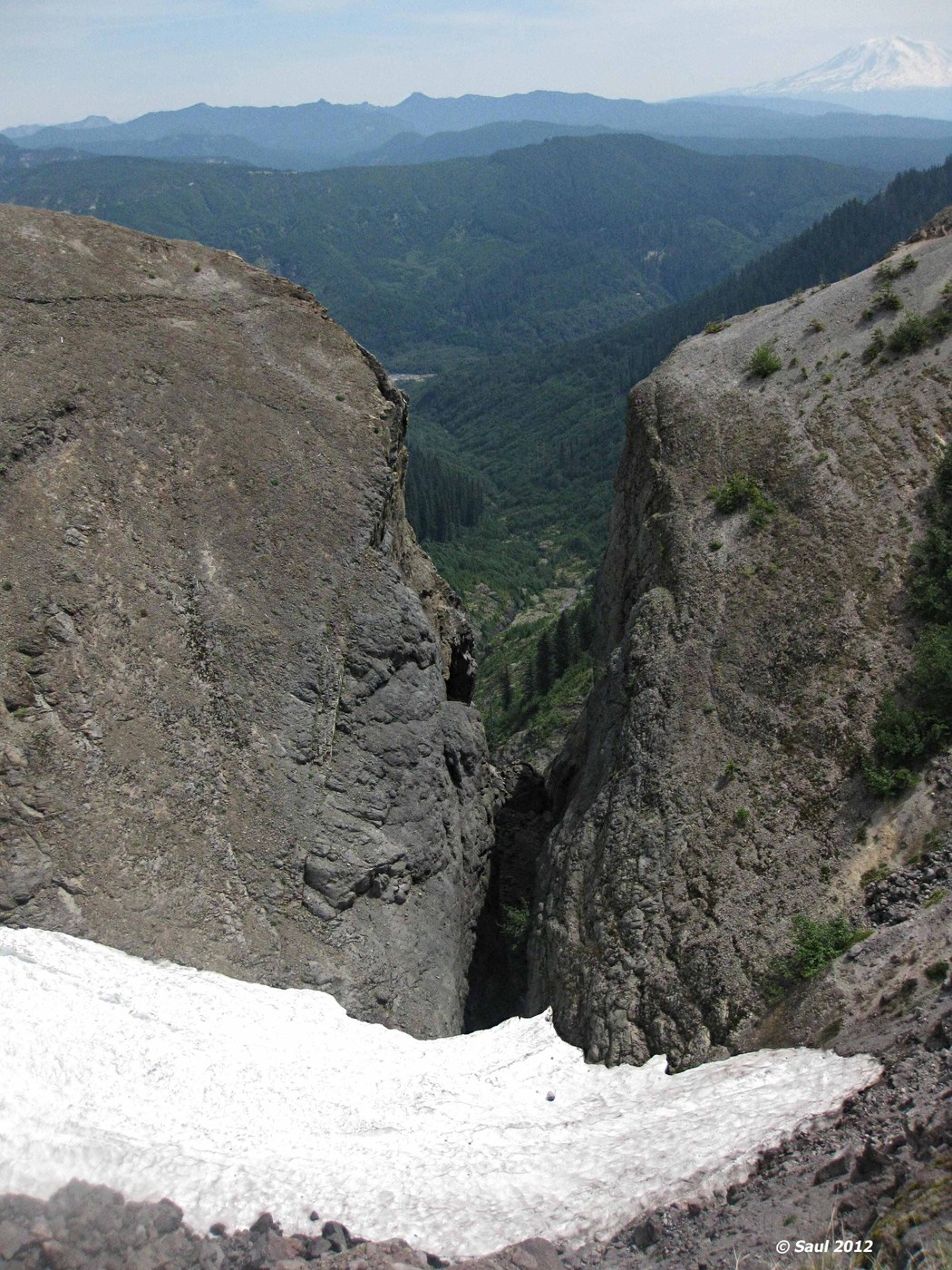
Every year offers something different to see. This year, it is the remains of a snow avalanche off of Mount St. Helens at the head of Ape Canyon. Normally this area looks like a dry, rocky river bed. This year, however, it is full of snow -- the first time I have ever seen it like that.
Ape Canyon got its name in 1924 when some miners, who had a cabin in the valley below at the foot of the canyon, reported to the Forest Service ranger at Spirit Lake that someone was throwing rocks off the cliff down on them. Unbeknownst to the miners, the ranger called all the boys at the YMCA camp on Spirit Lake "little apes." When he replied to the miners that it must have been the apes, they took him seriously. When the ranger realized he had the opportunity for a practical joke, he played it up. "Oh, I think some apes threw them down on you, all right. Haven't you heard of the apes up there? The apes roll those rocks down." The miners' story spread, and soon it was known at Ape Canyon.
The full story is recounted in "Spirit Lake People" by Alan Guggenheim.
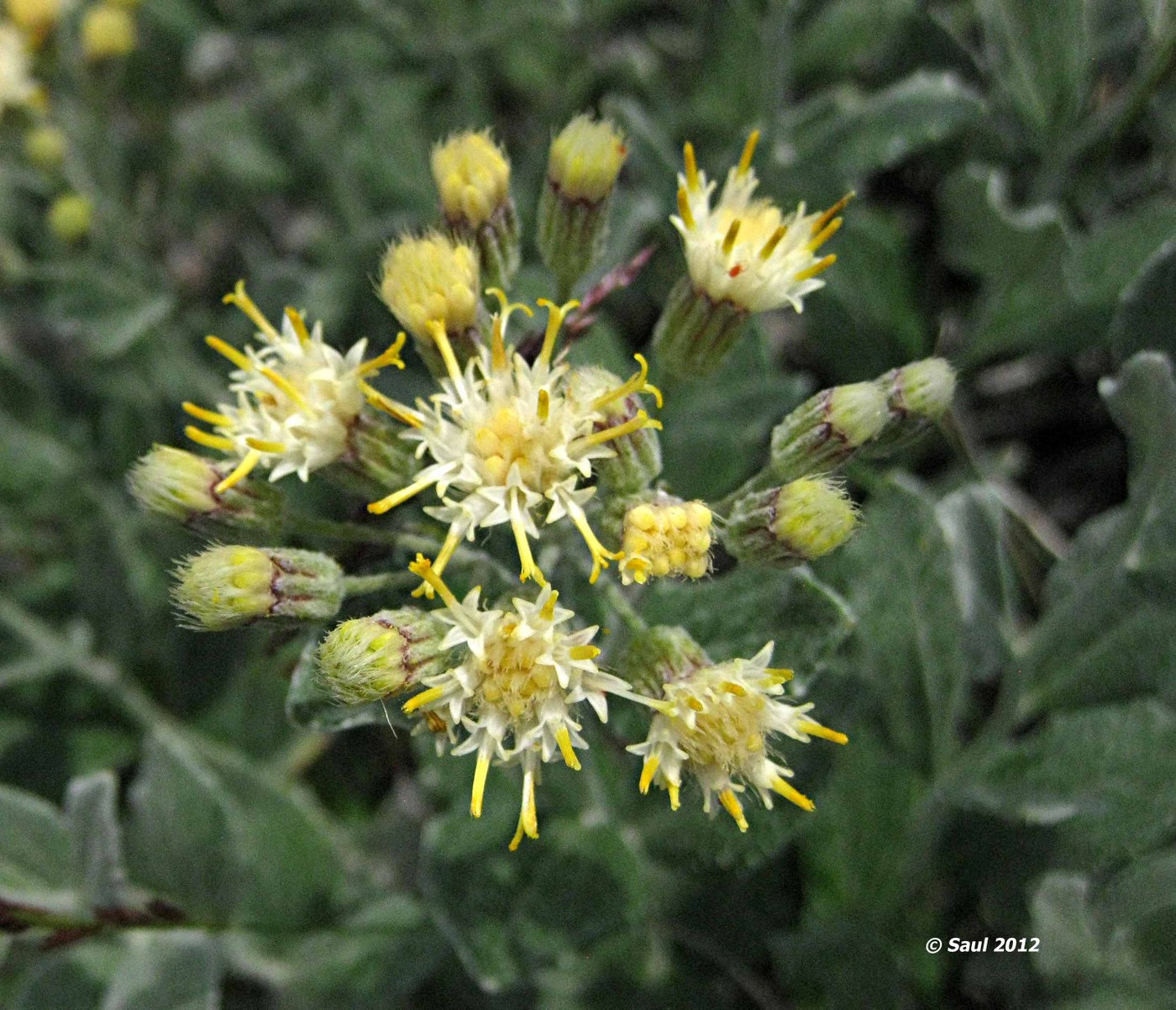
Since the Ape Canyon Trail goes through different habitats, it offers lots of wildflower species. The trail starts in an old clearcut, now reforested. After about 1.5 miles, the trail goes into old growth forest. Admire the huge Douglas-firs, western red-cedars, and western hemlocks as you hike up a set of nicely graded switchbacks. The trail attains the ridgetop, passes some openings, crosses back and forth over the ridge, and descends through a saddle before the final climb and ridge cross-over.
The trail breaks out of the forest just a few hundred yards before it reaches Ape Canyon. The vegetation changes dramatically from forest to pumice desert.
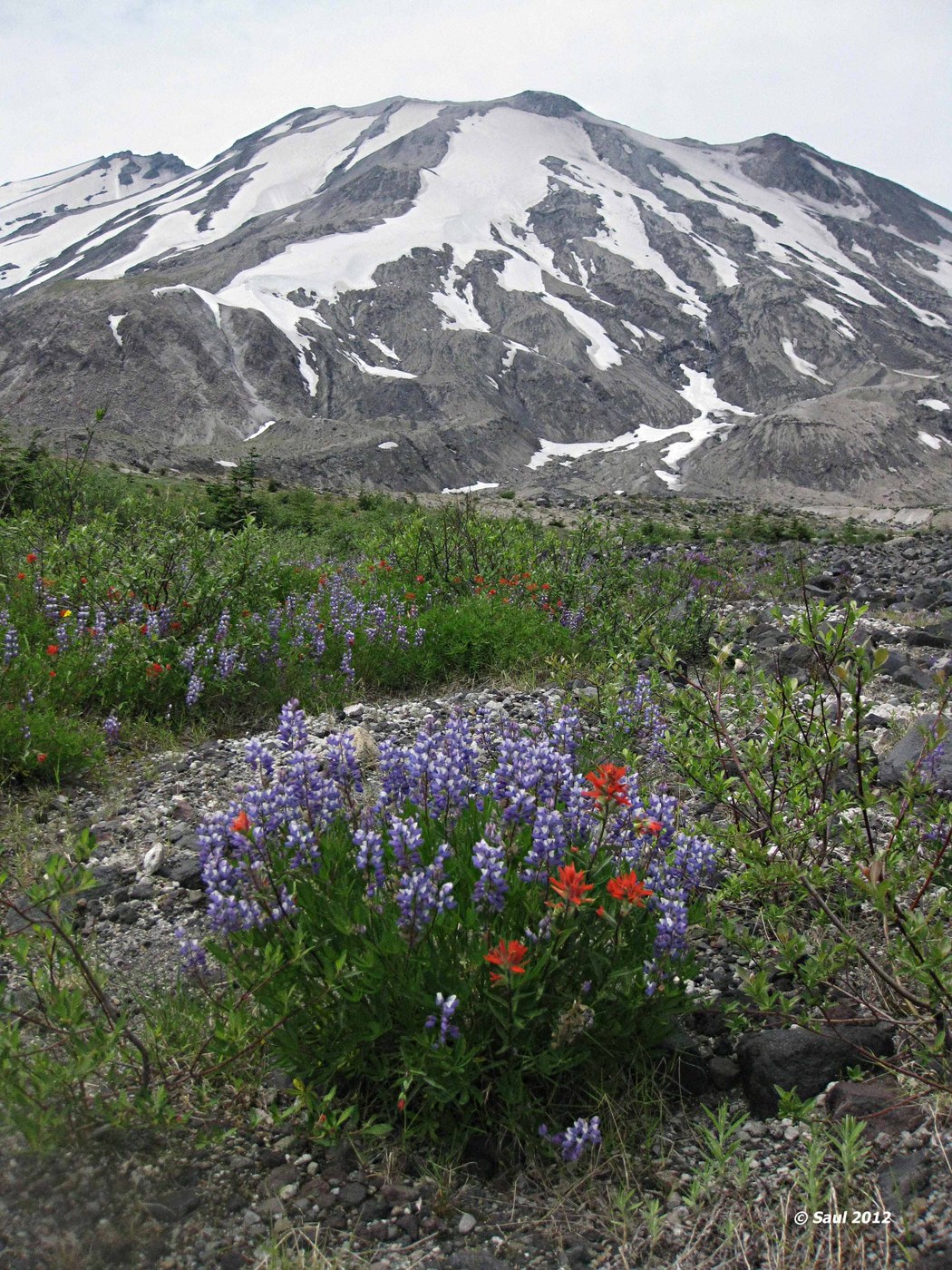
Before the 1980 eruption, the Plains of Abraham were a green paradise of meadows, flowers and streams. The Plains are slowly being recolonized by pioneer plant species like lupines and penstemons. It is interesting to watch the changes from year to year, all beneath the east face of Mount St. Helens.
Comments