


We hiked up the Ridley Creek trail to the Park Butte Lookout this past Saturday and slept overnight at the lookout.Most of the logging road along the middle fork of the Nooksack river is in very good condition. However, about five miles or so is filled with large potholes. It's passable with smaller sedans, you'll just have to take it slower.
The bridge over the Nooksack is in good condition, which is very good because that'd be difficult to cross otherwise. The first couple miles of trail are in the woods. Volunteers have down a great job maintaining the trail and adding a couple log crossings. There's a couple small streams where it's useful to have hiking poles to add in keeping your feet dry. Small plants are slightly overgrowing the side of the trail in spots.
The switchbacks gain elevation with purpose, starting a little over a mile in. We hit intermittent snow at about 4,200 ft elevation. At 4,300 ft the trail was completely snow covered, in a couple feet of snow. Sheltered from the sun, it may take a couple weeks to melt out completely. Post holing in the water soaked meadow becomes a hazard. Route finding becomes an issue as well. We were very glad to have a GPS, since it was so foggy we couldn't see an 1/8th of a mile in front of us.
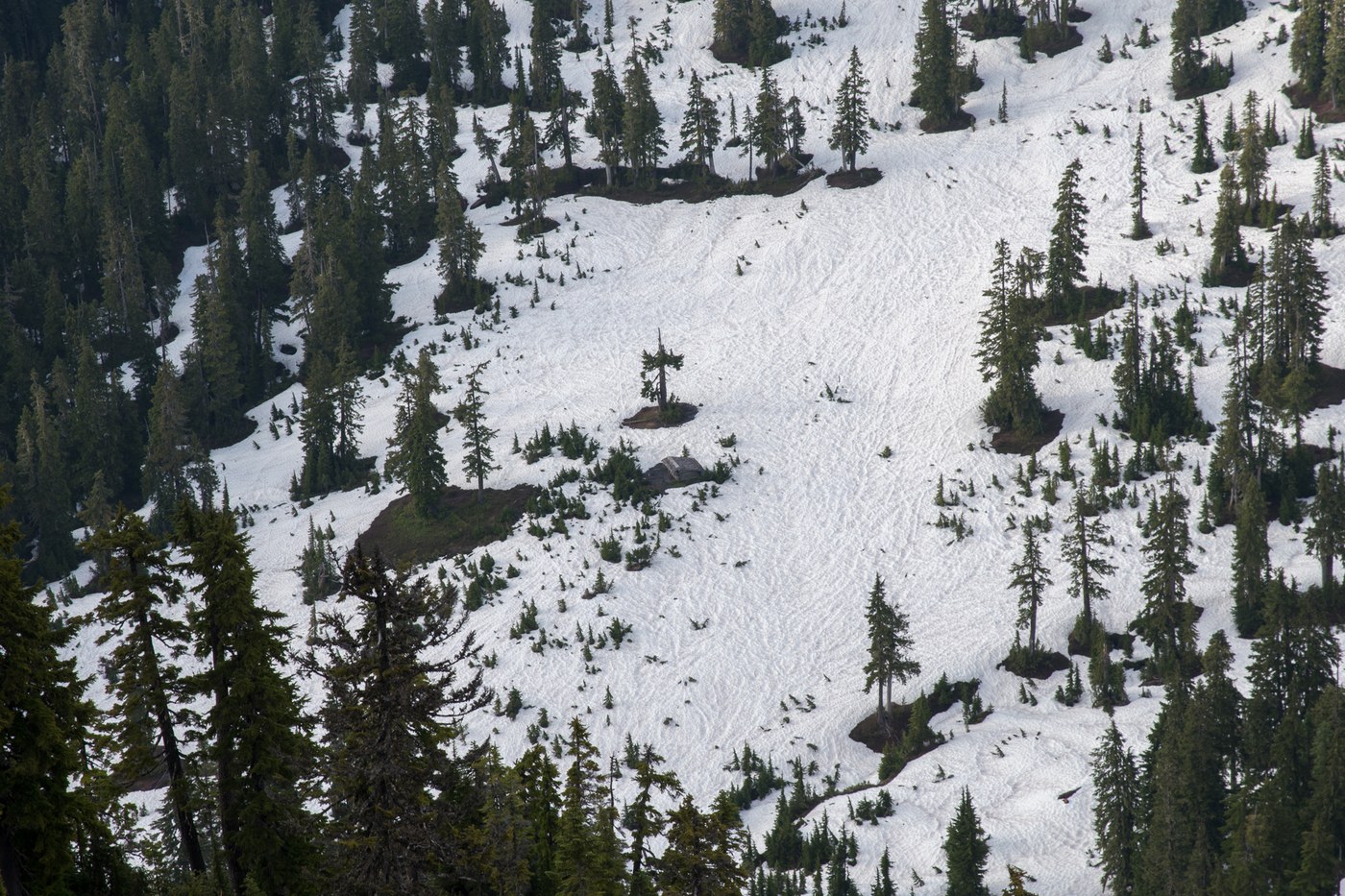
There are a couple difficult stream crossings due to the snow bridges melting out. Also, once you get across Ridley Creek, you have to hike up some steep snow to follow the trail and get to the meadow with the Mazama shelter. We had ice axes, but managed fine with our hiking poles. We also had mountaineering boots, which proved useful kicking steps. We didn't need crampons.
The switchbacks rising from the Mazama shelter to Park Butte are mostly snow free. The last section from the switchbacks to the saddle is still snow covered, and the snow is somewhat steep. Mountaineering boots again proved useful kicking steps.
From there it was all snow covered to very near the lookout. There's a source of running water after you get through the saddle - in between a couple tall trees, at about elevation 4,870 ft., about 280 ft due east of the summer trail.
We spent the night with another couple in the lookout. There was a bed that held to, we slept on the floor. Six people may be the comfortable limit for the lookout. There are a couple tent spots melted out near the lookout as well. There wasn't much running water, though you may find a trickle running down a section of melted out trail.
Note: This lookout is a historical building in the wilderness, maintained by the dedicated volunteers of the Skagit Alpine Club. Please be diligent about treating the lookout well, including picking up after yourself and putting the shutters up and down correctly so that future hikers can enjoy it.
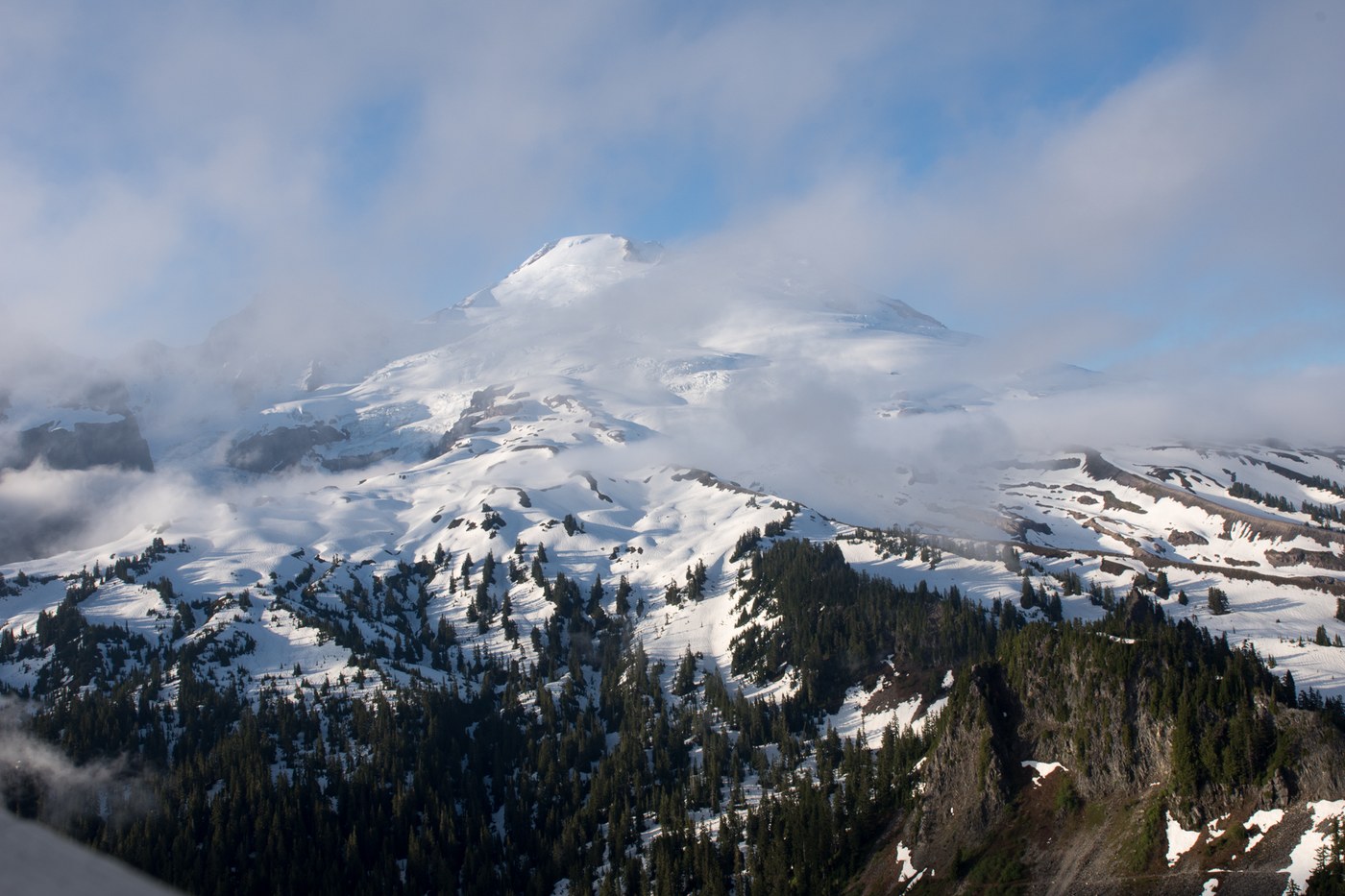
The clouds finally cleared a bit around 8 pm, giving us some great views, if briefly.
One great part of spending the night there was waking up in the middle of the night and seeing the headlamps of climbers summiting Baker at 3 am, stretching from the Easton Glacier to the Roman Wall. There were like tiny glowing caterpillars.
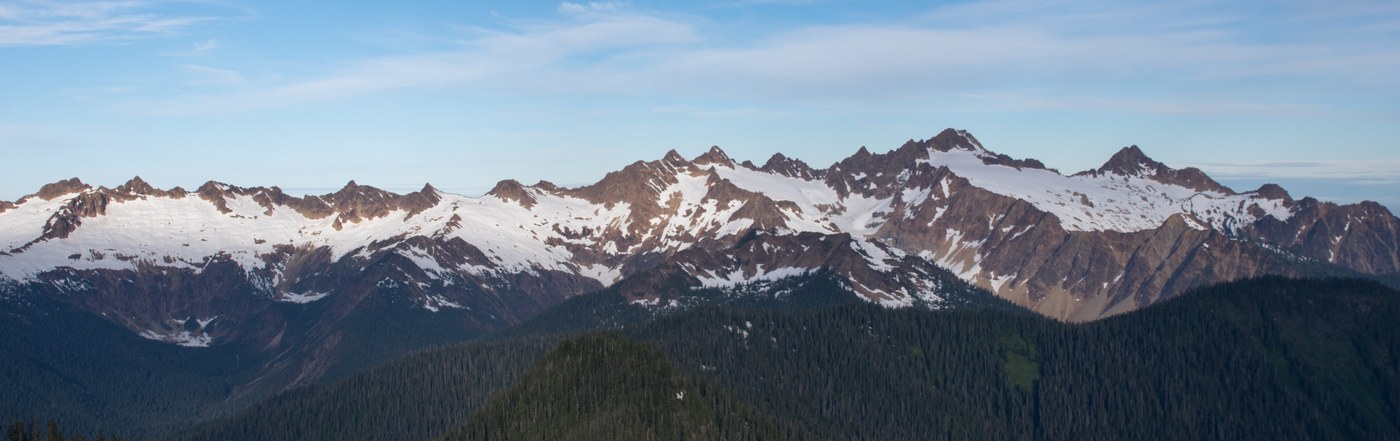
We all awoke about 5 am, just before sunrise, to clear skies. The views were magnificent and awe inspiring. Snow covered peaks are everywhere, and the immensity of Baker looms above. We could see Rainier too. The other couple left at 7:30 and found the snow to be quite firm. We left at 10 and found the snow very soft. Hiking in the snow under the hot sun was quite draining.
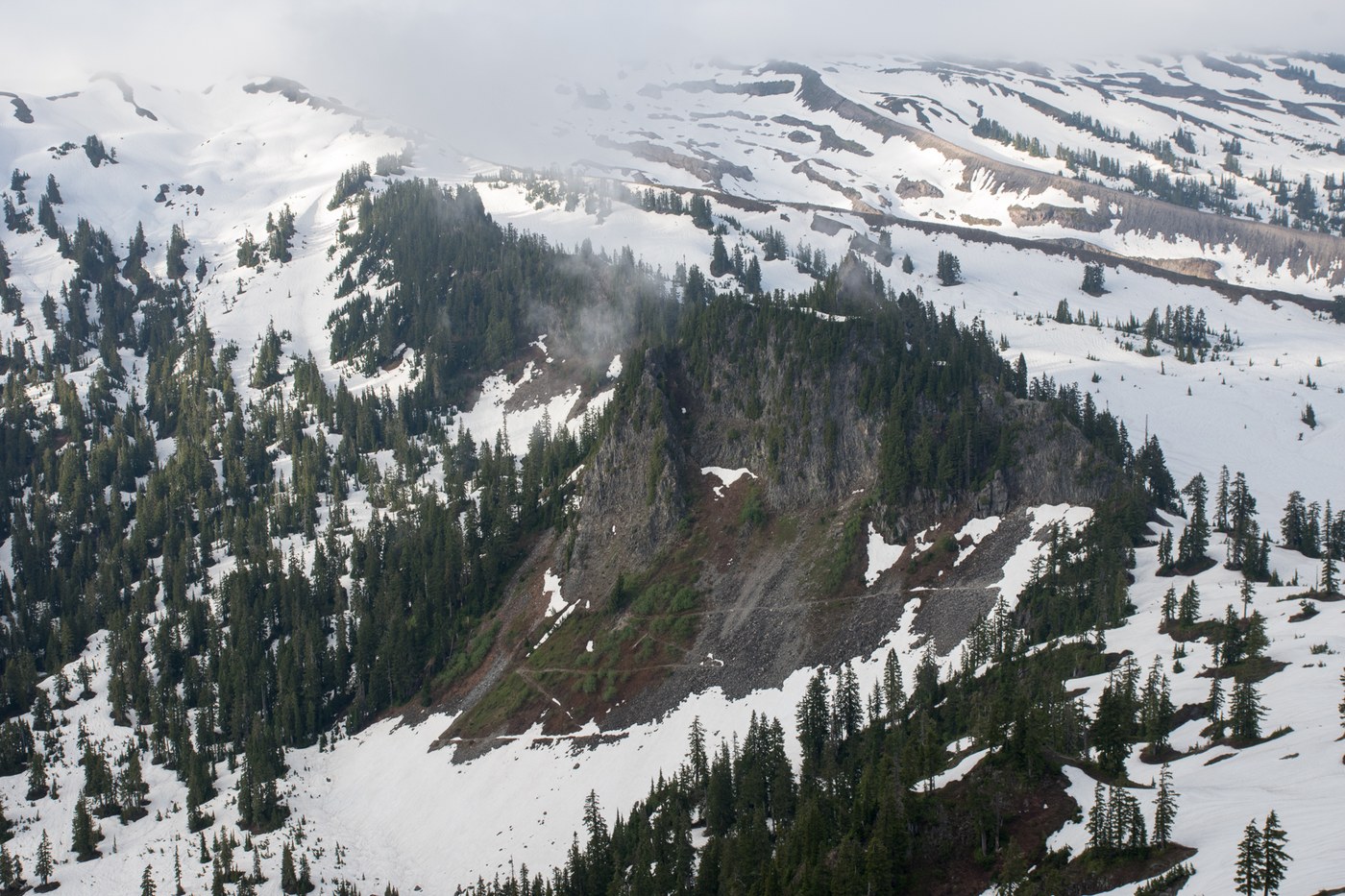
We went around the Cathedral Crag and visited the Mazama shelter for lunch. There's a couple tent spots melted out there.
Bugs weren't present on Saturday, likely due to the light, misting rain, but some came out Sunday. There weren't enough to be a bother when we stopped for lunch at the Mazama shelter.
Comments