


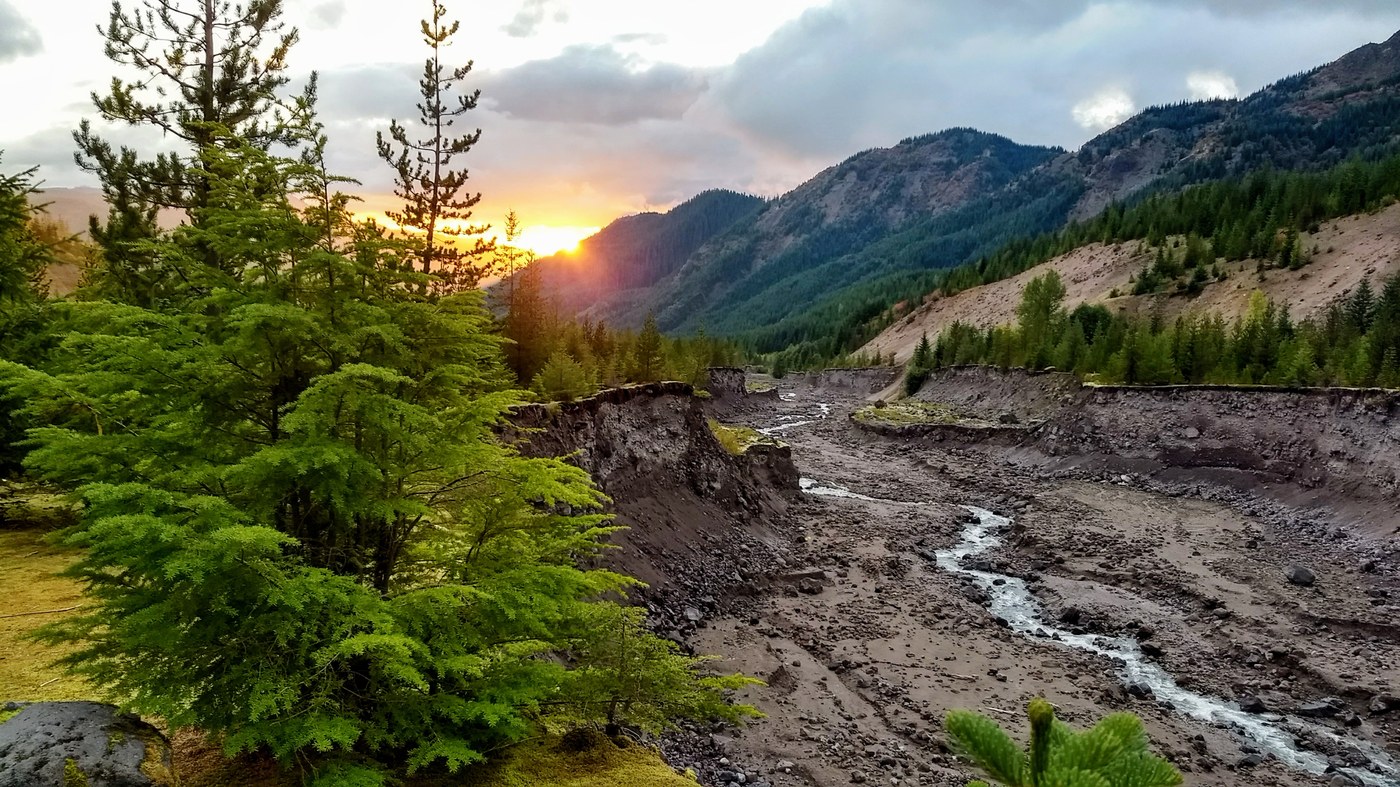
Did the Loowit Trail as a 3-day solo backpack, clockwise, and saw 7 humans on the trail. While planning this trip, the following itinerary seemed to break up the trip into 3 parts of relatively equal mileage, with Day 2 being the big day through the restricted blast zone. The views of Mt. St. Helens were breathtaking, the campsites beautiful and the terrain otherworldly. Here are the stats, according to GaiaGPS and my field notes:
Day 1 – Climbers’Bivouac/Ptarmigan Trail to the Loowit, left and clockwise to South Fork Toutle River. 10mi, 2000+ elevation. There is about a mile of boulder scrambling from post to post; sometimes the posts were intuitive and sometimes they weren’t. Did navigation by GPS, cross-referencing with map/compass. There had been lots of rain the night before, but the rocks were not overly slippery. Poles came in handy – best to place them on a rock in front of you and not in between rocks, so that they don’t get stuck in crevices, or punch thru lichen and throw you off balance. Past the boulder field is the detour about half mile down a washout to a hand line (rope) down a crack in a cliff. The route down is of clay and full of loose rocks, tread lightly, don’t trust footholds or handholds, and always keep one hand on the rope. Thin gloves will be helpful here. I wore my climbing helmet. Beyond the washout, there were route finding issues to get back to the Loowit. I was above the trail paralleling it and finally saw it below. There is one campsite I saw at Crescent Ridge and 3-4 above the South Fork. I went down 2 roped cliffs to the river to get water that evening. It would have been great to camp by the river, but too many giant boulders embedded in the clay cliffs above.
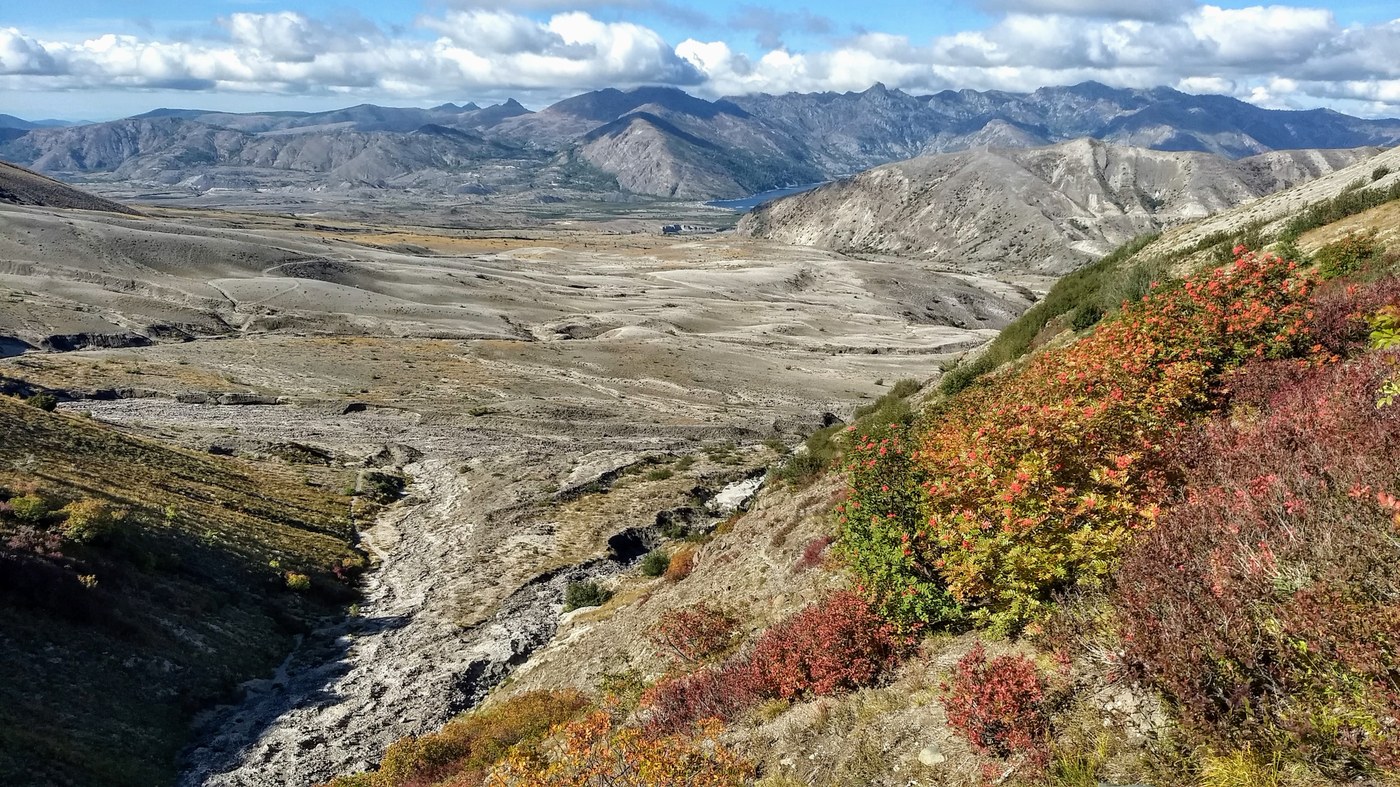
Day 2 – South Fork to jct with Ape Canyon trail. 12.3mi 2000+ elevation. Used the ropes to get down to the Toutle and opted to ford the river, vs. rock hopping. It was moving pretty fast, but was an easy ford. Then up the far side on a hand line. The rope scrambles were easy scrambling, but steep and loose. From there, up to Castle Ridge. On the ridge, there is a sign that points up for the Loowit – follow that, taking a right off the exposed trail. Going forward toward the obvious post puts you on a spur trail. From the ridgetop, I could see the post where I should have turned up. Also ran into some hunters, so depending on season make sure you’ve got bright colors! I did see an elk herd, a goat herd and lots of tracks, but nothing close up. Up and down various washouts, some sketchier than others, and onto the plains on the north side of St. Helens. This was my favorite part – endless amber plains, rolling hills, evidence of lahars, Spirit Lake to the northeast and the crater of Mt. St. Helens to the south (obscured the whole time by clouds). Lots of cairns and posts. However, either at the Truman trail or Willow Springs trail cutoff, I got more lost than at any other time on the trip. The sign points straight ahead for the Loowit and down for the feeder trail, and then there’s a trail going uphill with no sign (I think between mile 5 and 6 from the Toutle). The uphill trail is the Loowit. I went straight with no trail and ended up navigating back (uphill) by GPS, losing an hour. Here I saw the last human I’d see before the cars, doing a day hike to Loowit Falls. The trail up to Windy Pass is exhilarating and a bit intimidating. I wore my helmet. Going up into the gully, head to climber’s left to a cut in the rock. It switchbacks up to the pass. If you’ve got extra energy, go up to the top post to climber’s right, which is a viewpoint. The trail down is super sketch, barely a trail, and a long way down, but navigable. Beyond that it’s a flat (mixed use with mountain bikes) trail over the Plains of Abraham, which are gorgeous and vast. At Pumice Butte (a giant chasm) at 11.5mi from the Toutle, there are some great campsites and should be a spring, but there was only a trickle and a fetid pool. There is a spring back before Windy Pass with delicious water coming out of the ground, and I should have filled up there – it was the last water I saw until my car - had to severely ration Day 3. I camped on a hill above the seismic monitoring station at the jct to Ape Canyon. It was gorgeous – I could see Mt. Hood, Adams, and of course St. Helens. Amazing sunset and sunrise.
Day 3 – Ape Cnyn jct to Climbers Bivouac. 9.9mi, 1100+ elevation. Woke up to clear, blue skies and a brilliant sunrise, but by the time I broke camp, I was enshrouded by mist. This was not a hard day, but for the lack of water. Mostly trail and washouts. I had heard bad things about the Muddy River washout, but aside from some navigation to find the path down (you have to go up and over a rock outcropping that looks like the trail ends or drops into the abyss), it was no more scary than any of the others. There were a few navigation questions on short boulder fields before and beyond June Lake, but mostly it was self-explanatory. The fall colors were superb! I chose not to detour to June Lake for water, because it was cool/cloudy, and I was making good time. There are great campsites between the June Lake jct. and Chocolate Falls. There were hillsides with tons of juicy huckleberries and wild blueberries, and I had a nice lunch by Chocolate Falls and the sun came out, right before the 1,000ft upward assault (through a spectacular meadow) to reach the Ptarmigan trail and turn south for the TH. Protein and fat-rich, caffeinated dinner at Lone Fir before the long drive home.

Comments