You are here: Home » Find a Hike » Hiking Guide » Lake Ingalls

Lake Ingalls

Last modified Oct 23, 2009 12:52 PM
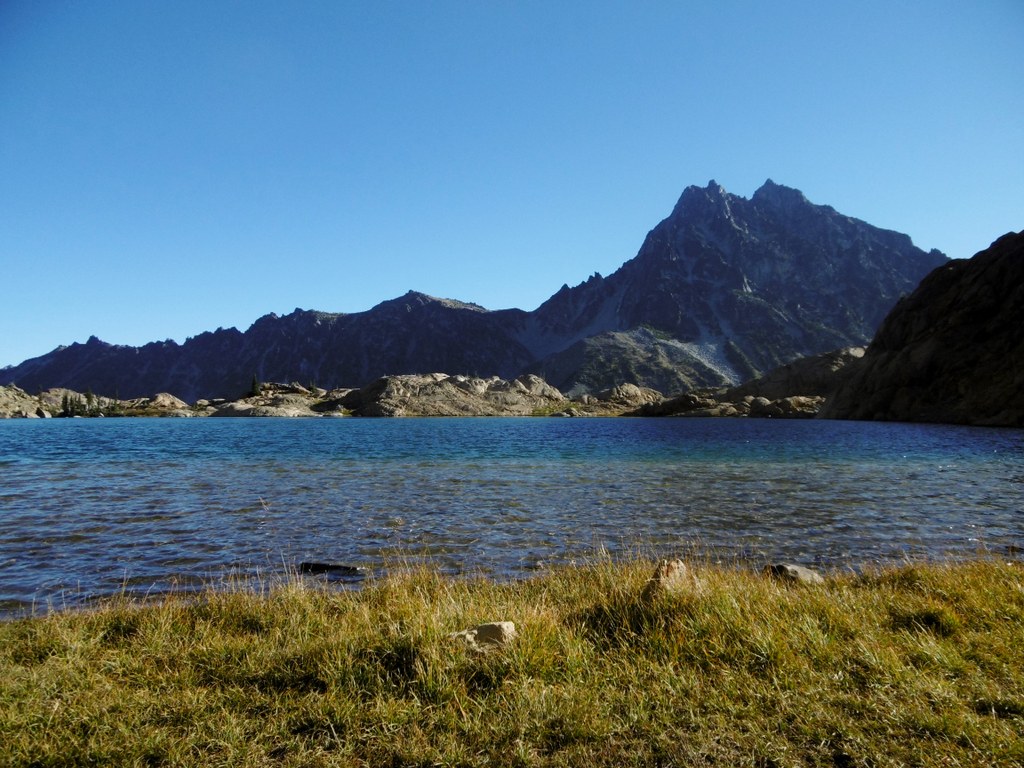
Autumn at Lake Ingalls. Photo by Don Geyer.

Sometimes you just want to get high--physically, not psychedeli-cally--and the Lake Ingalls Trail lets you do that while still exploring some of the grandest wildflower displays in the Cascades. You'll climb, descend, and climb again, crossing through no less than three distinct ecosystem types, each with its own species of wildflowers to entice and enchant you.

As with the Longs Pass Trail you'll start out on the old miners road leading up the Teanaway Valley. Within the first 0.25 mile the wide roadbed fades to a true trail. It also splits, the path to the left heading to Esmeralda Basin and Fortune Creek Pass.

Go right to start your climb out of the Teanaway Valley. You'll be hiking through the first flora stratum you'll encounter on this hike, with huckleberry bushes, a few lilies, and other lesser known flowers, such as pipsissewa and wintergreens.

At 2 miles go left at another trail junction (right leads to Longs Pass). The trail angles upward, climbing steadily and at times steeply. As you near Ingalls Pass the trail meanders through a rock-strewn meadowland. Along the long, slow climb to the pass you'll enter a drier ecosystem full of alpine firs. Bitterroot, white paintbrush, penstemon, and spreading stonecrop (a pretty little succulent plant) grow in profusion.

The final 0.3 mile switchbacks up to Ingalls Pass, about 3 miles from the trailhead. Here you'll enjoy spectacular views of Ingalls Peak across the Ingalls Creek valley in front of you, and Esmeralda Peaks across the Teanaway River valley behind you.

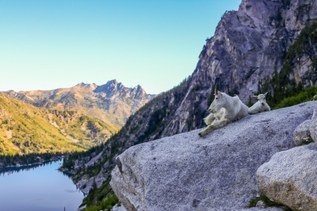
The trail now descends briefly before contouring around the upper flank of Headlight Basin. As you crest the pass and descend into the rocky basin, you'll enter rich heather meadows filled with bistort, paintbrush, and--in one spring-fed ravine--a 10-acre spread of shooting stars. This lush valley sports many fine campsites alongside small tarns and creeks in the open heather and flower fields. Of course, an abundance of rich foliage and plenty of water means birds and animals frequent this basin. Move silently and watch carefully for the best chances to see deer, mountain goats, marmots, coyotes, and countless bird species.

After gawking, pop your eyes back into your head and push on--the next mile swings around the upper edge of the basin, crossing a few creeks and weaving around some nice ponds. As you leave the flowers you'll traverse a broad granite slope and climb up and over a tangle of granite slabs and boulders before dropping to rock-rimmed Lake Ingalls. Views are hard to come by here--rock hard, that is.

Swing out to the left as you reach the lake and drop down to rest on the long rock slabs that taper down into the water. From here, look across the mirror-finish lake to the magnificent face of mighty Mount Stuart to the north, while the craggy top of Ingalls Peak towers directly over the lake on the west.

Improve or add to this guidebook entry

Recent Trip Reports

Hiked here recently? Submit a trip report!
There are 160 trip reports for this hike. See all trip reports for this hike.
Lake Ingalls — Nov 01, 2009 — danielshoe
Day hike
Issues: Snow on trail
Expand report text Hide report text
I started about 10:30 (1-Nov-09) from the trailhead at the end of the road on the Teanaway River Road (4240’,...
I started about 10:30 (1-Nov-09) from the trailhead at the end of the road on the Teanaway River Road (4240’, and after hiking about 1/4 mile took the trail branch marked (overly modestly) as a “way trail”. I saw my first dustings of snow at about 5000’, reached the junction to Ingalls Lake at 5600’. Shortly thereafter reached a stream falling off rocks. The mini-waterfall had many rapidly melting icicles. A little later, I met a couple whom had turned back at the ridge, the first of 4 parties I was to meet that day. There was little snow on the trail until crossing over the ridge. After reaching the north facing slope, snow was several inches deep in spots, but bare in more exposed areas. Fortunately, the larches still had a lot of color in them, as this was a photo trip.
Once at the lake I spent about 2 hours there waiting for the wind to calm, so I could get nice reflections of Mt. Stuart. The lake was not frozen yet, except for a few ice fingers forming in some shady spots. I left after clouds began forming around Stuart’s summit. Later, after stopping in a basin to admire the larch again, I found the summit again to be clear, so I took a photo of the mountain with the full moon rising.

See photos!

http://photo.net/photodb/photo?photo_id=10132352

http://photo.net/photodb/photo?photo_id=10132335


Read full report
Lake Ingalls — Oct 20, 2009 — Janice Van Cleve
Day hike
Issues: Mudholes | Water on trail
Expand report text Hide report text
A chance day mid-week turned out to be a beautiful hike. The Teanaway road up to the Esmeralda trailhead...
A chance day mid-week turned out to be a beautiful hike. The Teanaway road up to the Esmeralda trailhead is heavily potholed - especially the first 2 miles after 29 Pines campground. Up beyond Beverly Creek campground, the road is not too bad. From the trailhead to Ingalls pass is a very easy, gentle trail - almost lazy - with only one water seep up near the top which creates mud. The trail is absolutely clear of all obstacles and no snow. After the pass, the trail traverses a larch wonderland with huge views. The larches are brilliant gold, the meadows are kissed with winter's first frost, the rocks are stunning in all their colors and varieties, and Mt. Stuart looms majestically over all. We had to stop every 5 minutes to capture a photo or just admire in awe.

The trail comes down from the pass a bit rocky but soon enters meadow. There it is muddy. Beyond the meadow the trail traverses a rocky hillside. Watch for the cairns! They can be confusing because some indicate straight ahead while others indicate a turning. The trail descends through this rocky tumble and then up over a short, steep scramble to Ingalls Lake. There is no snow on any part of the trail. It is 4.5 miles to the lake from the trailhead which we completed in 3 hours. We returned down in 2.5 hours.

The lake itself is a large, rock bound tarn with Mt. Stuart for a backdrop. For me, it was more than matched by the beauties of the trail getting there.
Read full report with photos
Lake Ingalls — Oct 18, 2009 — JoJoClimber
Day hike
Features: Fall foliage
Expand report text Hide report text
This is a great hike to see the larch in all their glory right now. Even on the drive in...
This is a great hike to see the larch in all their glory right now. Even on the drive in you'll see fall colors. We also saw quite a few deer and a rafter of wild turkeys from the road. When you get to the trailhead and look up at the Teanaway Valley you won't see the larch, but be assured that they are plentiful on the other side of the pass. As you approach Lake Ingalls keep an eye out for the schist (at least we think it's schist) on the sides of some of the boulders -- it looks like smooth green marble or glass.

The trail is in good shape -- there are some muddy sections through the meadows on the other side of the pass.

Make sure you have a vehicle with high clearance and/or good shocks to handle the 19(?) miles of potholed gravel road to the trailhead.
Read full report with photos
Lake Ingalls — Oct 12, 2009 — shegoat
Day hike
Issues: Snow on trail
Expand report text Hide report text
Decided to fit one last fall hike in before the snow hits the upper hills this week. Ingalls was...
Decided to fit one last fall hike in before the snow hits the upper hills this week. Ingalls was a great choice but we sure didn't beat the snow. Only 4 cars at the trailhead. High clouds on the way in with all summits visible (including Stuart). We got to the lake in a couple of hours and then watched the clouds roll in and the snow flakes started to fall. The dusting of white that lasted for our entire trip down was beautiful. It added contrast to the existing fall colors, including the larch. Plenty of goats on the way in but I think they found shelter during the flurries because they left their high rocky perch. Lovely day....but very cold. The rocks were getting slick and the basin/camp area is frozen and preparing for winter. Ahhh...the change of seasons.
Read full report
Lake Ingalls — Oct 11, 2009 — HikerJim
Day hike
Features: Fall foliage
Expand report text Hide report text
Originally I had planned a larch backpacking trip this weekend. Changes left me alone and I decided to join Gary...
Originally I had planned a larch backpacking trip this weekend. Changes left me alone and I decided to join Gary and Paul for another day trip to Ingalls Lake instead. Forecast was mostly sunny and very cold. Cold as in high teens overnight and high twentys during the day. We met at Eastgate P&R at 6:30 am and headed east. It was cloudy in Seattle and the clouds remained all the way up the NF Teanaway Road to the Ingalls trailhead. Not what we were expecting. We planned on backlit larch trees and blue sky. We had white sky and a few snow flakes.

We were on the trail at 8:35 am. There were "only" 23 cars in the lot when we started. It was cold but with the clouds it was not as cold as expected. Still, within a mile up the trail my baseball cap was exchanged or a wool hat. Light gloves were replaced with heavy fingerless mitts. There are some red berry leaves down low but with no sun they were dull. We passed the Longs Pass junction and headed higher. Inevitably we ran into a few other groups heading up.

We reached Ingalls Pass a little after 10:00. The larch trees start right at the pass. The real action is across the ridge in Headlight Basin. At the pass I realized my camera was taking black photos. I had this problem with my dslr early in the year but not since. Thousands of larch and no camera! My worst nightmare. I played with it, warmed it, changed settings, and managed to get it to work most of the time. I had more than thirty ruined black shots but managed to coax 230 good shots out of it. It was frustrating but not a disaster.

Although there was snow a few weeks earlier there was almost none left. A few small patches near the pass and some short icy spots on the trail just across the pass. After that there was no snow left. A short hike through rocks brought us to the upper basin. Larch are a mix of a few past prime, many at peak, and a number from green to light yellow. Looking down to the lower basin many trees are still green. Two years ago Gary and I took the high route to the lake then the low trail back to the pass. This year the best bet was to stay high.

Paul had been to Ingalls Pass but never at larch time. He was in for a treat. The white sky blocked sun from lighting up the larch trees. On the other hand it did bring out some nice colors though a little muted. Our hope was to take our time photographing larch trees for our enjoyment and to waste enough time that we might still be around to see some afternoon sunshine. The goal was not to have to sit around waiting from sun while we froze.

There were a number of tents visible. We spotted a group of a dozen Mountaineer Naturalists hikers Gary had mentioned were going to be on the trail. Those folks were loudly discussing other folks who had a campfire though numerous signs forbid it. There is precious little wood in this high meadow. We were not pleased either. Short detours brought us to some excellent groves of larch trees. Enough were at their peak to provide a great display. In about a week the overall display should be at its best.

We found another old fire pit and them the outhouse. About then a group of a dozen scramblers passed us heading up Fortune and South Ingalls. Seemed like a waste to spend the day up high when the best views were down in the basin. Soon we were back on route heading for Ingalls Lake. many more folks were now on the trail. It seemed like the trail to Mt. Si with folks everywhere. We reached the lake just after 12:00 pm. We put on what clothing was left in our packs and had lunch. The clouds were still thick but at least high enough to be above Mt. Stuart.

After lunch we headed around the lake to the right. Up and over the rock and down to the shore again. Gary and I had come through here in 2007 but did not have time to explore. This time we went all the way to the far end of the lake. We had a nice view over to Goat Pass and the west ridge of Mt. Stuart. Looking back I counted about 50 people around the lake including us. It was nice to be well away from most all of them.

As we came back around to the trail we could see over 20 folks leaving the lake at one time. From our vantage point they were spread out on the trail below the lake. We had a different idea. We headed back at a slow pace hoping that just maybe there would be a sliver of sunlight on the larch trees in the upper basin. It was near 3:00 pm when we reached the larch forest and the sky was still white. It looked like patience would not pay off this time.

Gary noticed a small blue patch. It seemed to grow. A few minutes later there was a thin ray of sunlight. A few larch were lit up. A little later there was some more sun. All at once half the sky cleared. It happened within just a few minutes. Those who left the lake and hiked straight back missed the real show. Big stands of larch went form dull yellow to blazing orange. We probably took half our photos in a 20 minute time frame. Patience did pay off in a big way. In the sun the temperature seemed to go from frigid to just plain cold. From mid winter back to late fall. The larch trees were not as close to peak as we had in 2007 but they were plenty good.

The sun does not climb far above the ridge top this time of year. It was now almost ready to drop back below the ridge. It was time to go. We hiked back to the pass in the cold shade and across the pass picked up the sun once again. It was almost 4:30 when we left Ingalls Pass, some 8 hours since we started. We enjoyed the sun part way down then dropped back into winter again. The parking lot is wedged under the bulk of Esmerelda Peaks and I doubt it get more than a few hours of sunshine this time of year. A little before 6:00 pm we reached the end of the trail. There were only 13 cars left in the lot but almost that many parked well down the road.

We had dinner in Cle Elum and by 8:00 pm the feared traffic jam on the one open lane west bound never materialized. We sailed though at the speed limit. I was home by 9:30 pm. We had high hopes for sun and peaking larch this day. We then were a little disappointed by the thick clouds. In the end we had the sun we expected and plenty of golden larch. The larch season is short and we were very pleased with our day in the mountains.

45 photos have been posted at: http://www.hikingnorthwest.com. Go to "Trips-2009" on the left margin.
Read full report with photos
Location
Ingalls Way (#1390)
Snoqualmie Pass -- Salmon La Sac/Teanaway
Cle Elum Ranger District (509) 852-1100
4.00 out of 5
Based on 27 votes
Featured In...

Day Hiking: Snoqualmie Region
by Dan A. Nelson and Alan L. Bauer

To buy the full book, including maps, elevation profiles, photos, and more, visit:

A portion of all book sales from the links above benefits WTA and helps protect and maintain our trails.

Information about this hike provided in partnership with Mountaineers Books. Copyright © Dan A. Nelson/The Mountaineers Books

Roundtrip 9.0 miles
Elevation Gain 2500 ft
Highest Point 6500 ft
Features
Lakes
Waterfalls
Fall foliage
Wildflowers/Meadows
Mountain views
Wildlife
Ridges/passes
Established campsites
Guidebooks & Maps
Day Hiking: Snoqualmie Pass (Nelson & Bauer - Mountaineers Books)
Green Trails Mount Stuart No. 209

Improve or add to this guidebook entry

Driving Directions
(47.4367, -120.9372) Open in new window
Red Marker Lake Ingalls
47.4367166667 -120.937166667

From Seattle drive east on I-90 to East Cle Elum, exit 85. Cross over the freeway overpass and turn right (northbound) on State Route 970. Cross the Teanaway River bridge, and in another mile turn left onto Teanaway Road. Drive north on Teanaway Road, veering right as it becomes first the North Fork Teanaway Road and then unpaved Forest Road 9737 at 29 Pines Campground. Continue to the road's end.

Document Actions
  • Email this page
  • Print this
  • Share
Email Newsletter
Monthly trail news, hiking trips and advocacy.
Log in


Forgot your login name or password?
New user?


powered by Plone | site by ONE/Northwest and served with clean energy