 Washington Trails
Association
Washington Trails
Association
Trails for everyone, forever
Washington Trails
AssociationTrails for everyone, forever
Take to the snow this year by donning snowshoes. Here you'll find out how to plan your trip, what to wear, how to be safe and even how to bring your dog along.
When winter hits, you can opt for a snow-free lowland hike, but sometimes you just want to breathe some alpine air and play in the snow. When your trusty hiking boots just don't cut it anymore, strap on some snowshoes and explore new ground.
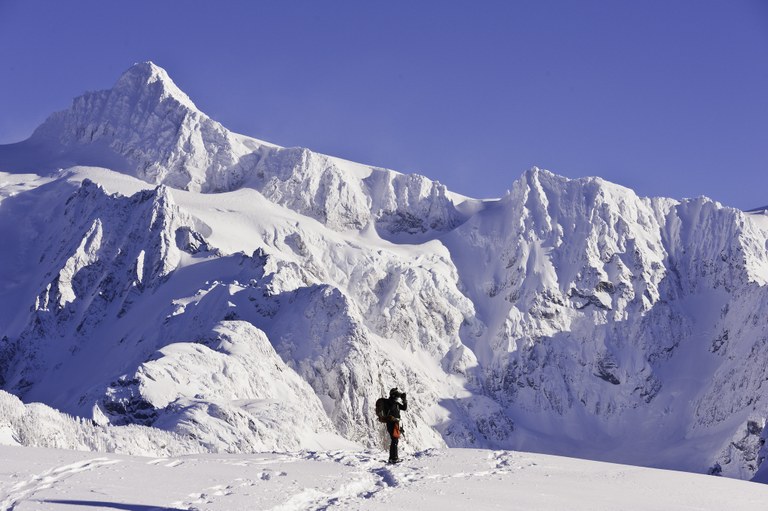
Artist Point in the North Cascades is popular place for all levels of snowshoers. Photo by David Bradley.
Choose your destinations wisely. Some popular summer hiking routes can be avalanche hotspots in winter and should only be visited with plenty of advance research, preparation, and gear. But you can consult our Hiking Guide, trip reports or a guidebook to find safe snowshoeing trails.
Consider visiting a sno-park. Sno-Parks are parking lots that are cleared and maintained by the Washington State Department of Natural Resources during the winter. They are great jumping-off points for snowshoe outings.
Or you can always start out with a guided snowshoe trip, which are offered by several different organizations throughout the state.
Whatever you decide, remember that snowshoeing requires much more energy than hiking, so keep your mileage goals lower than you usually do, and turn around when conditions are beyond your skills or your energy level is low.
Once you find a destination, make sure it is accessible and safe. Check with the Northwest Avalanche Center (NWAC) to see if any warnings are in effect. Check the roads and the weather, as well as trip reports from people who were just there.
Finally, always let someone know where you are going and when you expect to return and call them when you get home. Here's WTA's itinerary template to help you know what information you should leave behind.
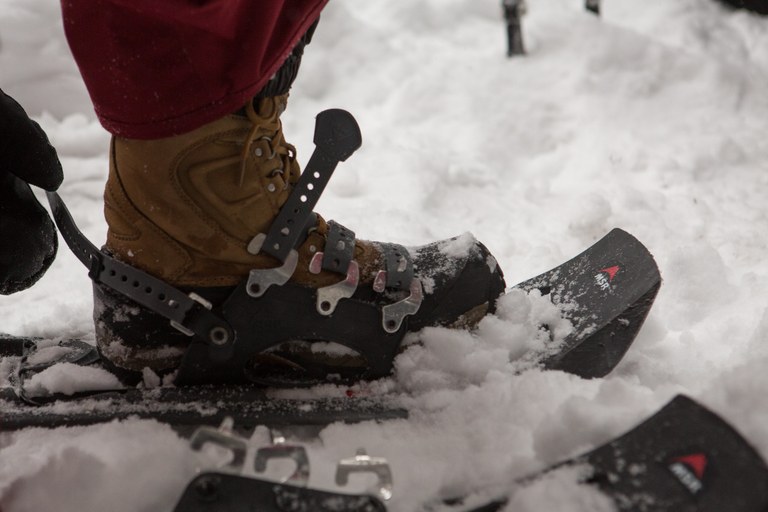
Strapping on snowshoes before heading out. Photo by Emma Cassidy.
Aside from the obvious addition of snowshoes, going on a snowshoe trek requires a little extra gear than a normal hike.
Lightweight ski pants, rain pants with long underwear, snowboarding pants lined with fleece, or regular trekking pants will work well. Snow in Western Washington is quite wet, so something water-resistant is a good idea.
Layer your upper half with a quick-dry piece close to your body, then a fleece jacket that can be unzipped for ventilation. It's OK to be a little cold when you start because you will warm up quickly. On the other hand, if you'll be out with kids, you'll want to bundle everyone up; their pace is often slower and you won't work up a sweat quite as quickly.
You’ll want warm, waterproof boots. If your hiking boots come with materials like Gore-Tex, they will be just fine. If you're with kids, waterproof snow boots or even rubber boots are OK for short outings.
Before you invest in gear for yourself or growing kids, consider renting gear if you want to check out the different types.
Most snowshoes now have aluminum frames with a decking material that will keep you on top of the snow. Teeth or cleats on the bottom are essential for the icy, hard-packed snow of Western Washington. Most shoes have straps that secure your boot to the shoe. Some others offer a binding mechanism similar to ski boots.
Just like for hiking, poles can come in handy, but they aren't essential on beginner trails.

Take some extra time to prepare for your snowshoe hike. Photo by Isabel Uriarte.
Snowshoeing is hiking on the snow, so you’ll want to carry the same Ten Essentials that you take hiking. This includes having a topographic map and compass, hydration, extra food, extra clothing, a fire starter, a first-aid kit, a pocket knife, a flashlight, sun protection and an emergency shelter.
Some of these are extra important for winter hiking and snowshoeing:
A few extra items to put in the winter backpack include:
While it's true that if you can walk, you can snowshoe, you do have to widen your step. This seems intuitive, but it's a good tip to share with little ones who may be having trouble making it work.
The first couple of steps feel awkward, but your body quickly adjusts to the width of the snowshoes. Walking backward or turning takes a little practice, too. You may fall, but the snow is usually soft.
Learning basic avalanche awareness skills can also help you identify risky places or conditions. Classes through the Northwest Avalanche Center are a great starting point.
Knowing how to navigate is also key. Snow tends to make the landscape look uniform and obscure landmarks. It's not a good idea to follow tracks if you don't know where they lead. Just because someone went before you, it doesn't mean they chose a safe route. To learn more about winter hazards, navigation, and to bolster your skills, check out these courses or read our winter safety tips.
Snowshoeing is an increasingly popular activity, and often overlaps with other user groups. Snowshoeing is permitted on Nordic (or cross-country) ski trails, but snowshoers are requested to keep to one side and not walk across the ski track.
On steep grades, snowshoers should keep in mind that skiers have the right of way. Do your best to move to one side and allow skiers to pass.

A furry friend can be a great companion on a long snowshoe. Photo by Ashley Jones.
If you're planning on taking your pup with you, there's a little extra prep you'll want to do. Many dogs love the snow, but if you're just learning, it might be a good idea to leave your pup at home the first few times out.
Consider whether the location and weather are appropriate for your pet, and if they can handle the outing. Some dogs do better in snow than others. Your pup may need special clothing and equipment to keep them safe and healthy on a winter snowshoe adventure.
Prepare for other people. Snowshoeing trails are popular and often have other hikers. How does your dog act around other dogs, people and wildlife?
Have doggie first-aid at hand. In addition to packing out your pup's poop, be sure you are prepared to deal with injuries such as cut pads and hypothermia.
Finally, if you do plan to snowshoe with a dog, make sure dogs are allowed on the trail where you plan to go. Dogs are prohibited on trails in national parks and, for safety reasons, on groomed trails in state sno-parks because dog paws punch holes in the trails. For everyone's safety (including your pup), it's almost always a good idea to keep your dog leashed.


