


I hiked the White Pass - Pilot Ridge loop counterclockwise over the weekend of Jul 4-6. Overall the trail conditions were good, though the non-PCT parts of the trail are noticeably steeper and a bit less well-maintained. I took the Blue Lake High Route and found it quite manageable--details below.
Direction: The WTA description describes the route clockwise, and I think that's the more popular direction given that I met quite a few clockwise backpackers and I seemed to be the first person to give them snow beta. I hiked counterclockwise because I wanted to start with the river crossing I was least certain about, and because I wanted to hike the section of the PCT facing Glacier Peak as I did when I thruhiked in 2022.
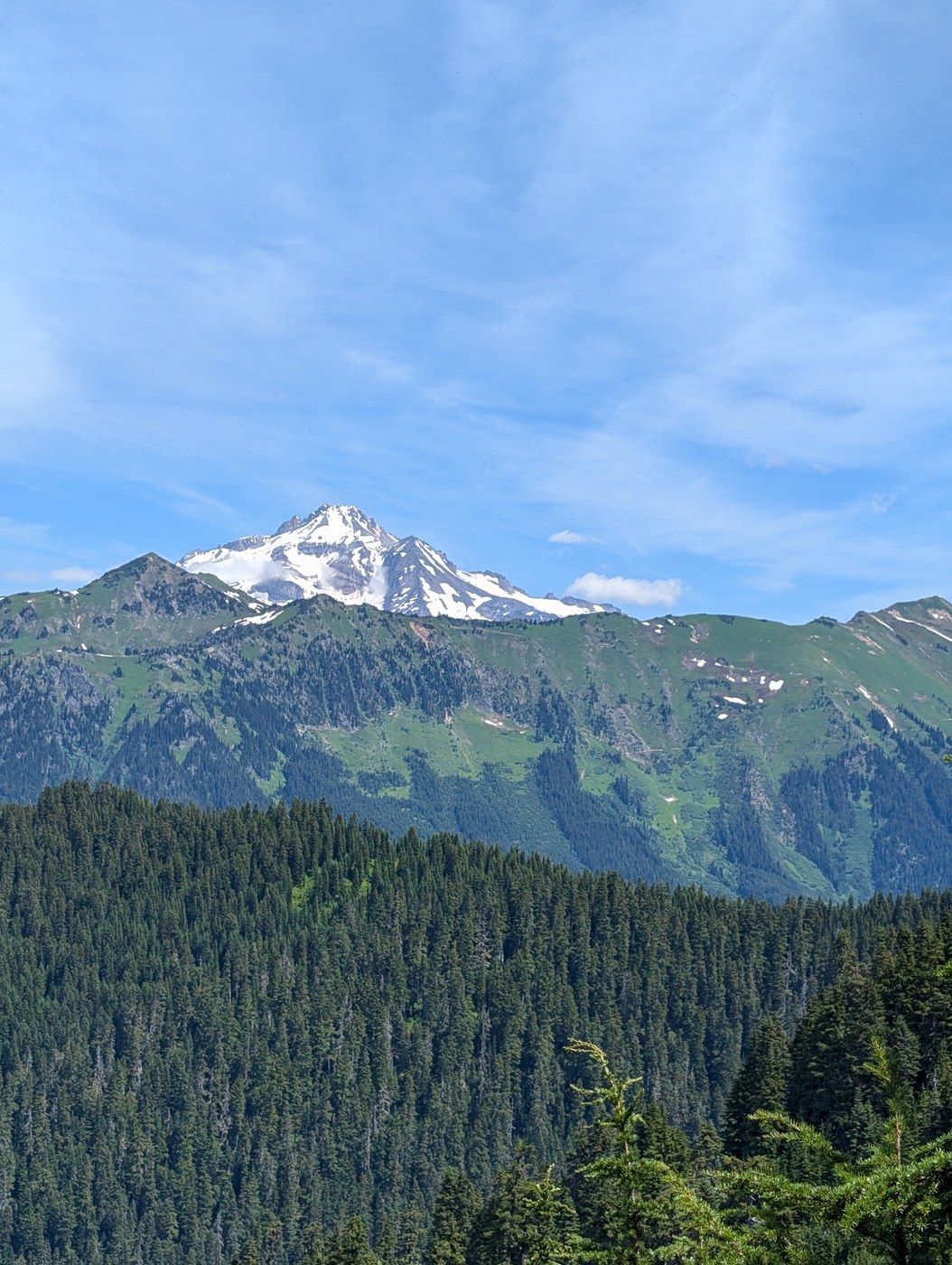
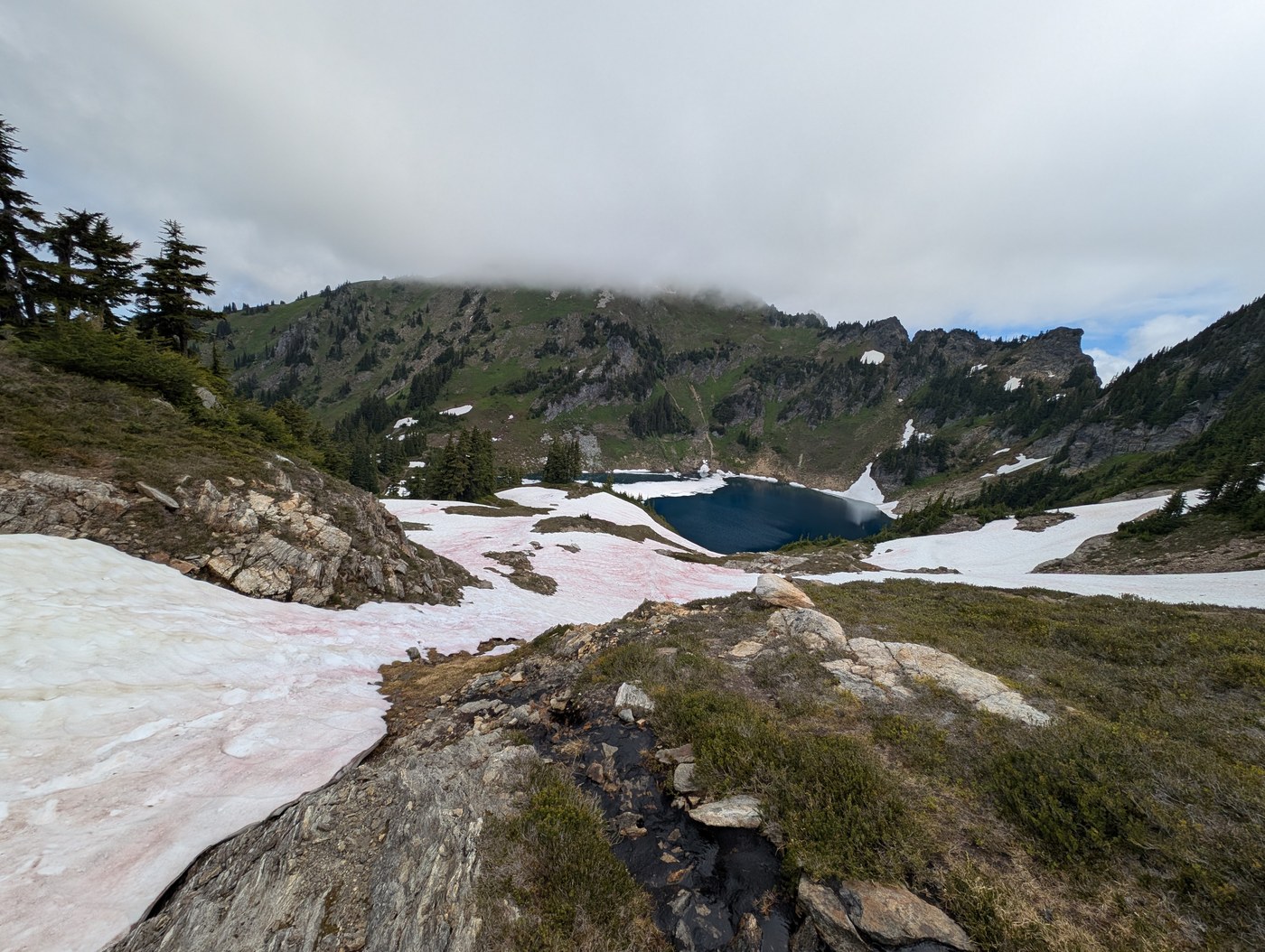
Day 1: I camped about a mile from the trailhead Thurs night and started my hike in earnest on Friday, July 4. Crossing the North Fork Sauk River was easy as there is a very large log fallen across the tree, and it's been cut/flattened on top to make it easier to walk across. It's high enough above the water to not be too slick. After that the trail ascends relentlessly up towards Pilot Ridge. On this ascent there were two spots where there were a couple blowdowns that obscured the trail enough that having a .gpx track downloaded was helpful, but generally the trail is in good shape, though steep. The trail crosses a raging stream at ~3800 ft that is probably the last reliable source before Blue Lake. Early in the season I found a couple streams after that, but nothing after reaching Pilot Ridge itself. The hike along the ridge is beautiful and you can look across the valley and see where the North Fork Sauk River Trail meets the PCT on the long, open slope between White and Red Passes (see photo). I ended my first day at Blue Lake, which is a gorgeous campsite but filled up early on the holiday weekend.
Hiking the loop counterclockwise means you're front-loading the vertical. While my first day to Blue Lake was a bit over 12 miles, it did include 5000 ft of ascent. If you're concerned about spreading out the ascent, hiking the loop clockwise as described on the WTA site, and camping somewhere well before Blue Lake the first day should work out.
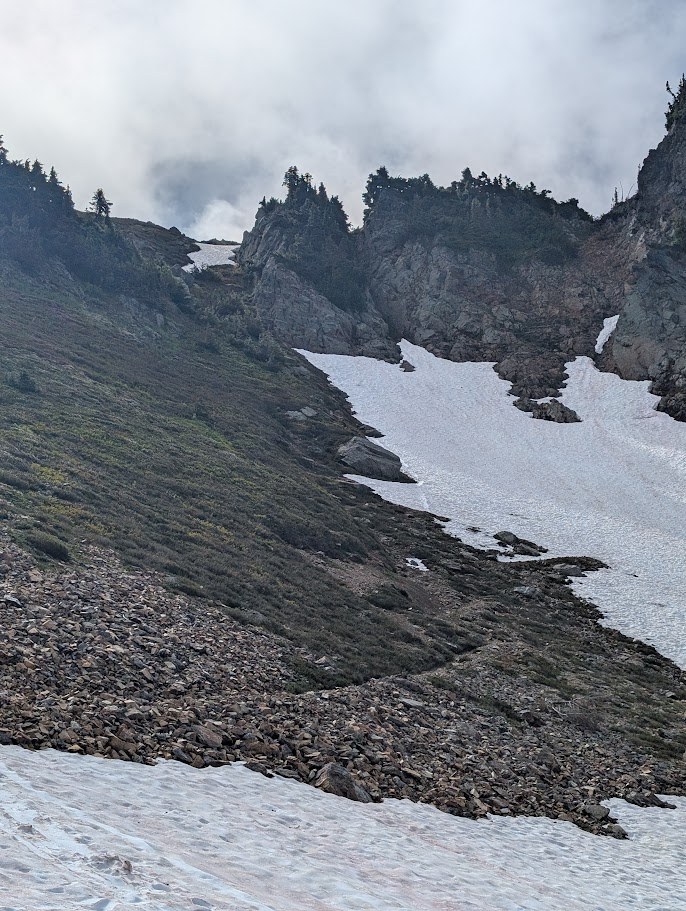
Day 2: I ascended the Blue Lakes High Route. From Blue Lake you're ascending the northern, snowier face first and descending the south face. The trail just above Blue Lakes crossed a short snowfield that was moderately steep but above a long run-out ending in the lake, so I put on my microspikes and got my ice axe out. Above that short section I found the upper half of the high route trail only crosses low-angle snow and only briefly, so put my axe away for good. The steepest part of the ascent is on scree but stays off of the remaining snow chute entirely (see photo). Then the south side descending was also snow-free. If I were going back next weekend I definitely wouldn't bring an ice axe, but might still pack spikes (but only because I'm pretty risk averse).
When the trail joins the PCT it's much smoother going, with smooth, gradual ascents and descents. In the early season there was abundant water. The stretch crossing meadows approaching White Pass is phenomenal. There's still a bit of snow but I found it easy to cross. I passed some campers who had set up right on the ridge and shortly after saw the sign saying don't camp on the ridge--which they must also have seen. Don't be those people!
The descent back down to the North Fork Sauk River is steep, but probably less so than the Pilot Ridge trail. Since I was descending I went faster and didn't note if there was any water. I camped near the remains of Mackinaw Shelter and thought it was a lovely and large campsite next to the river.
Day 3: The 6 miles from Mackinaw Shelter to the trailhead is glorious old growth forest, and the trail is in great shape. I would have taken my time more if town food weren't calling...
Comments