


Trip Report
Jackita Ridge, Devil's Dome Loop — Thursday, Jul. 25, 2013
 North Cascades > North Cascades Highway - Hwy 20
Type of Hike
Multi-night backpackTrail Conditions
Obstacles on trail:Overgrown in places.

Although this trip report is more than a month old, it may still be useful to hikers in the future.
Our first trip on this Devils Ridge hike, which Harvey Manning titles ‘Crater-Jackita Ridge-Devils Loop’ in his book, 100 Classic Hikes in Washington, was indeed a classic. I can’t believe that I put this trip off for so long, fearing that it wouldn’t be as spectacular as than main western North Cascade range. This trip rated at least as high for me as my favorite long highland wanders, such as the PCT through Glacier Peak Wilderness, Miners Ridge and Image Lake also in glacier Peak Wilderness, Easy Ridge and Copper Ridge in North Cascades National Park.
We hiked this loop in the counterclockwise direction as suggested in the guidebook and I feel like it was a great way to go, considering all of the brush you would have to fight your way through, in an uphill battle, from Ross Lake to Devils Dome, if you traveled in the clockwise direction.
Day 1 - We left the Car at the Canyon Creek Trailhead on the North Cascades Highway in 90 degree weather, crossed Granite Creek on a very substantial bridge and Canyon Creek on the “commodious footlog”, turned right at the trail junction with the Canyon Creek Trail and sweated or way up the switchbacks, gaining 3400 feet of elevation in 4 miles. We came across two creeks along the switchback section that provided water when we needed it. They looked substantial enough to last the hiking season.
There is an obscure trail junction at the top of the switchbacks, where a big spike is driven into a tree. A sign must have been there once upon a time. Turning left at this junction takes you to Crater Lake, about a mile distant. The main trail continues straight ahead, crossing a small creek and then entering McMillan Park.
Since the old 100 Hikes guidebook said that Crater Lake was a “compulsory” side trip, we opted to camp there, taking a left at the junction. The lake was pretty, but shallow and campsites were few. The best camp that was occupied on our visit is just a short distance below the lake outlet. We ended up camping on rocky ridge just above the lake.
My opinion (as a trail snob) is that the lake is OK, but if you are short on time, you aren’t missing that much, considering the absolutely breathtaking beauty that lies ahead of you on the rest of the trip.
Day 2 - From back at the obscure trail junction, heading straight takes you into McMillan Park, a wonderful, Japanese garden of a place, dotted with groves of sub-alpine trees, small tarns and grassy meadows. We should have filled up with water here, but were counting on Nickol Creek to provide. Unfortunately it was dry as a bone, here near the end of July on this pretty dry summer.
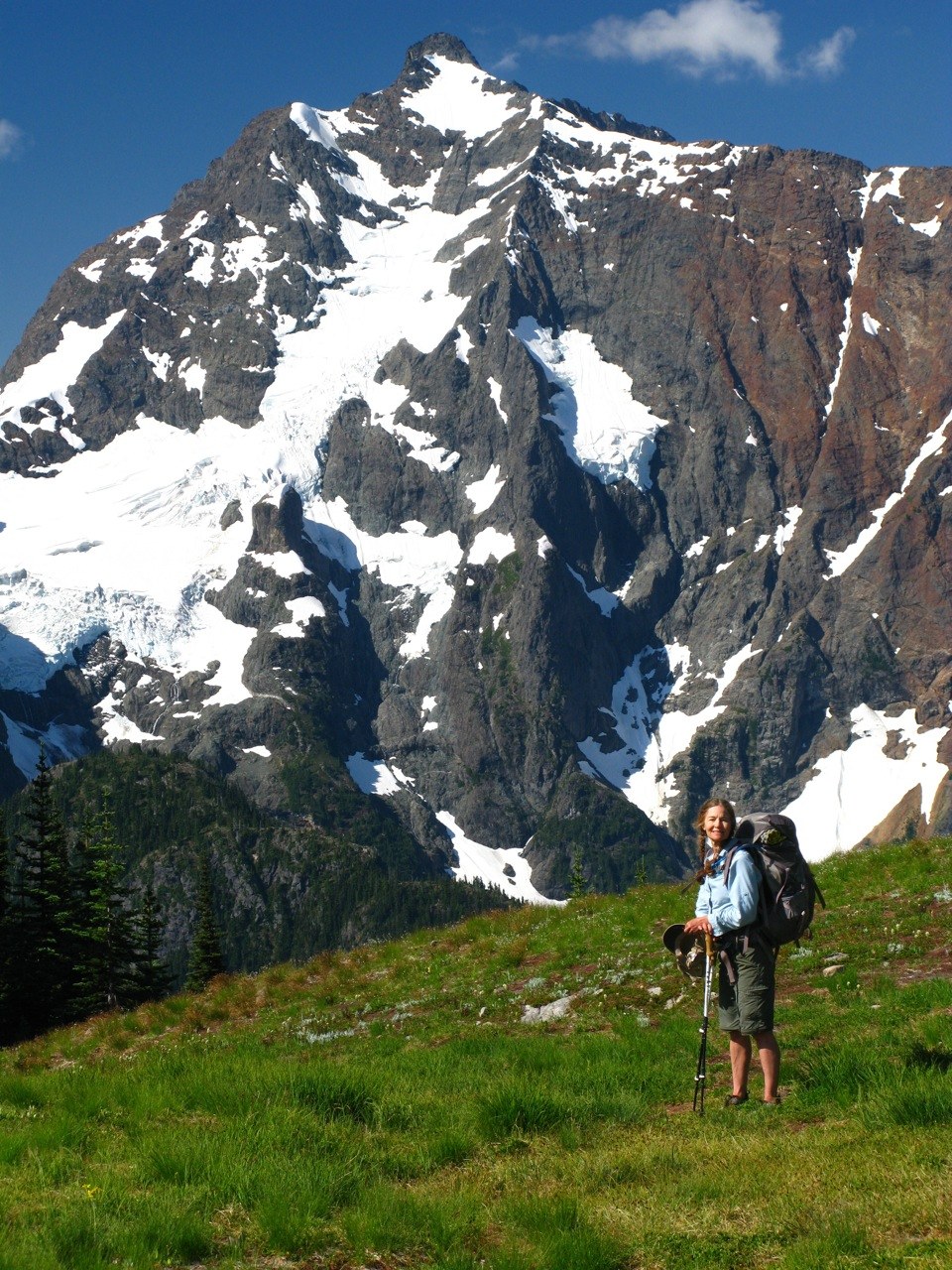
After Nickol Creek, the trail climbs a brushy hillside, and then breaks out into parkland with great views of Jack and Crater Mountains. Continuing on through groves of subalpine tree and grassy meadows you find yourself in the astoundingly green meadowland of Devils Park. Devils Park Shelter looked a bit creepy and mouse ridden, containing someone’s stash of gear and a sleeping bag rolled up in plastic. Just down-slope, off the main trail from the shelter is a beautiful creek lined with Mimulus where we tanked up for the dry haul up to Jackita Ridge. There was no water after this creek until we reached one of the forks of Devils Creek, just south of point 6522.
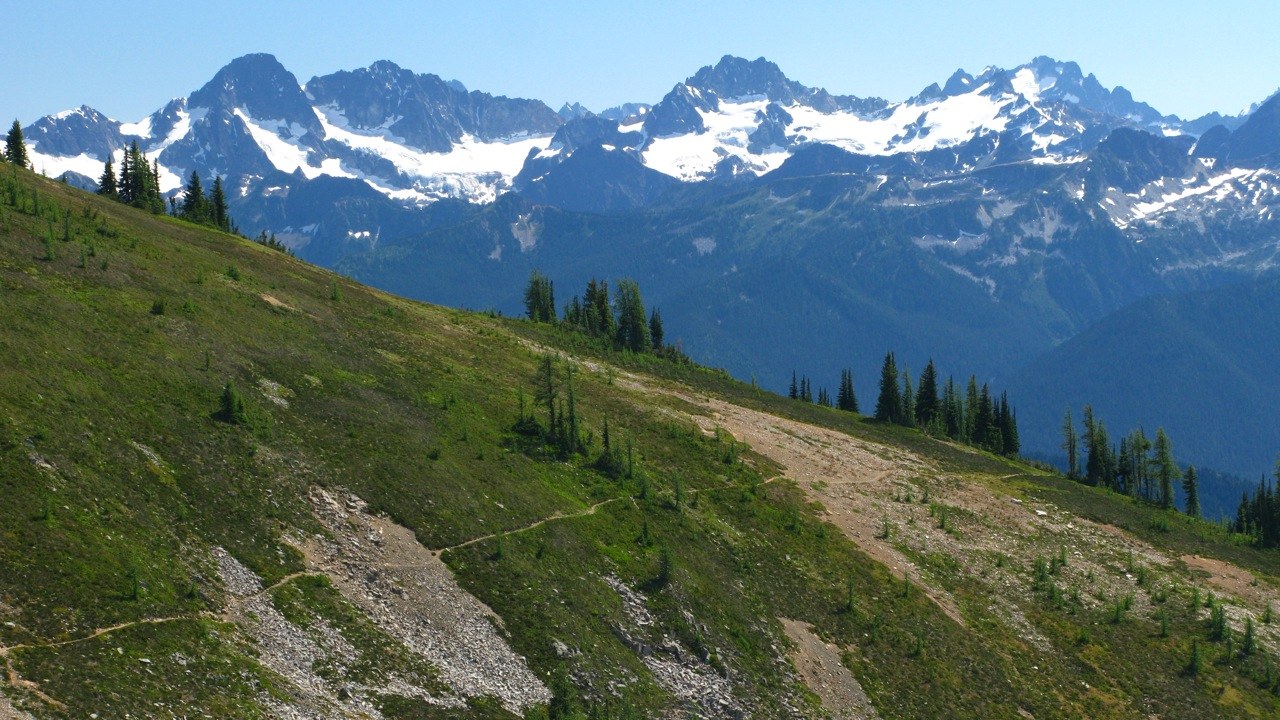
We wandered on through the huge meadows and blue Lupine fields of Devils Park, eventually turning back north to climb the spectacular green and flower covered slopes of Jackita Ridge. Cross a shoulder into a beautiful Larch dotted basin, climbing to the edge of a ridge where another obscure trail junction is reached. Continuing straight up the ridge, you would eventually drop into Hells Basin where the long abandoned alternate route once existed, regaining the main trail once again on the west side of Anacortes Crossing. We were wondering why this route was abandoned. The main route goes left at this ridge crest, dropping down through and across a very steep scree slope. The trail is almost non-existent in places but you’re able to see the continuation of the trail below and can head generally toward it.
Traverse another hillside and then drop again into a fork of Devils Creek with good flowing water and a nice campsite just passed the creek, where we spent our second night.
Day 3 – The trail makes a climbing traverse of a ridge east of point 6522 and then makes a long drop into the beautiful talus basin of the North Fork of Devils Creek. Lots of water here to fill up on before a climb back up the slope. This was the last water until the ‘spring’ marked on the map just below Devils Pass, east of the trail junction toward Deception Pass.
Climbing the forested slopes above and along the North fork Devils Creek, we came across a beautiful campsite with views up to Anacortes Crossing. There were enough sites here for two or three tents. A trail from this campsite leads down through the talus to water.
We broke out again into vast meadows below Anacortes Crossing, passing the old trail sign at a junction. The old trail leading up to that pass is still visible. I regretted not taking the time to take that little side trip.
The main trail continues another north for another spectacular 2 miles to Devils Pass. There are a couple of great camps at the pass with water not too far away on the trail toward Deception Pass. The spring water is less than ¼ mile form the pass and can be seen looking down hill from the trail as you cross through a grove of trees. Someone has set up an old pipe to make it easier to collect water.
We had planed to camp in the basin east of the pass at Devils Pass Shelter, but it turned out to be in a dark hole with little sun. The shelter itself has collapsed and is basically just a roof on the ground.
Make sure to fill up on water at the spring before you continue your journey. This the last on-trail water until you reach the basin on the west side of Devils Dome.
Day 4 – The trail from Devils Pass to Devils Dome and beyond is a wonderland and one of the high points of the trip for me. Traversing up through Skyline Basin, I noticed some small tarns and a creek, off trail and below us in the meadows, in case you are desperate for water. The views across Devils Creek to Jack Mountain are amazing!
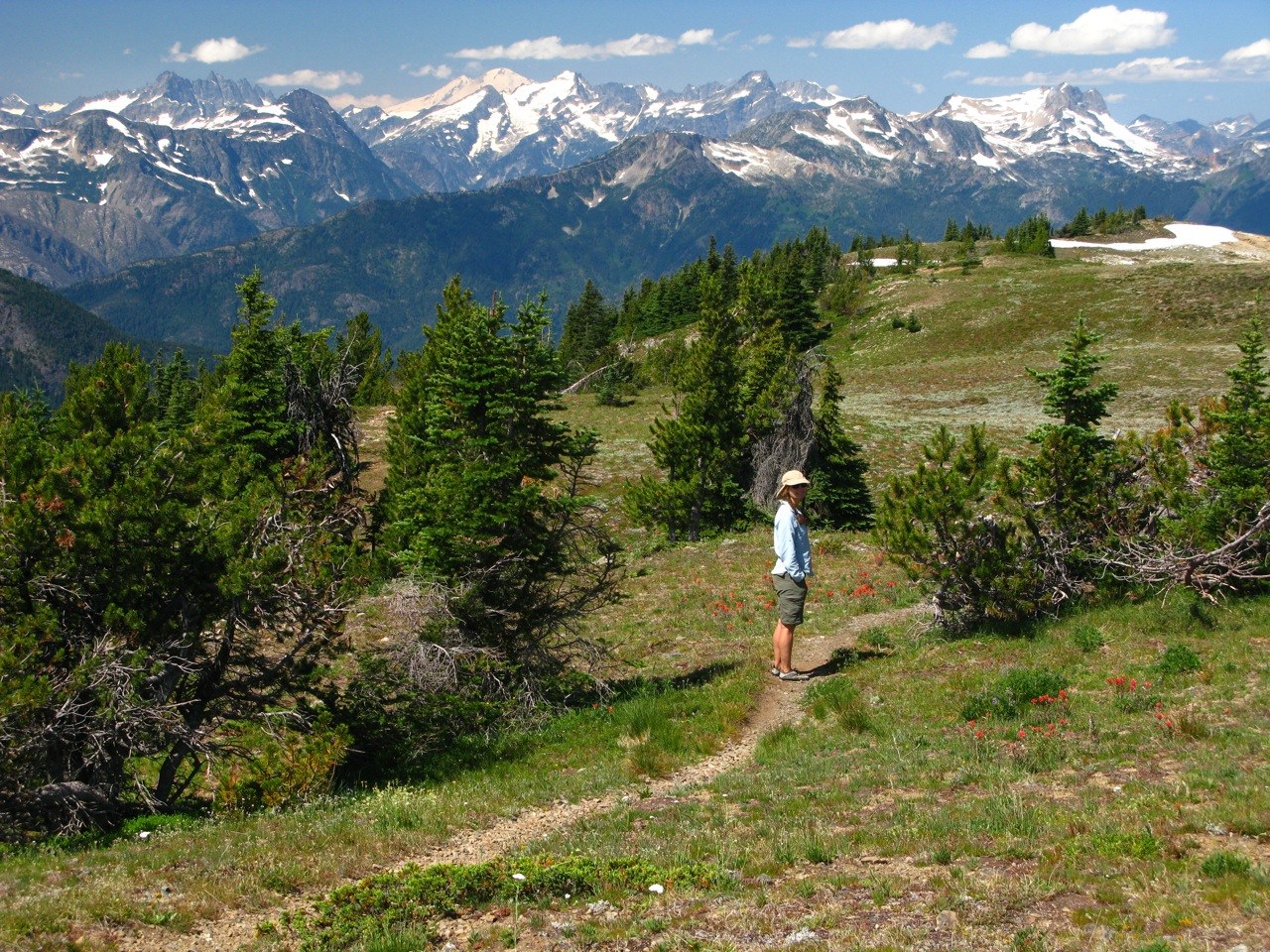
Devils Dome is a highlight of the trip and beyond words to describe. A vast flower covered tundra with 360-degree views across Ross Lake to the Picket Range, North to Hozomeen, south to Jack and Crater Mountains and east to the Pasayten highlands of the Pacific Crest Trail.
We wandered down through a beautiful, green basin with water running across polished slabs and took a turn to the north at the trail junction (unmarked) to Bear Skull Shelter. There is good water at the shelter but decided not to camp there as the only good tent site had a big tree lying across it. There we no views to speak of from the shelter so we headed back to the main trail. Turning right toward Dry Creek Pass we found a fantastic campsite (no water here, fill up at the shelter) just off the trail to the left, before the main trail begins to drop to the right side of the slope. The campsite at the crest of the ridge here has great views and a rocky knob above camp for morning coffee drinking and grand views up the Devils Creek Valley, across to the glaciers of Jack Mountain and east to the Pickets and Ross Lake.
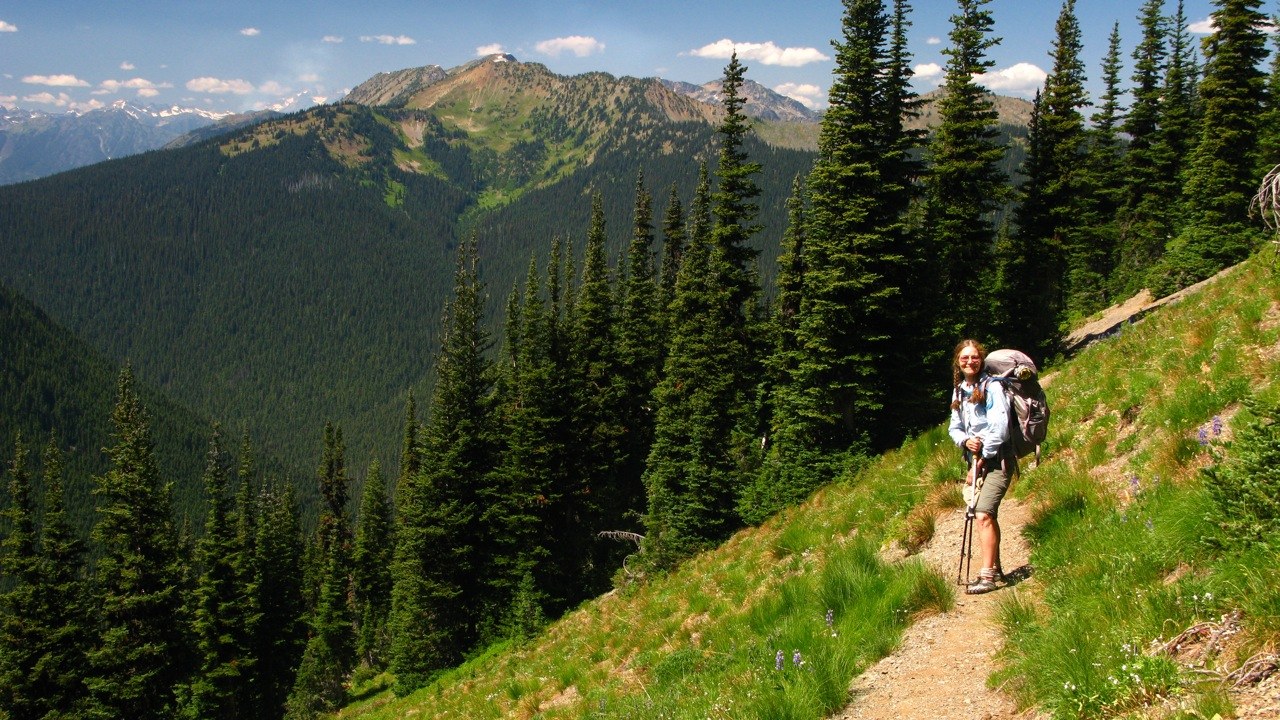
Day 5 – The long 6-mile drop from Dry Creek Pass to Ross Lake is very, very brushy. At times you are forced off the trail down-slope by the maples and slide alder that look to have not been cut back for decades.
We eventually made it to the shore of Ross Lake at Devils Junction Landing where we had made arrangements with Ross Lake Resort to pick us up with the water taxi. We had a great two hours of swimming in the clear warm waters of the lake and met a nice family who were taking a canoe trip up the lake from the dam.
The boat ride was incredible! Watching the mountains and shoreline go by from a fast moving boat was surreal after several days in the wilderness. We said our goodbyes to the boat pilot at Ruby Road Trail where we walked the last 7 miles back to the Canyon Creek trailhead where the journey began. The little walked section of the Canyon Creek Trail between the East Bank Trailhead and the Canyon Creek ‘commodious footlog’ was very pretty! We swam in the icy blue waters of the creek while listening to the occasional car go rushing by on the North Cascades Highway just above us.
General trail conditions of this hike:
We were saddened to see such a beautiful gem of a trail falling into disrepair is it was. The trail is very brushy. The subalpine trees, that grow very slowly, force you down-slope off the trail in many places. Evidence that this trail hasn’t seen a brushing job in many years.
The drainage provisions on the trail, drain dips, water bars, etc. haven’t been cleaned out in a very long time and have allowed water to take long runs down the tread causing erosion problems. There were numerous windfalls along the trail, but none so serious that you couldn’t just walk around or step over. The very worst of them and a dangerous one is right near the end of the Canyon Creek ‘commodious footlog’ on the Canyon Creek Trail itself. It was very difficult to climb over this log, with a significant drop into the water below.
We met people from all over the country and from Europe that were hiking this trail because of its reputation. It is a shame that congress has so starved the Forest Service of funds that it cannot take care of our national treasures such as this one! Maybe WTA can help? We did notice that there had been recent read work done to the first 4 miles of switchbacks up from Canyon Creek. Was that you WTA?
Comments