Pacific Crest Trail (PCT) Section K - Stevens Pass - East to Rainy Pass
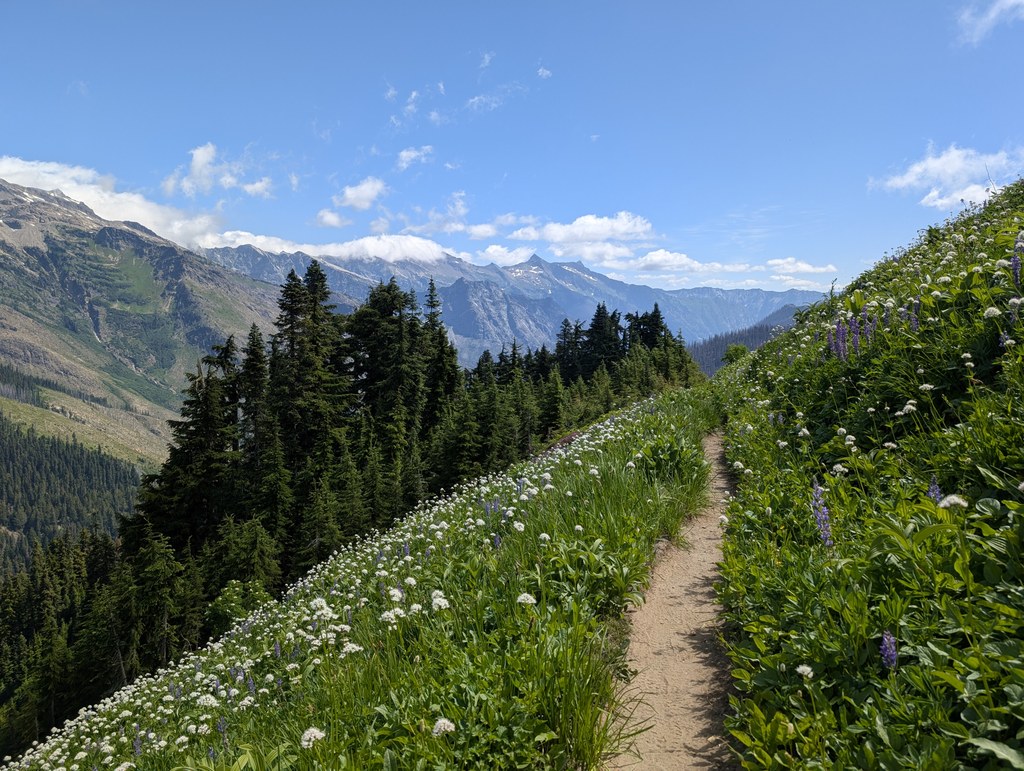
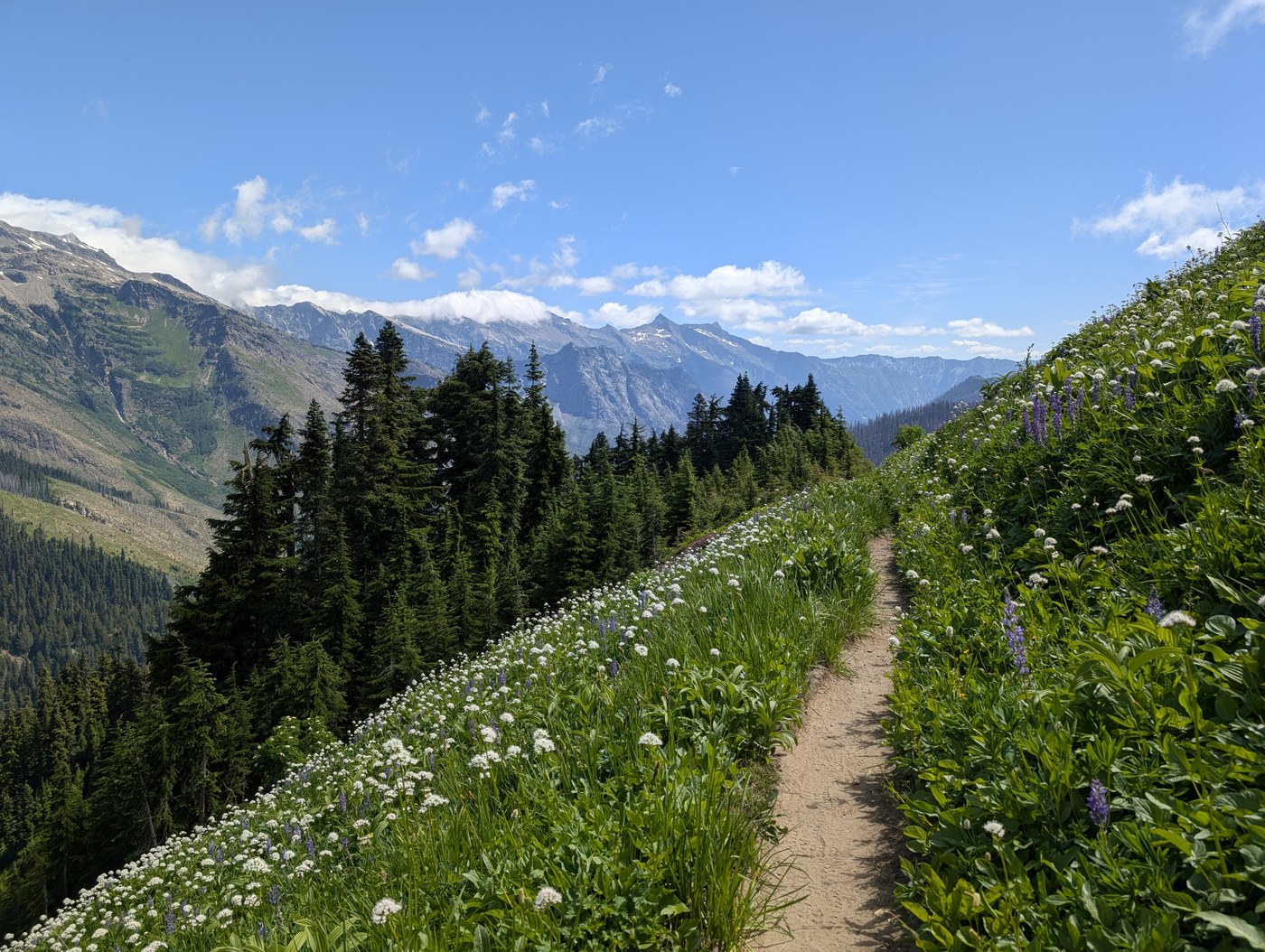
There's no two ways about it: Section K is tough. In fact, only California's infamous John Muir Trail section is considered more challenging. But for those with the skills and desire, the hike from Stevens Pass to Rainy Pass is also one of the PCTs most rewarding. Wild, rugged and stunning, this section passes through two wilderness areas and a National Park, allowing hikers to experience the natural beauty of the Pacific Northwest untarnished by civilization.
Steven's Pass offers day-hikers and backpackers a good starting point, and through-hikers can stop here for supplies. From here, you're on your own as the PCT heads deep into the North Cascades. Expect a lot a climbing, and a lot of descending (26,351' of gain, as well as 25,552' of elevation loss) as the trail winds northward up and down the mountains, valleys and canyons of the Glacier Peak Wilderness. Be sure to take plenty of breaks, both to catch your breath and to take in the glorious surroundings, which include views of dozens of peaks, glaciers, mountain lakes and alpine meadows. Summer and early fall are the best times to hike this section, as thick snow-pack, treacherous river crossings and high avalanche danger often make it impassable through mid-summer. No matter when you hike it, be sure to check current conditions before heading out so you're abreast of any bridge outings or hazardous conditions. In particular, check on the status of the 50-mile reroute around a heavily flood-damaged 45-mile stretch of Section K. Though the trail is expected to re-open with newly built bridges for the 2011 season, check the Forest Service Website (http://www.fs.fed.us/r6/wenatchee/conditions/pct/) for up-to-date information about the detour and new route. Water is plentiful on this section, but through hikers and backpackers should be sure to pack everything they need for the journey, as the only available supply stop is through a National Park Service shuttle at the Stehekin River around the 100-mile mark. Bears are common here, so either hang your food or bring bearproof canisters for storing food overnight. Recent Trip Reports
Hiked here recently?
Submit a trip report!
There are
31
trip reports for this hike.
See all trip reports for this hike.
Cady Creek, Pacific Crest Trail (PCT) Section K - Stevens Pass - East to Rainy Pass
— Oct 01, 2011
— mcm
Day hike
Issues:
Blowdowns | Overgrown | Mudholes | Water on trail
Expand report text
Hide report text
Read full report
Thought we'd go to Lake Wenatchee to escape the incoming rain, but it was raining at the TH when we ...
Thought we'd go to Lake Wenatchee to escape the incoming rain, but it was raining at the TH when we started. Cady Creek is quite brushy at times. Not hard to walk but will soak you through on a day like today. Thinking the clouds would lift as the day went on we pushed on up to 5,200 feet stopping for lunch in steady rain, sitting at the top of a meadow, looking out where there would have been views had the weather been clear. The one other hiker we saw, a through-hiker on his way to Canada, shared the humor in our situation and said he was impressed to see us out hiking in this weather, but I think we were more impressed by his super positive attitude. He was also soaked and heading even higher into the clouds. We decided to attempt the loop out Cady Ridge in future in better weather and with more daylight. Still, we enjoyed the beautiful forest hike despite the rain. I'd give the fall colors another couple of weeks to develop.
Multi-night backpack
Expand report text
Hide report text
Read full report
with photos
First of all, the new bridge is in place over the Suiattle River, and the new trail segment approach...
First of all, the new bridge is in place over the Suiattle River, and the new trail segment approaching the bridge is complete. This was the final repair for this storm-ravaged segment of the PCT; there is no longer any need to detour around the east side of Glacier Peak.
The new Suiattle bridge is located several miles downstream from the old crossing, adding 5.5 miles (and 500ft elevation gain) to the total milage for this section. Many people will say, “well, I’m not afraid of the log crossing, so I’ll just take the old shorter route.” This is a tragedy, because the new trail segment passes through one of the most magnificent stands of old-growth forest I have ever seen (and I have seen many). Seriously, this forest is magical--- easily comparable to the Hoh, Queets, Big Beaver, etc. It is an oustanding new element for the PCT, which so often stays high on the crest. When I approached this segment, my feet were cold and soaking wet (boot failure), and my left knee was screaming at me with every step; even so, as soon as I reached the end of the old-growth, I turned around without hesitation just so I could walk through it again. Coming after the harsh beauty of Fire Creek Pass and Vista Ridge, and the wild brush of Milk Creek, I was literally moved to tears by this place. I regard it as one of the great enchanted moments of the entire PCT. If you’re thinking of skipping it, stop and remind yourself why you’re out there. Okay, trip report: I took the NW trailways bus to Stevens Pass and set out into the rain. The forest is most beautiful when it’s raining, and I saw lots of shadowy mountainsides cloaked in swirling mists (people who only hike in “good” weather are really missing out). Camped at the top of Grizzly Peak. At dawn, I looked out from under my tarp to see that the rain had turned to snow during the night, coating the meadows. The clouds were breaking. In the distance I could see mists billowing off Glacier Peak, lit up by the first rays of light. It turned into a sunny day of wandering along the crest: lakes, meadows, forest, views of Glacier Peak and the Monte Cristo peaks, and Rainier and everything else to the south. I camped in howling winds on a ridge north of Skykomish Peak. The next day was still sunny. Somewhere around Indian Pass, the character of the landscape begins to change. The mountains become snowier and more formidable, looming above you. At Red Pass, looking down into the storm-ravaged White Chuck Valley, there’s a feeling of heading into a truly remote, wild realm. And in fact, this next segment is presently one of the most remote places in the lower-48. The west-side approaches to Glacier Peak (White Chuck, Milk Creek) are totally impassable; there is no way in or out of here that doesn’t involve a very long trek over at least one high pass. And you shouldn’t count on running into anyone else here; I encountered exactly one hiker between Indian Pass and Cloudy Pass (50+ miles). So, this is a place to be careful with your footing, especially if you’re alone--- a casual misstep could turn into a tragedy. But the feeling of wildness here is an incredible experience. Descending into the White Chuck Valley, you begin to see the carnage from the cataclysmic floods of the past eight years. It may not be pretty, but it is beautiful in a terrifying kind of way: whole segments of forests wiped out by flood waters; raw bluffs where the river carved chunks out of the landscape; bridges tossed aside like matchsticks, etc. What you’re seeing here is a privileged glimpse of the raw forces that shape our universe. Also amazing is the massive amount of work that has been done to restore this segment of trail, which had been virtually obliterated. In the history of trail maintenance, this must have been the Battle of Stalingrad. I cannot express my gratitude strongly enough to those involved in this epic undertaking. The trail is now in excellent shape: clear and easy to follow, and all the new bridges are in place. I camped on Kennedy Ridge. The next day, clouds moved in as I began the ascending traverse towards Fire Creek Pass. As the trail makes its way around Glacier Ridge, you can scramble a few hundred feet to the ridge crest for a great view (not hard, but be careful--- you’re a long, long way from help here). I reached Fire Creek Pass just in time to see the amazing views north to Dome Peak and the rest of the Ptarmigan Traverse, gradually enveloped by dramatic clouds. From points near the pass, I watched clouds and mist closing in on Glacier Peak, constantly shifting to reveal glimpses of ice and rock. There was still a brief stretch of icy snow covering the trail descending from Fire Creek Pass, but it was easy to get around by climbing over rocks. Mica Lake was still mostly-frozen, and spectacularly beautiful. As I descended from here, the rain moved in--- just in time for the land-of-infinite-brush, the Milk Creek Valley. This is very clearly the kingdom of the avalanche. Naturally, the trail is brushy--- I expect it would take a large permanent crew working round-the-clock to keep it brush-free in these environs--- but it’s easy to follow. If it has rained in the past few days, you will get thoroughly drenched here. The brush continues up the other side of the creek. There’s a brief respite of forest, and then you switchback up a brushy avalanche slope towards Vista Ridge. The brush isn’t much fun, but it is an important part of the mountain realm, and I don’t regret the experience--- and it is pretty cool to imagine the avalanches and mountains of snow that must pile up here in winter. It’s worth noting that there is no good place to camp in or around Milk Creek Valley. I camped here anyway, wedged between a big tree and a steep slope. In the morning I climbed to Vista Ridge. Rain/snow, clouds, and wind---- and yes, vistas too. Not wide-open sweeping postcard-vistas, but the kind I really love: mysterious glimpses of jagged rock and ice shrouded in shifting clouds. It was too cold to linger on the ridge, so I desended into the beautiful forests above Vista Creek. Then I reached the new trail segment towards the Suiattle bridge, and the truly enchanted forest I’ve already described. Even aside from the old-growth, this new segment is a really nice stretch of trail, generally within sound and often sight of the wild Suiattle River--- one of the great rivers of the Northwest. The new bridge is fantastic: visually striking, and it appears very well-situated and secure. Maybe, just maybe, this one will be around awhile. On the other side, you hook up with the old Suiattle trail. Something to consider: the new Suiattle crossing means that you now pass the lower junction with the Miner’s Ridge trail, presenting an attractive alternative via Image Lake that reconnects with the PCT just before Suiattle Pass (this would only add 2 miles/800ft elevation gain). I stayed on the PCT, ascending gradually through forest, and camped near Miner’s Creek. The next day (day six) I climbed to Suiattle Pass, then headed east to Cloudy Pass. Yes, it was cloudy, but the clouds were high enough so that I could see a lot of the surrounding glacier-clad peaks. Descended to Lyman Lakes, where I caught a rare sighting of two humans--- nice humans, fortunately. The upper Railroad Creek Valley is an avalanche deposit zone (like Milk Creek), so it’s mostly brush with some intermittent forest. Nice views up the impressive mountain walls on both sides. The trail itself was somewhat brushy in places, but later I saw a WTA crew at Holden, so maybe they’ve already taken care of this. Anyway, the trail is easy to follow, and the brush wasn’t nearly as ferocious as Milk Creek. Finally I reached the end of the trail, and came out onto the road. Passed some stone walls and foundations of old mining homes, and then the graceful wooden structures of Holden Village. The village is a perfect place to end a trek. I spent two days there, eating good food and letting my feet dry out. The people are really nice and welcoming and generous, and no one tries to push their beliefs on you in any way. It’s a perfect place to gather your thoughts and let your mind work through all the ideas and experiences that developed during the journey, before heading back into the entrenched thought-patterns of urban life. Reservations are a good idea; I hadn’t made any, but I was lucky. A massive clean-up of the old mines and tailing piles is getting underway--- great news, but at some point (maybe 2013-2014) there will be hundreds of workers staying in the village, and there won’t be much room for visitors. My plan from there was to head down the lake and catch the Link Transit bus from Chelan to Wenatchee, then the train back to Seattle (I did that last year in reverse to get to Stehekin; it works out well, but in either direction you have to stay overnight in Wenatchee. You can camp at the mouth of the Wenatchee River. The train ride is fantastic). But when I mentioned my plan over lunch at Holden, a kind soul who was also heading out offered me a ride from Fields Point to Seattle. And so I made it home, feeling privileged to have traveled through such a wild, extraordinary realm. Sorry this report is so long, but it seems like this area hasn’t been covered much by other recent reports, so I wanted to be thorough.
Spider Meadow and Phelps Basin, Phelps Creek, Upper Lyman Lake, Lyman Lakes, Cloudy Pass to Holden, Image Lake, Pacific Crest Trail (PCT) Section K - Stevens Pass - East to Rainy Pass, High Pass, Spider Gap - Buck Creek Pass Loop
— Sep 06, 2011
— el tigre
Multi-night backpack
Features:
Wildflowers blooming | Ripe berries
Issues:
Blowdowns | Snow on trail | Bugs
Expand report text
Hide report text
Read full report
Day 1: Phelps Cr TH - Lyman Lake via Spider Gap ~ 12 miles
3:30 wake up in Longview, 5 or so hour...
Day 1: Phelps Cr TH - Lyman Lake via Spider Gap ~ 12 miles
3:30 wake up in Longview, 5 or so hour drive to the Phelps Cr TH, on the trail by 9:30 am. Road to Trinity is fairly good til the last 2 miles, road from Trinity to Phelps Cr is less good but still passable with a regular car. You can do the road walk either at the beginning or end of your hike. If at all possible, do it first. I did it last, and it is not fun! Phelps Cr Trail is gorgeous, lightly traveled, excellent tread, tons of water available, no bugs, no snow. Beautiful big trees, peekaboo views through the forest of nearby peaks. When you hit Spider Meadow you start getting views of surrounding peaks. About midway through the meadow there is a big pile of avalanche snow. I got turned around here, thinking I had already passed Phelps Creek and started looking for the trail to Spider Gap. Don't make my mistake, I wasted maybe an hour of time on the snow, in avalanche fall, bushwacking, etc, which took a physical and mental toll later. For whatever reason I thought there was no official trail from Spider Meadow up to Spider Gap, but that is not true. Just stay on the main trail, eventually you'll hit a signed trail junction at the bottom of the headwall, and you'll turn up slope toward the Gap. The ascent from the meadow to the Spider Snowfield is steep and hot. Bring lots of water. The snowfield is soft and safe on a warm day like the one I did. Don't need any special equipment but poles might make it easier. It's apparently only a mile but it feels longer. Spider Gap is spectacular, views for miles, and a good place for lunch. You'll have to swat a few deerflies, though, precursor of things to come. Heading down now onto the Lyman Glacier is definitely steeper. With warm, soft snow a set of poles is all you'll need, but an axe or maybe crampons would make me feel safer. There's a thread at NWHikers.net with excellent info about how to find your way down the snow and onto a trail. Don't go right too soon are you end up cliffed at an overlook. But don't go right too late (like I did) or you miss the main trail and end up having to scramble down scree for hundreds of feet, which is tiring. Once you find the trail, it's an easy up and down to Lyman Lake, which is beautiful. Camping sites are pretty mosquito-ey, but right at the lake there were hardly any flies or skeeters and it's got lots of warm, shallow areas perfect for a hot day. Gorgeous views! There were some camping spots up higher on the ridge between upper and lower Lyman Lakes, which were scenic, breezy, and lonely, but you would have had to have gotten your water from upper Lyman lake or earlier, as there is no water right at those sites. Worth it though, for those who plan ahead. Day 2: Lyman Lake - Cloudy Pass - Image Lake - Miner's Creek ~ 13 mi On trail about 8 am. Easy jaunt up to Cloudy Pass with great views but again, lots of bugs. Definitely bring a headnet and spray. I was going to go with just a tarp since we had such great weather, but in the end I brought my 16 oz homemade bug tent too, which I was very grateful for - more for flies than mosquitoes. The hiker shortcut to Suiattle Pass is snow-free, no trouble, but kind of steep and rocky. Trail to Image Lake has a few blowdowns, nothing big. There are signs of active bears en route to Image Lake with several stripped trees and tons of scat near the miner's cabin ruins. Image Lake itself was infested with horseflies. The campsites appear to be located over a ridge from the lake itself with great views of Glacier Peak but none of the Lake. I didn't camp here, instead moving on to Miner's Creek. Hint: Miner's Creek bridge goes right over a 4 or 5 foot deep pool of water in the creek, exactly right for jumping in to neck depth for a great rinse off and cool off on a hot and dusty day. Water is cold but tolerable. There aren't a lot of good campsites at Miner's Creek - I only saw one good one. I made do with a so-so spot and I didn't see any others sites. Day 3: Miner's Creek - Middle Ridge/Sheep Driveway - Buck Creek Pass - High Pass Lookout ~ 12 mi On the trail at 8 am. From Miner's Creek you're up to Middle Ridge through forest then parkland, again lots of flies and mosquitoes. There is an unmaintained but well-known trail there that you can go up about a mile and get big views of Glacier Peak et al. Worth it. Then down to Small Creek, a beautiful stream, then back up to Buck Creek Pass. This is around 6 mi, pretty easy, I was there before 11 am. Note the official Buck Creek Pass campsites are down a hundred or two hundred feet in elevation next to a little stream. They have better access to toilets and water, but much inferior views, also cooler at night and less breezy, bad for bugs. Try to get the unofficial site visible from the main trail if you can, the one you pass as you first head down toward the official camping area. After setting up camp at the unofficial campsite just off the main trail - the one still high enough to see sunset and sunrise on Glacier Peak - I set off for a dayhike to the unnamed pass just short of High Pass, described in Doug Lorain's "Backpacking Washington." It's an easy first couple miles, rounding Liberty Cap with ever-better views of Glacier Peak, etc. After a long 2 miles you hit an unnamed saddle and round the north-facing side of a ridge. Then you start to hit snowfields - about half a dozen in all. The first is too steep to safely pass. You have to scramble briefly down and around, which isn't too bad. The next few are safe to pass, with proper precautions. To be safest you should have an ax. I didn't. I had in-step crampons, but it was warm and the snow was soft. In retrospect I was probably taking a risk. The final snowfield which is literally immediately before the final destination is not passable. However you can scramble sort of back and up and reach the ridgeline, which you can then traverse briefly to the pass for the best views. Whoa!!! Icy Triad Lake, mostly frozen over, tons of snow and ice, glaciers, peaks, Glacier peak visible to the right, etc. This is an awesome and worthwhile short day hike if you can do it safely! Thunderheads were starting to build at 1:30 so I headed quickly back, just in time to cover my bug tent with my tarp as the first (and last) raindrops fell. Note there is no water once you start up Liberty Cap, bring what you need from Buck Creek Pass. Day 4 - Buck Creek Pass - Trinity - Phelps Cr ~ 12 mi (plus 1 mi in a vehicle) 7:30 am start. Long, long, steady downhill with spectacular views of Buck Creek Valley and many snowy, icy peaks and slopes. The undulating portion of the valley can be wet with dew, swarming with flies, and hot and humid as there are a few avalanche slopes that are exposed. There are some ripe huckleberries here, but the flies keep you from hanging around too much. Saw some inbound hunters on the way down. Once you get to the road, it's a long 3 miles, maybe 3.25 miles from Trinity parking lot to Phelps Creek TH. As mentioned, try to do the road walk on entry rather than exit. I found this a very painful and not fun part of the hike, would have been better at the beginning. However, you probably need 5 days to do it that way (staying the first night in Spider Meadow after a 10 mile hike in including the road walk), otherwise you end up starting off with a 15 mile plus day, and the last 3-4 miles are descending the Lyman Glacier in late afternoon while you're probably pretty bushed, which doesn't sound that safe to me. Great hike, would be nicer in 5 days than 4 but rarely is the hiking steep and the trails are all well-graded and easy to travel (obviously excepting the Spider snowfield and Lyman Glacier). Really spectacular scenery. Maybe flies and skeeters will be doing out shortly with cooler weather coming this week. Huckleberries just coming on. One of the most scenic backpacks I've done! I didn't mention all the flowers, just tons of lupine and many other common Cascade flowers on the parks of Buck Creek Pass, Lady Pass, Cloudy Pass, etc. Thanks to posters at NWHikers.net for their tips on traversing the snowfields at Spider Gap! Multi-night backpack
Issues:
Blowdowns | Water on trail | Snow on trail | Bugs
Expand report text
Hide report text
Read full report
with photos
Began at Stevens Pass hiking north; camped at Lake Valhalla which was very busy for a Thursday night...
Began at Stevens Pass hiking north; camped at Lake Valhalla which was very busy for a Thursday night - we got the last of 4 campsites. Intended Pear Lake (13 miles) for the second night but only made 6 or 7 miles due to many blow downs and snow crossings. At least one of the snow crossings, above a large bowl ending in boulders, was dangerous and would have preferred to have ice axe and ropes for safety. Camped second night above Glasses Lake along the PCT - only issue was large numbers of mosquitoes but remained bite free with 100% Deet, bee hood and long pants and shirt. My team of 3 elected to depart the next day rather than try to press on with even greater snow challenges so we coordinated by Sat Phone, then used the Top Lake trail to meet our ride. The first 15 miles of section K that we experienced were quite drastic in terms of elevation gain and loss and above 5000 feet there were numerous chutes full of snow to cross. Trail ambiguity only twice: once when the trail switched back in the snow and another side trail led to a field of downed trees and another time just after the Smith Brook trail meets the PCT due to multiple blow downs. The Top Lake trail had a larger trail loss area with downed trees and snow but if you stay at the same level (don't go up or down) you will find it again. Some maps show the Top Lake trail as 5.0 miles but it seemed more like 7 miles to us. We heard from the Leavenworth Ranger that they moved the trail head so maybe that explains it. It was also extremely steep both up and down but had one nice part through a meadow along a steep slope. The wild flowers were out but a bit sickly looking; there were no berries and we saw fresh bear prints in the mud but otherwise no encounters. I must also mention a very fun part of the trail just past Grizzly Peak where there was a large snow hill - the 3 of us used my ground tarp (a Tyvek sheet) to sled down the hill.. it was great! Water was plentiful but slow running in places so bring the tablets.
Little Wenatchee Gorge, Pacific Crest Trail (PCT) Section K - Stevens Pass - East to Rainy Pass
— Aug 14, 2011
— scout677
Multi-night backpack
Features:
Wildflowers blooming
Issues:
Blowdowns | Overgrown | Water on trail | Snow on trail | Bugs
Expand report text
Hide report text
Read full report
This was the 50 mile hike for our boy scout troop this summer. The little wenatchee trail is very ov...
This was the 50 mile hike for our boy scout troop this summer. The little wenatchee trail is very overgrown but easy to follow until meander meadow. At meander meadow, the trail is closed for restoration and a new trail takes you to the pct. The new trail is in good shape. As we went north to white pass on the second day, we encountered patchy snow but it was never really an issue. The trail was very wet though and had water running down it most of the time though and if there was no water, it was muddy. The trail was very passable and easy to follow nonetheless. South of meander meadow was a different story however. The trail becomes mostly snow covered until about the top lake trail junction. Lake sally ann is still 75% frozen and the trail is probably 85% snow covered between meander and lake sally ann. The snow makes it very slow going. Crampons, trekking poles and gators would have been great. Postholing was never really an issue though. Between lake sally ann and pear lake, the trail is still mostly snow covered. The are some treacherous snow field crossings about 2 miles north of pear lake. Ropes were necessary. This part of the trail was barely passable. it probably won't melt out this year. Stil a good 4 to 5 feet of snow in spots. The hike was beautiful and the wildflowers were great everywhere. South of pear lake, trail is in good shape with only patchy snow all the way to stevens pass. The bugs are terrible in this stretch though. Lake janus was a mosquito heaven. I counted 88 bug bites in total and I was wearing long pants and long sleeves and a head net.
All in all, wait a year. The hike is beautiful but the pct is snow covered and muddy. It is very slow going and treacherous in some spots. Less than 1 mph between meander and lake sally ann. A gps unit is a must on these trails this year as there are no footprints and you have to find the trail again after every snowfield. |
![]() Glacier Peak as seen from Red Pass on the PCT. Photo by climber729.
Map it
|
Document Actions
- Email this page
- Print this
- Share